Ford reveals its new LMDh car on track
Ford’s brand-new LMDh car performed its maiden shakedown at Le Castellet on Monday ahead of its World Endurance Championship debut in 2027. Circuit Paul Ricard was chosen for the shakedown as it is close to the headquarters of manufacturer ORECA, whose chassis forms the basis of the unnamed Ford prototype. The 5.4-litre naturally-aspirated V8 engine derived from the Coyote, built and ... Keep…
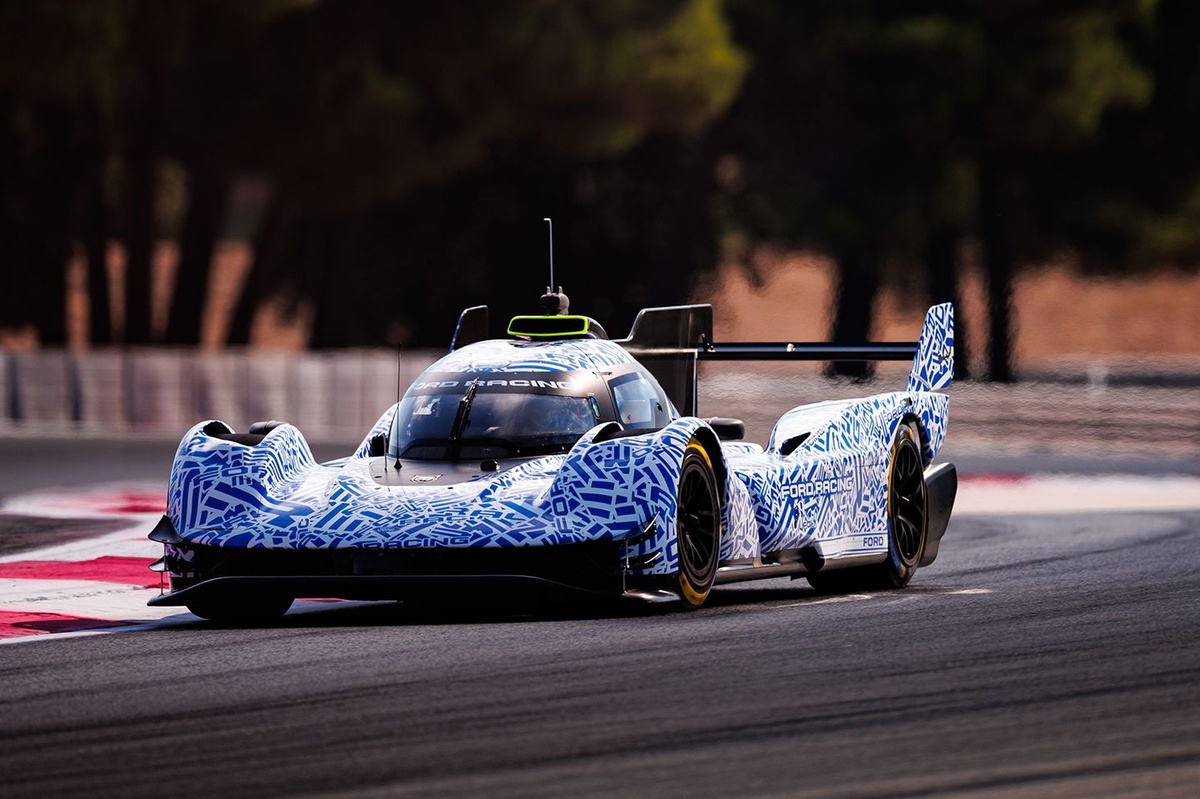
Ford unveiled its cutting-edge LMDh car during a shakedown session at Le Castellet on Monday, in preparation for its World Endurance Championship launch in 2027. The testing took place at Circuit Paul Ricard, chosen due to its proximity to ORECA's headquarters, which supplies the chassis for the unnamed prototype. The car's 5.4-litre naturally-aspirated V8 engine, derived from Ford's Coyote, underwent its inaugural start-up at Dearborn facilities last month.
The manufacturing team commenced testing on August 5th, beginning with run-in procedures that proceeded smoothly and as planned. Subsequent to this, the team meticulously executed a comprehensive program to activate and validate every control system, which are now fully operational and prepared for the forthcoming track tests slated for the following week and beyond.
Drivers Matt Campbell and Logan Sargeant alternated behind the wheel of the prototype, with team-mates Tom Blomqvist and Mike Rockenfeller slated to follow in the days to come. Initial test sessions were allocated to Campbell, Sargeant, Blomqvist, and Rockenfeller, while additional participants Nick Yelloly and Sebastian Priaulx will contribute their expertise ahead of the Hypercar's debut next year.
The Ford Hypercar boasts a distinctive blue-and-white camouflage exterior, adorned with "Ford Racing" lettering and a black fin. Its nose design mirrors that of a Ferrari 499P, featuring a low profile without the wing typically seen on other ORECA-based models. A raised, contoured splitter connects to a protruding "nose" from beneath the bodywork in the center.
On the sides, aerodynamic flaps called 'flicks' enhance airflow. A unique feature includes contoured sections above the front mudguard area, leading to a classic opening above the wheels.
The rear of the car showcases a side wing support attached to the wheel arch end, which adopts an unprecedented hollowed-out shape connecting to the central section of the bodywork where the horizontal LED strip for rear lights is visible. Curved lower panels merge seamlessly with the diffuser section, which is wider and more squared-off at the center. Notably, the bonnet fin echoes the design of the Porsche 963, featuring a substantial air intake visible through a yellow outline on the cockpit cover.
Written by urgent.news from Motorsport.com's reporting — not their text. Machine-written — may contain errors; check the original before relying on it.