Faced with historic drought, the Dutch rethink water management
The Netherlands, which designed its dikes, dams and vast waterworks to battle floods, faces a dilemma: how to retain water while protecting itself from it?
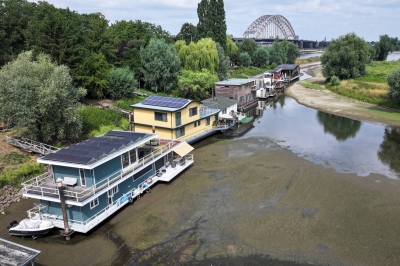
Nijmegen, Netherlands - The Dutch are grappling with a historic drought that has forced them to reconsider their water management strategies. The Waal, a branch of the Rhine river, is currently at its lowest level in recent memory, providing swimmers with a rare beach experience. Dutch engineers, known for their prowess in flood protection, now face a challenge: retaining water while safeguarding against it.
Entrepreneur Leon Berkers, a captain of a restaurant boat, has never seen the river so low. "This is the craziest level it's ever reached," he remarked, while his son Linus added, "We can't even fill the coffee cups to the brim without them spilling."
The drought has significantly impacted the southern and eastern provinces, where grass has turned straw-colored. The Rhine's reduced flow and seawater intrusions have led to salinization, affecting the entire country. Marthe Wens, a water and climate risks researcher, likened the situation to the south of France, noting the impact on nature and buildings.
Rijkswaterstaat, the national water management agency, has declared an "actual water shortage" since mid-July. The agency has imposed irrigation restrictions and limited lock operations to reduce fresh water loss and prevent saltwater intrusion. Shipping, both inland and maritime, has suffered as a result.
Climate change has made extreme weather events more frequent, prompting the Netherlands to rethink its "waterproof" systems. Micha Werner, a professor specializing in drought resilience, emphasized the need for adaptation. "We must start retaining water within our hydraulic systems rather than trying to get rid of it," he said.
For Berkers, adaptation has meant improvising to keep his restaurant boat afloat. He anticipates at least two more months of water scarcity. As the Netherlands faces this crisis, the country must adapt its water management strategies to survive the challenges of a warming world.
Written by urgent.news from Japan Times's reporting — not their text. Machine-written — may contain errors; check the original before relying on it.
This story
This is one outlet's version. Read the fullest account.