DNA shaper steers nervous system development
A study of worms finds a protein that helps shape the structure of the genome is critical for establishing the identity of some neurons.
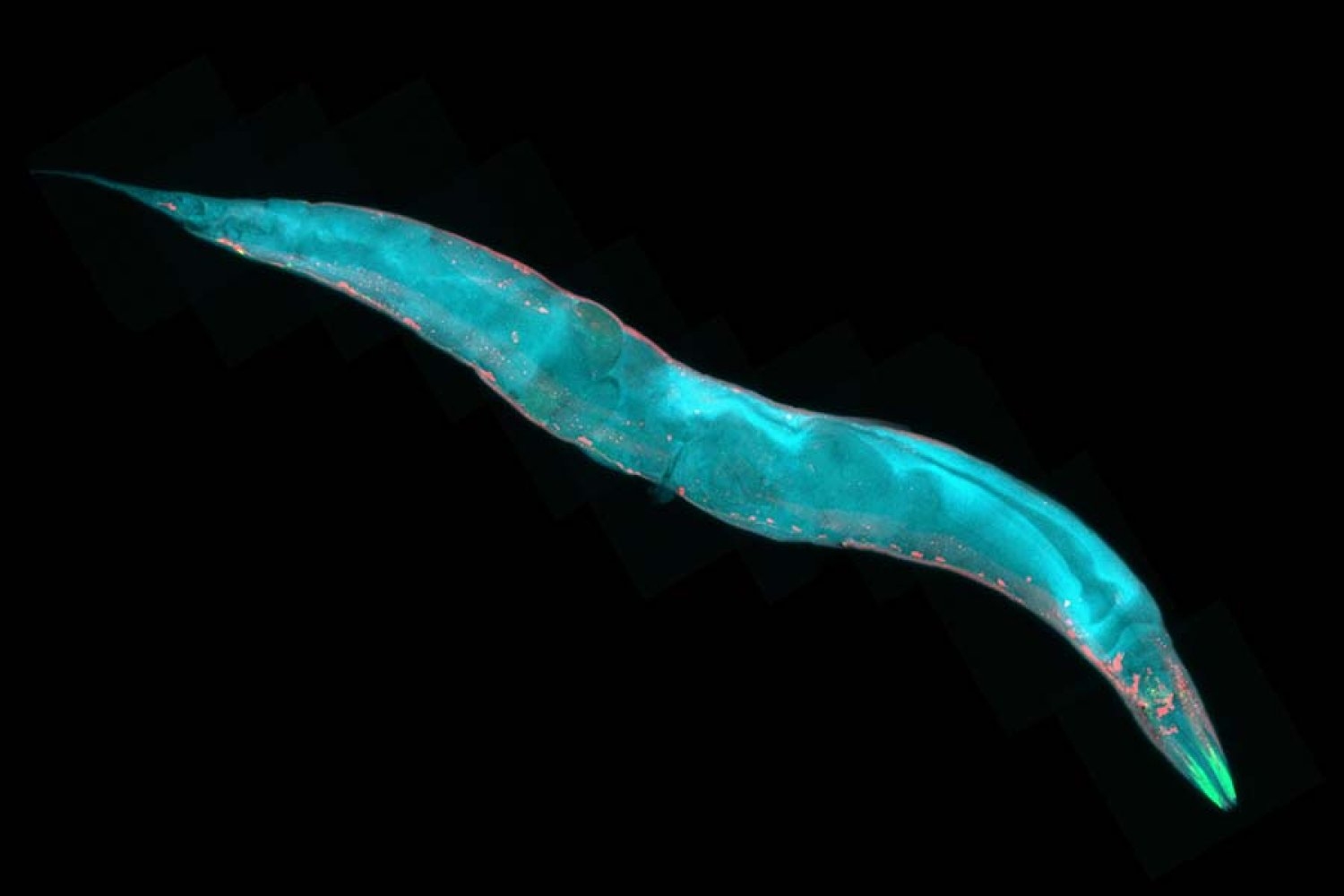
A functional nervous system depends on the cooperation of many cell types, each assuming different roles as organisms grow. In C. elegans, a tiny worm, the nervous system comprises 118 classes of neurons. At MIT, researchers led by David H. Koch Professor of Biology and McGovern Institute investigator H. Robert Horvitz are studying this simpler system to understand nervous system development.
Using the C. elegans model organism, postdoc Dongyeop Lee discovered that a protein complex called cohesin, which shapes the three-dimensional genome structure in both worms and humans, is critical for establishing certain neurons' identities during development. This finding could aid in understanding and treating a rare developmental disorder called Cornelia de Lange syndrome, which results from cohesin complex mutations.
Lee observed that worms with a genetic mutation producing an excess of adrenergic neurons—responsible for responding to environmental and internal cues—had too many of two types of these neurons (RIM and RIC) when their cohesin gene (coh-1) was mutated. Further experiments revealed that cohesin works with the gene-regulating protein EOR-1 (human PLZF) to direct specific neurons to develop into GABA-producing neurons, which communicate via the inhibitory neurotransmitter GABA.
The researchers found that when cohesin or EOR-1 function is impaired, certain neurons become adrenergic instead. Additionally, cohesin impacts the development of cells and tissues throughout the body, leading to severe defects in worms with cohesin mutations, including slow growth and reproductive issues.
These cohesin-related abnormalities in worms mirror Cornelia de Lange syndrome symptoms. The discovery opens new avenues for studying the disorder and finding potential therapeutic targets using C. elegans. The Horvitz lab is already testing additional mutations that counteract impaired cohesin, aiming to identify genes where suppressor mutations occur and potentially uncover human therapeutic targets.
Furthermore, the team is investigating cohesin's role in shaping other neuron types and searching for additional molecules that work with cohesin during development.
Written by urgent.news from MIT News Research's reporting — not their text. Machine-written — may contain errors; check the original before relying on it.