“Dirty snowballs” have joined together since the planets formed
Across cosmic time and space, stellar systems form. This image shows the Orion Molecular Clouds, the target of the VANDAM survey. Yellow dots are the locations of the observed protostars on a blue background image made by Herschel. Side panels show nine young protostars imaged by ALMA (blue) and the VLA (orange). Protoplanetary disks not only are rich in organic molecules, but contain species…
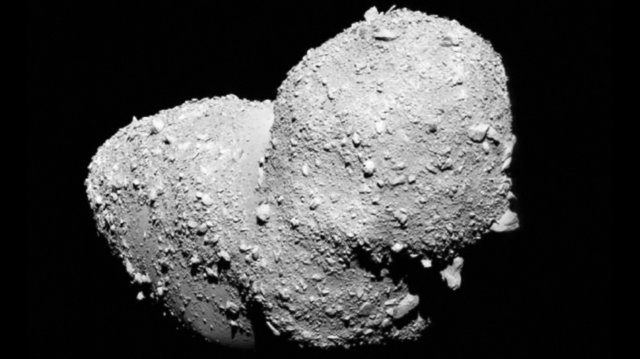
Stellar systems, or "dirty snowballs," form across cosmic time and space. Protoplanetary disks, rich in organic molecules, contain species rarely found in typical interstellar dust clouds. As protostars mature, material in the disk can persist for millions of years. Fragmented regions within these disks form protostars surrounded by protoplanetary disks.
These disks grow and evolve, with imperfections leading to the formation of planets. In systems dominated by a single protostar, major regions are defined by multiple frost lines, each corresponding to specific molecular species. This results in belts of material accumulating, with small, sub-planetary objects inside. JWST has revealed an "intermediate" belt in the Fomalhaut system, a surprising discovery compared to our Solar System's asteroid and Kuiper belts.
Our Solar System, with its rocky inner planets, asteroid belt, gas giants, and outer Kuiper belt, is believed to have formed around a star with a sufficient fraction of heavy elements. However, only about 8 planets now remain, having merged over time from numerous protoplanets. Most of the surviving planets possess moons, and distributed across these belts and clouds are small, rocky, metallic, and icy bodies of various sizes.
Written by urgent.news from Big Think's reporting — not their text. Machine-written — may contain errors; check the original before relying on it.