Chinese scientist spends 20 years mitigating geohazards in Pakistan
A distinguished geologist specialising in geohazards, Cui Peng has never confined his research within China's borders and has dedicated two decades to disaster-reduction work in Pakistan.
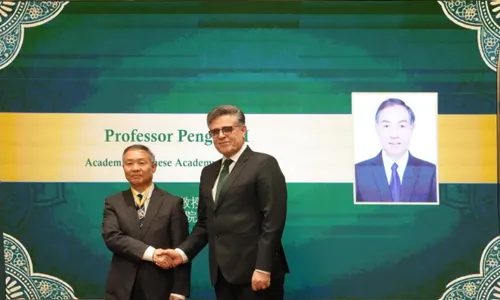
Cui Peng, a distinguished geologist from the Chinese Academy of Sciences, has spent the last twenty years mitigating geohazards in Pakistan. Based in Beijing, his office overlooks a serene, green environment. Despite his silver strands, Cui remains vibrant and committed to his research.
In 2005, a 7.6-magnitude earthquake struck Pakistan, causing immense destruction and loss of life. Cui's research on geohazard mechanisms and mitigation technologies caught the attention of Pakistani academician Muhammad Asif Khan, leading to a collaboration for post-quake reconstruction.
Cui's dedication to China-Pakistan scientific cooperation began in earnest when he arrived in Pakistan in early 2006. Over the next two decades, his efforts have been instrumental in disaster reduction and risk assessment. One notable incident was the Attabad landslide in 2010, which blocked the Hunza River and threatened a catastrophic flood. Cui's team assessed the water conditions and constructed diversion channels, saving the Karakoram Highway and preserving Attabad Lake as a tourist attraction.
Cui's work has also been crucial during Pakistan's devastating 2022 floods. By utilizing satellite remote-sensing and collaborating with Pakistani professionals, his team conducted damage assessments and supported emergency response efforts.
Cui believes that geoscience should serve the well-being of all humanity. Although geohazards cannot be entirely avoided, thorough risk assessment and preparation can significantly mitigate their impact. His efforts have not only advanced disaster risk simulation and early-warning systems but also provided valuable opportunities for Pakistani students to study overseas and contribute to the field upon their return.
Cui's legacy is one of lasting institutional platforms, collaborative research, and a commitment to safeguard human lives.
Written by urgent.news from IOL's reporting — not their text. Machine-written — may contain errors; check the original before relying on it.