China’s property recovery is fragile, but ignoring it is a mistake
Global commercial real estate investment markets are roaring back to life. In the first half of this year, direct investment in commercial property rose 27 per cent in annualised terms. The sharpest increase was in the Asia-Pacific, where transaction volumes were up 38 per cent to US$92.5 billion, the strongest half-yearly performance on record, according to data from JLL. While there have been…
China's property recovery is a fragile one, yet disregarding it would be unwise. In the first half of 2025, direct investment in commercial property surged by 27 percent on an annualized basis. The Asia-Pacific region saw the sharpest increase, with transaction volumes climbing 38 percent to US$92.5 billion, marking the strongest half-yearly performance ever recorded, according to JLL data.
Notably, mainland China emerged as the most actively traded commercial real estate market, with transaction volumes rising 103 percent to US$28 billion, surpassing Japan's performance. While China's data was influenced by a limited number of deals in the first half of 2025, investment activity still outpaced the average first-half level since 2021.
Nevertheless, a rapid rebound from a low base differs from a recovery built on solid foundations. China is not as strong as Japan in this regard. Many of the deals this year were sales, often involving the recapitalization of developers' commercial properties. Foreign investors were net sellers, disposing of US$11 billion in assets, representing 40 percent of total investment activity in the first half of 2025.
Moreover, demand is fueled by domestic buyers, with self-use demand accounting for 45 percent of transactions in Shanghai's second quarter, as per JLL data.
In contrast, Japan is a leading institutional investment market, with foreign investors accounting for 36 percent of transaction volumes in the second quarter. The most significant deal last quarter involved the purchase of Sapporo Holdings' real estate by private equity firms KKR and PAG for US$3.1 billion. The type of capital being deployed in Japan and China differs significantly.
Henry Chin, global head of research at CBRE, pointed out that "international capital continues to view Japan as a core deployment market, underpinned by liquidity and scale."
China's commercial property market fundamentals remain weak. All three main property types—offices, shopping centers, and warehouses—recorded falling rents in both quarterly and annualized terms last quarter. CBRE predicts that China's first-tier cities, excluding Manila and Bangkok, will see a decline in grade A office rents this year due to persistent supply pressures.
Tokyo, however, is expected to witness a surge in grade A office rents, with the fastest rate in the region. The vacancy rate in Shanghai stands at a remarkably low 0.6 percent, primarily due to strong leasing demand, inflationary pressures, and tight supply. However, while Japan's commercial real estate investment market rests on solid foundations, rental yields for prime offices in Tokyo's central business district have plummeted to a record low of 3.1 percent, only slightly higher than Japan's 10-year bond yield of 1.1 percent.
Citigroup anticipates that pressure to strengthen the yen may prompt the Bank of Japan to raise interest rates more sharply, further reducing the spread between rental yields and debt costs. "Japan is becoming more challenging for core real estate investors," said Nicholas Wilson, senior director for strategic research and advisory in Savills' Asia-Pacific capital markets team.
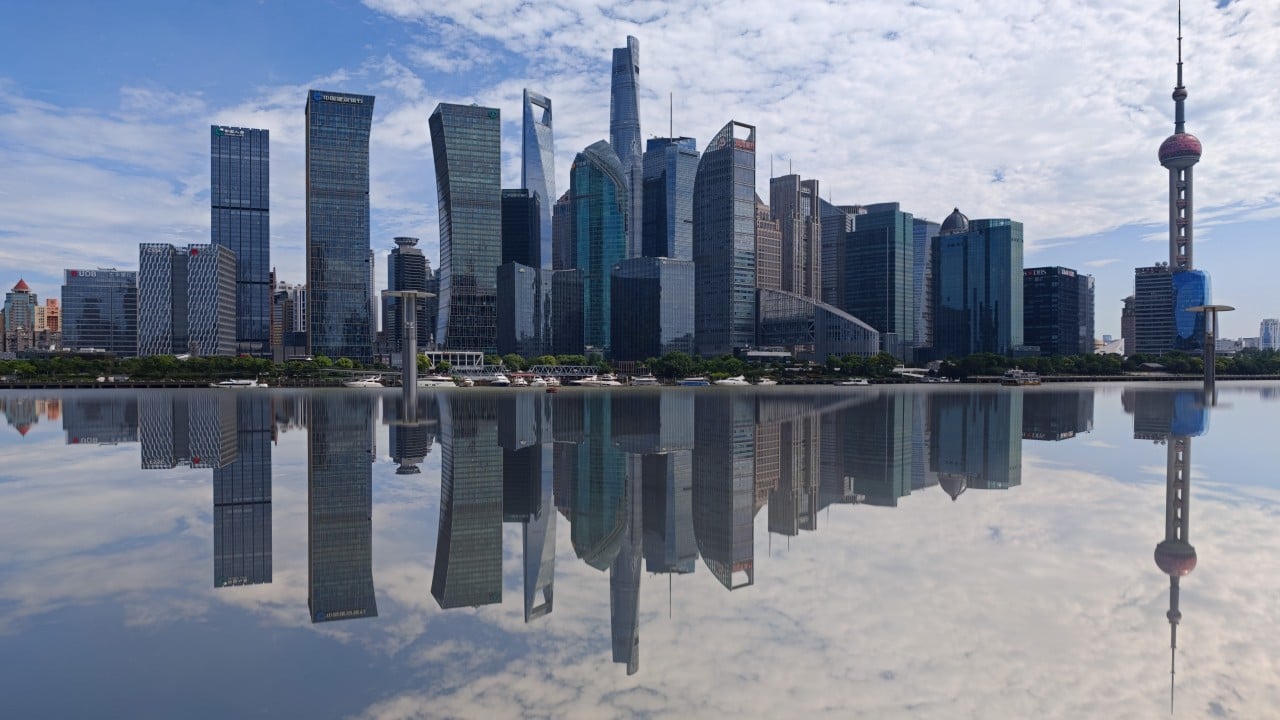
In Shanghai, prime office yields are close to 6 percent, providing investors with a more attractive spread that could increase further if China's central bank eases monetary policy later in the year. Despite sharp price corrections since 2024, China finds itself at the bottom of the commercial property cycle, while Japan is near the top.
Chin noted that while Japan continues to surprise on the upside, Shanghai's office market recovery is beginning to show. Net take-up exceeded new supply in the first half of 2025. Premium buildings in the city's central business district are outperforming the rest of the market, creating opportunities for investors looking to position for a stronger recovery.
Japan's commercial property market remains in its own league. However, the sharp repricing in China presents compelling opportunities, provided the fundamentals improve.
Written by urgent.news from South China Morning Post's reporting — not their text. Machine-written — may contain errors; check the original before relying on it.