Can China follow its own ‘technological path’ amid growing AI rivalry with US?
China’s ability to set its own technological course in the face of sustained US export restrictions may be the key factor in the two countries’ contest over artificial intelligence, a prominent analyst has argued. Zheng Yongnian, dean of the school of public policy at the Chinese University of Hong Kong (Shenzhen), made the case in his preface to The Rise of Atlas, a new book about the…
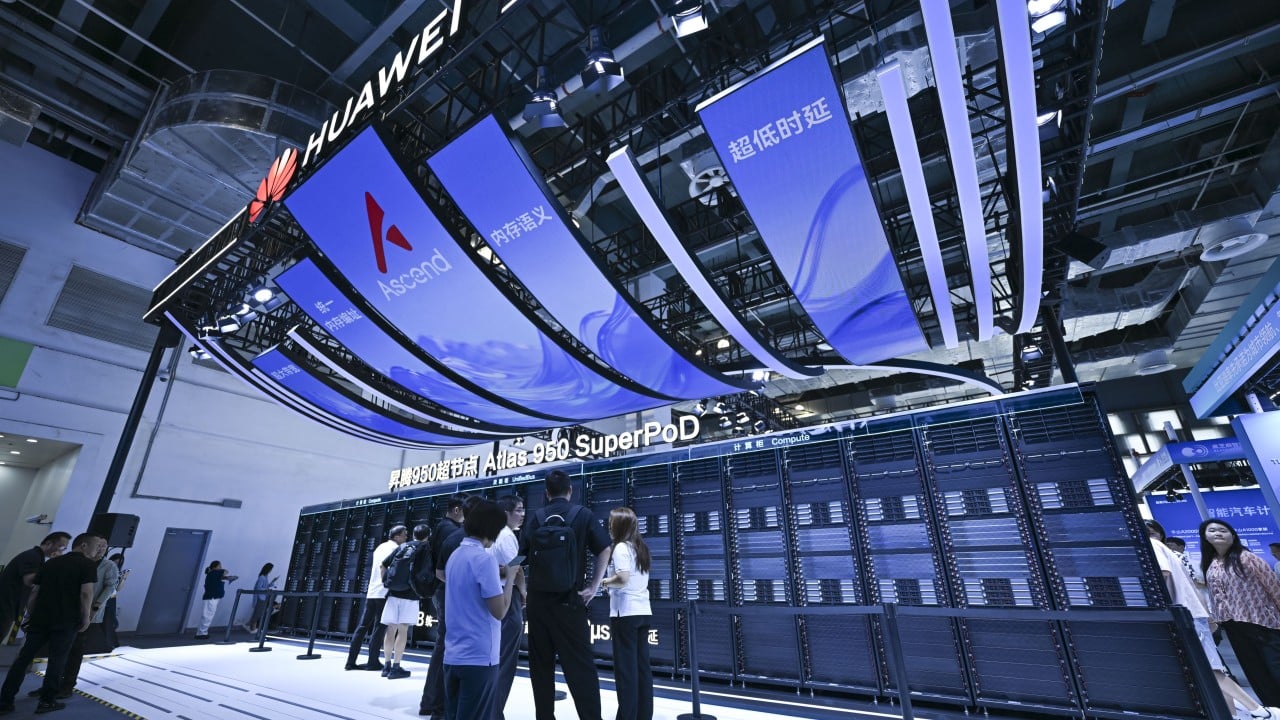
Zheng Yongnian, dean of the school of public policy at the Chinese University of Hong Kong (Shenzhen), asserts that China's capacity to forge its own technological trajectory amid persistent US export limitations could prove pivotal in the ongoing AI competition between the two nations. In his preface to The Rise of Atlas, Zheng highlights the significance of Huawei's Atlas 950 SuperPoD computing system, showcasing its status as the industry's largest AI supernode.
This system's capacity to link over 1,000 processors demonstrates China's strategic response to external pressures, according to Zheng. He argues that true technological autonomy transcends the mere possession of chips; it involves the ability to shape technological pathways. Zheng situates this development within a broader strategic context, noting a shift from economic-driven innovation to security-driven competition.
He emphasizes that technology now serves as a medium for exerting national authority, regulating order, and governing. The challenge for China lies not only in achieving breakthroughs under pressure but also in sustaining them by constructing a robust "technological survival structure." Zheng identifies three core components: mastery over foundational hardware like chips and computing infrastructure, the ability to orchestrate developer ecosystems and applications, and the industrial capability to translate technological prowess into universally accepted standards and governance rules.
Without these elements, China's independent innovation might fracture. The US has progressively tightened its restrictions on Chinese access to technology, with the Commerce Department imposing stringent export controls on advanced semiconductors, AI chips, and manufacturing equipment, which have since been expanded to encompass additional categories.
Zheng underscores China's unique organisational model, characterized by "embedded state capacity," where enterprises operate as both market participants and integral nodes in a national technology system. This approach, grounded in system-level capability and industrial chain integrity, contrasts with Silicon Valley's market-led strategy and Europe's emphasis on regulatory frameworks.
While acknowledging the strengths of this model in innovation and addressing clearly defined problems, Zheng cautions that its highly targeted, state-mobilized nature may limit flexibility and diversity, raising concerns about its adaptability to unforeseen challenges. He concludes by asserting that the trajectory of China's scientific and technological system hinges not solely on achieving breakthroughs but also on its ability to consistently generate them.
Zheng frames the Atlas story as part of a larger contest over defining the rules and pathways of future technology, emphasizing that victory will depend on a nation's consistent ability to organize technology, capital, and institutions.
Written by urgent.news from Reuters Business via SCMP's reporting — not their text. Machine-written — may contain errors; check the original before relying on it.
This story
This is one outlet's version. Read the fullest account.