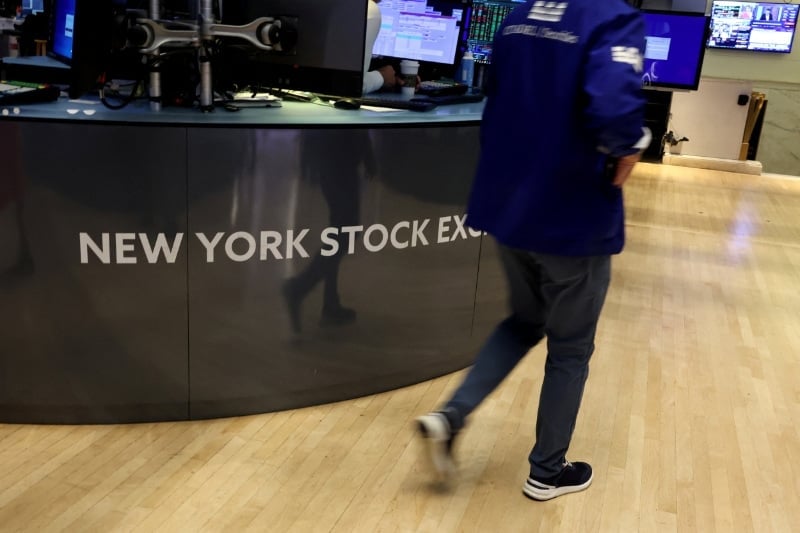
Btig warns stock investors on seasonal weakness ahead in election year

Btig, a research firm, has warned investors about the potential for seasonal weakness in U.S. equities during mid-term election years. Currently, the equal-weight S&P 500 is at an all-time high, yet volatility is at its lowest point for the year. In fact, the equal-weight S&P 500 has gained approximately 16% so far this year, with every sector posting positive performance.
Since 1990, Btig has noted that the equal-weight S&P 500 has typically faced a 7% or greater pullback between August and October during mid-term election years, with the exception of 2006, which saw a 9% decline from May to July. The firm observes that the index has historically peaked around August 18 before sliding into a decline by mid-October.
Currently, the market finds itself in this historically risky period with stretched conditions. The S&P 500 trades roughly 11% above its 200-day moving average, which is a concerning sign. Furthermore, the 2026 year has not yet witnessed a single 80% downside volume day on the New York Stock Exchange since last October, a stark contrast to the average year that sees 21 such days and no year has ever had fewer than five.
Btig also highlighted that long-end U.S. treasury yields have reached their highest levels of this cycle, despite the release of dovish data from key economic indicators such as non-farm payrolls, consumer price index, producer price index, and retail sales. Despite the recent March decline, the equal-weight S&P 500 has not experienced more than a 2.25% pullback.
To mitigate potential risks, Btig recommends that investors either reduce their overall risk exposure or consider hedging their broad-based equity exposure. Historically, the healthcare sector has performed best during the August-October period of mid-term election years, while the semiconductor index PHLX Semiconductor Sector (INDEXNASDAQ:SOXX) has failed to maintain gains above its 50-day moving average.
Written by urgent.news from Investing.com's reporting — not their text. Machine-written — may contain errors; check the original before relying on it.