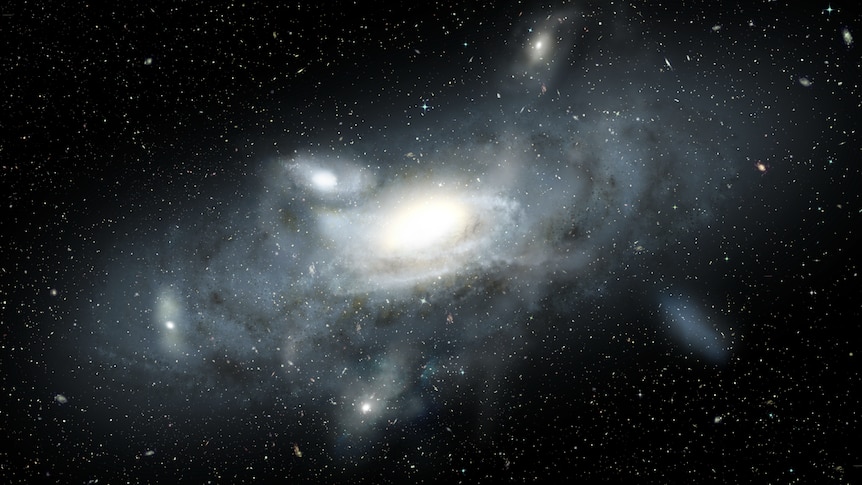
Astronomers may have discovered a new kind of object called a black hole star
"Our picture of this object is evolving very rapidly," says lead author Rohan Naidu, a NASA Hubble Fellow and Pappalardo Fellow at MIT's Kavli Institute for Astrophysics and Space Research. "We think there is a central black hole that is 100,000 times as massive as the Sun. And around this... Read Entire Article
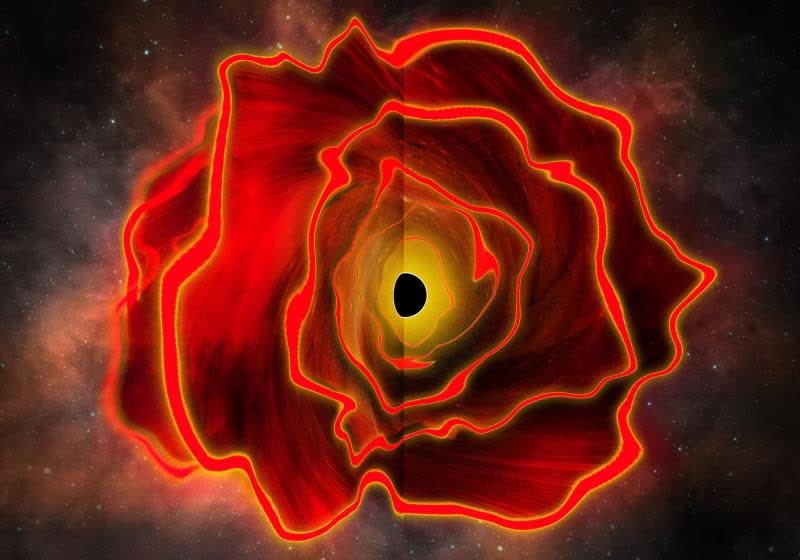
Astronomers may have identified a novel cosmic entity dubbed a "black hole star" using NASA's James Webb Space Telescope. The enigmatic object, detected in a survey called Mirage or Miracle (MoM), appears to be a black hole concealed within a vast gas shell. Roughly the size of our solar system, the object emits more energy than any known star.
Lead author Rohan Naidu, a NASA Hubble Fellow at MIT's Kavli Institute, suggests the object harbors a central black hole roughly 100,000 times the mass of the Sun, surrounded by an extended envelope of gas that seems larger than a star. The unusual properties of this celestial body, including a much stronger Balmer break than observed in typical stars, point to the possibility of a black hole star.
The finding, published in Nature, emerges from the MoM survey, which utilizes the JWST to detect galaxies from approximately 300 million years post the Big Bang. Researchers are now grappling with the mystery of "little red dots" in the early universe, which seem to vanish by the present day. These objects might not be galaxies, but rather objects resembling them in telescope data.
Written by urgent.news from TechSpot's reporting — not their text. Machine-written — may contain errors; check the original before relying on it.