African scientists to put radio telescope on Moon
Rhodes University researchers help lead Africa2Moon, a mission that aims to deploy Africa’s first radio telescope on the Moon in 2029.
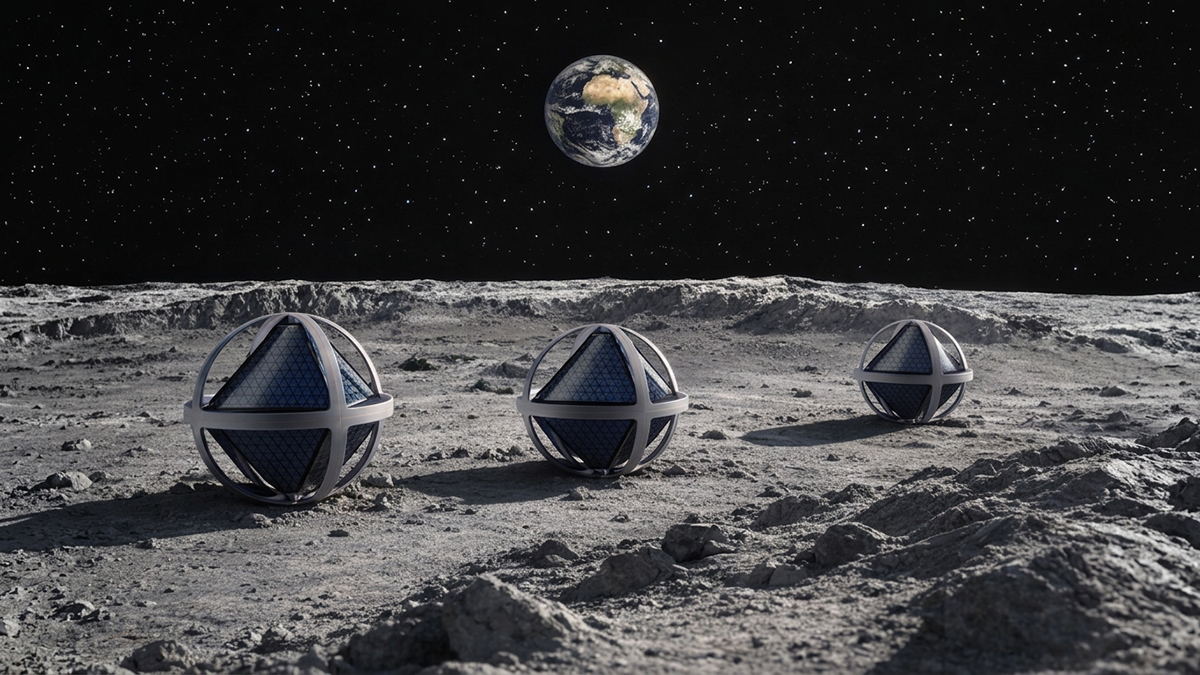
African scientists and engineers are gearing up to install a radio telescope array on the Moon's surface. Known as Africa2Moon, this mission represents the first all-African space exploration project. Dr. Oleg Smirnov, a distinguished professor at Rhodes University and the principal investigator for radio astronomy, leads the initiative. The Africa2Moon mission, slated for launch aboard China's Chang'e-8 mission in 2029, aims to become the first radio interferometer to function on the lunar surface.
Dr. Adriana Marais, lead author and director of the Foundation for Space Development Africa, emphasized that Africa2Moon is more than just a single instrument on the Moon. It serves as proof that African scientists and engineers can conceive and construct ambitious projects together. According to Rhodes University, radio astronomy has transformed our understanding of the cosmos by revealing objects and events invisible to conventional telescopes.
However, one window remains largely unexplored: radio waves at the lowest frequencies, below 20MHz, are blocked by Earth's atmosphere, leaving a vast portion of the cosmic radio spectrum inaccessible from the ground.
The Moon presents an opportunity to overcome this limitation. Its nearly absence of atmosphere and, on its far side at night, minimal interference from human-made radio noise and the Sun, make it the most radio-quiet location within reach. By placing a radio telescope there, the mission aims to open up the last unexplored band of the radio sky.
The Africa2Moon mission concept involves a collection of spherical devices called BALLS, which stand for Bounced African Low Lunar Spheres. These spheres, each about 30cm in diameter, weighing less than 4kg, and equipped with their own antennas, electronics, and solar power, will be transported to the Moon. Once deployed, they will roll freely across the lunar surface, collaborating as a unified telescope. Each BALL is designed to function as an independent radio receiver for at least six Earth days.
During this period, the array will observe the Earth, the Sun, the Galaxy, and the lunar surface itself, searching for technosignatures—possible evidence of technology beyond Earth. Rhodes University's Centre for Radio Astronomy Techniques and Technologies has played a crucial role in developing the expertise required for this mission, including their contributions to South Africa's MeerKAT telescope and SKA projects.
The project builds upon a decade of rapid growth in African radio astronomy. The Square Kilometre Array (SKA) and its precursors have positioned the continent as a significant contributor to global space science. Dr. Carla Sharpe Mitchell, the founding director of the Foundation for Space Development Africa and mission director of Africa2Moon, highlighted that Africa2Moon demonstrates what can be achieved through collaboration, empowering African youth to envision and shape a collaborative and resilient future for their continent.
While the three-sphere demonstrator is currently planned for the Chang'e-8 mission, the full Africa2Moon mission envisions placing 55 antennas on the Moon's far side, one for each African nation. Beyond scientific advancements, the mission serves as a training ground, engaging students, universities, research institutions, and engineering companies across the continent. It aims to build expertise in radio engineering, systems integration, and space mission design.
Written by urgent.news from ITWeb's reporting — not their text. Machine-written — may contain errors; check the original before relying on it.