Africa: From Capital to Prosperity
[allAfrica] Africa has no shortage of industrial ambition. What it lacks is the financial machinery to turn ambition into factories.
Africa possesses a strong industrial ambition; however, it is lacking the financial tools to transform this ambition into actual factories. For decades, Africa's economic challenges have been portrayed as a result of a lack of infrastructure, industrial capacity, skills, technology, and foreign investment. Yet, there is an alternative perspective to consider.
Africa does not face a shortage of plans for industrialization. Nor does it lack individuals who are eager to build factories, governments that are keen to attract factories, or consumers ready to purchase what they produce. Instead, the continent's primary lack, in many regions, is an intangible yet crucial element: a financial system capable of financing the necessary industrialization process over a substantial period and with the required level of investment.
While constructing a factory is costly before it becomes productive, other elements like railways and power plants also require considerable capital expenditure before they can generate sufficient returns to justify their construction. Ports, cold-storage facilities, textile mills, and processing plants share a similar characteristic: they necessitate substantial financial investment upfront, with returns that may not materialize for many years.
This makes industrialization fundamentally a matter of finance. This notion helps explain one of Africa's enduring economic contradictions: the continent exports commodities such as cotton, cocoa, and minerals to the rest of the world, often with minimal processing. Simultaneously, it imports numerous high-value products derived from these commodities.
A frequent explanation for this phenomenon is that Africa needs to progress up global value chains. While this statement holds true, moving up a value chain is not merely a matter of policy aspiration. It necessitates someone to finance the journey upwards. Converting cotton into garments involves more than merely increasing cotton production.
It requires financing spinning mills, weaving facilities, machinery, electricity, roads, logistics, skills, and working capital. The same principle applies to cocoa, copper, lithium, agricultural products, and almost every other commodity for which African governments discuss "local beneficiation." In large parts of Africa, the financial framework necessary for industrialization remains absent.
Consequently, this is why discussions about capital availability can be misleading. The crucial question is not solely about whether money exists; it is about whether the money is available in the appropriate form. Industrial economies depend on various layers of capital: entrepreneurs willing to assume risks, commercial banks capable of financing companies, development institutions prepared to tolerate longer-term uncertainties, institutional investors able to deploy pension and insurance assets, and capital markets deep enough to link domestic projects with global savings.
When these layers are thin, expensive, or disconnected, seemingly viable industrial projects can become unprofitable. A loan that must be repaid too quickly can be as ineffective for an industrial project as having no loan at all. Furthermore, capital priced for short-term commercial risk may struggle to finance infrastructure whose returns accrue over decades.
Moreover, funds that remain idle in pension schemes or banking systems offer little assistance for industrialization if there is no viable mechanism to convert those savings into factories, logistical networks, and energy systems. Africa's issue, therefore, may stem from a deficiency in the financial infrastructure rather than a shortage of capital.
This distinction is significant because it alters the policy focus. Instead of inquiring solely, "How can we attract more investment?" governments and financial institutions must also consider: What kind of financial system would render productive investment feasible? This inquiry is beginning to find answers through various experiments taking place across Africa.
One notable example is Afreximbank. This institution has evolved beyond its traditional trade finance functions by expanding into project finance, guarantees, export development, industrial infrastructure, and market access. The significance of Afreximbank lies not in any single transaction but in the underlying model: finance organized around the creation of productive capacity rather than individual deals.
In 2024, Afreximbank facilitated more than 50 transactions resulting in approximately $1.6 billion in manufactured exports. Additionally, the bank has backed industrial parks, special economic zones, agro-processing projects, and trade-enabling infrastructure. This approach is advantageous because a factory rarely operates in isolation.
It requires reliable power, transportation access, telecommunications, customs infrastructure, suppliers, warehousing, and market access. Financing the factory alone without addressing the surrounding ecosystem would render the factory merely an expensive building with idle machinery. This insight has led to a shift in development finance from standalone projects to industrial ecosystems.
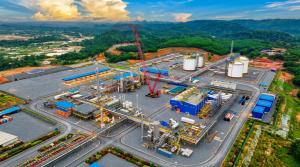
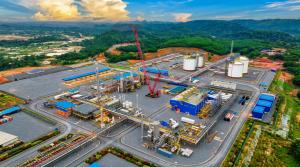
Afreximbank's collaboration with ARISE Integrated Industrial Platforms exemplifies this new approach. In 2025, the bank secured a $450 million facility, as part of a larger $800 million financing structure, to support industrial parks and special economic zones in multiple countries. Industrial parks enhance the economics of manufacturing since companies no longer need to build their infrastructure from scratch.
They can share power, water, logistics, and other services. Suppliers can also gather around producers, and training can be more easily organized. Transportation networks benefit entire clusters instead of single firms. As a result, an industrial zone on a map becomes not just a piece of financial infrastructure but also a site where productivity can be maximized and a foundation for long-term economic growth.
Cotton is a commodity that illustrates this problem well. Africa produces significant quantities of cotton. However, most of the value added after the cotton leaves the farm—such as spinning, weaving, dyeing, and garment manufacturing—occurs in other countries. This disparity highlights the need for financial mechanisms that support the entire value chain, not just the extraction of raw materials.
In conclusion, Africa's industrialization is not merely an aspiration to move up global value chains. It requires a robust financial system capable of financing the transition from raw material exports to value-added products. The emergence of institutions like Afreximbank and similar initiatives across the continent offers promising pathways towards achieving this goal.
Written by urgent.news from AllAfrica's reporting — not their text. Machine-written — may contain errors; check the original before relying on it.