1,700-year-old church discovered under a lake in Turkey may be the location of the First Council of Nicaea — but other experts disagree
A small church discovered beneath a larger one may have hosted one of the most important meetings in the history of Christianity, but some scholars not involved with the excavation disagree.
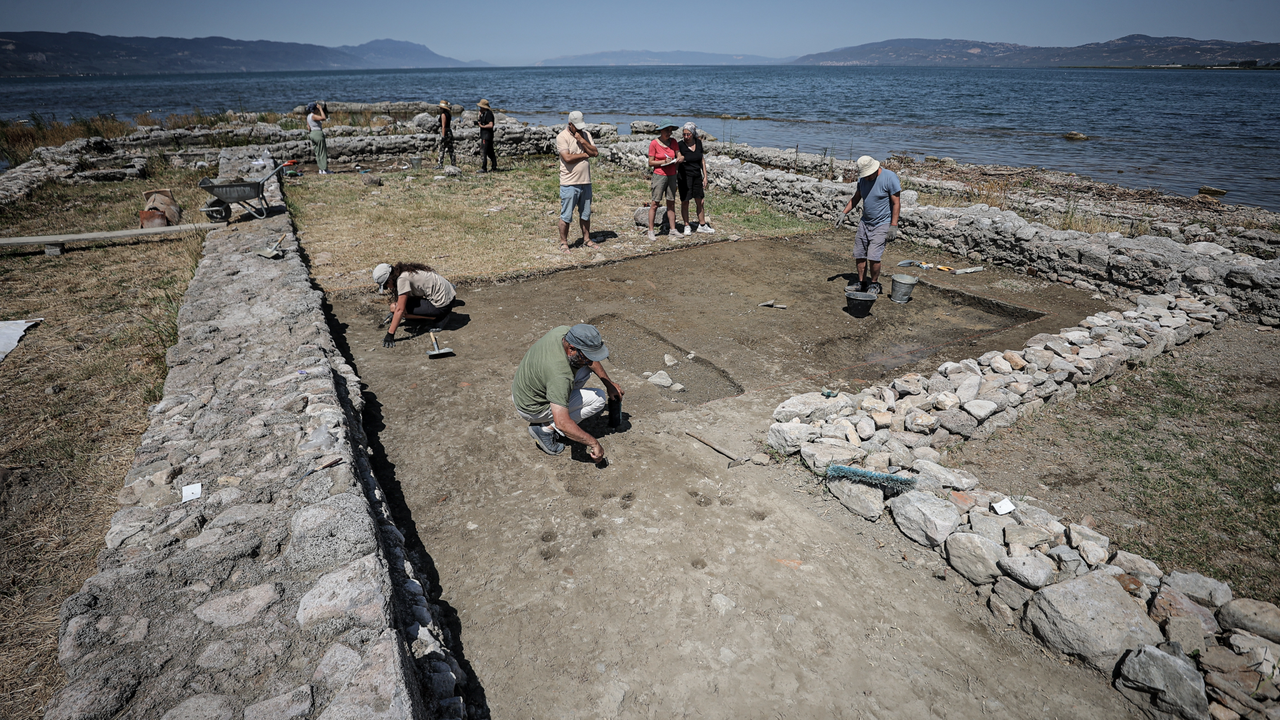
Archaeologists claim to have found the site where the First Council of Nicaea, a pivotal gathering of Christian bishops in A.D. 325, likely took place. However, some experts remain skeptical about this interpretation. The ancient Greek city of Nicaea, now part of modern-day Turkey near Lake İznik (formerly known as Lake Nicaea), hosted the council, which aimed to resolve theological disputes and established the Nicene Creed, a key Christian belief statement.
Emperor Constantine I, who legalized Christianity in A.D. 325, is believed to have played a significant role in organizing the council.
Excavations led by Mustafa Şahin, an archaeology professor at Bursa Uludağ University, have revealed a smaller church beneath a larger basilica since 2015. The smaller church's pavement floor, approximately a foot below the basilica, suggests it predates the larger structure. Şahin posits that the smaller church may be the Church of Neophytos, a historic Christian figure who was martyred in 303, while the basilica might be the Church of Holy Fathers, commemorating the council.
However, some scholars argue that the bishops may not have convened in this church. Classics professor Richard Kim of the University of Illinois Chicago points out that Eusebius of Caesarea noted the opening session occurred in the imperial palace, and the council lasted for three months. Therefore, the church might not have been a primary meeting place.
Similarly, historian David Gwynn of Royal Holloway, University of London, emphasizes that while the evidence points to a potential connection between the church and the council, one should not overstate the significance of the physical structure beyond offering a glimpse into the council's context. Excavations continue to shed light on this historically significant event.
Written by urgent.news from Live Science's reporting — not their text. Machine-written — may contain errors; check the original before relying on it.