Why Gangtok is India’s most walkable city
What is it like to grow up in a city built for feet, not wheels? Prajwal Parajuly returns to Gangtok, where school, errands and even social visits are made on foot, and reflects on what India’s increasingly car-choked cities could learn from its quiet, uphill rhythms
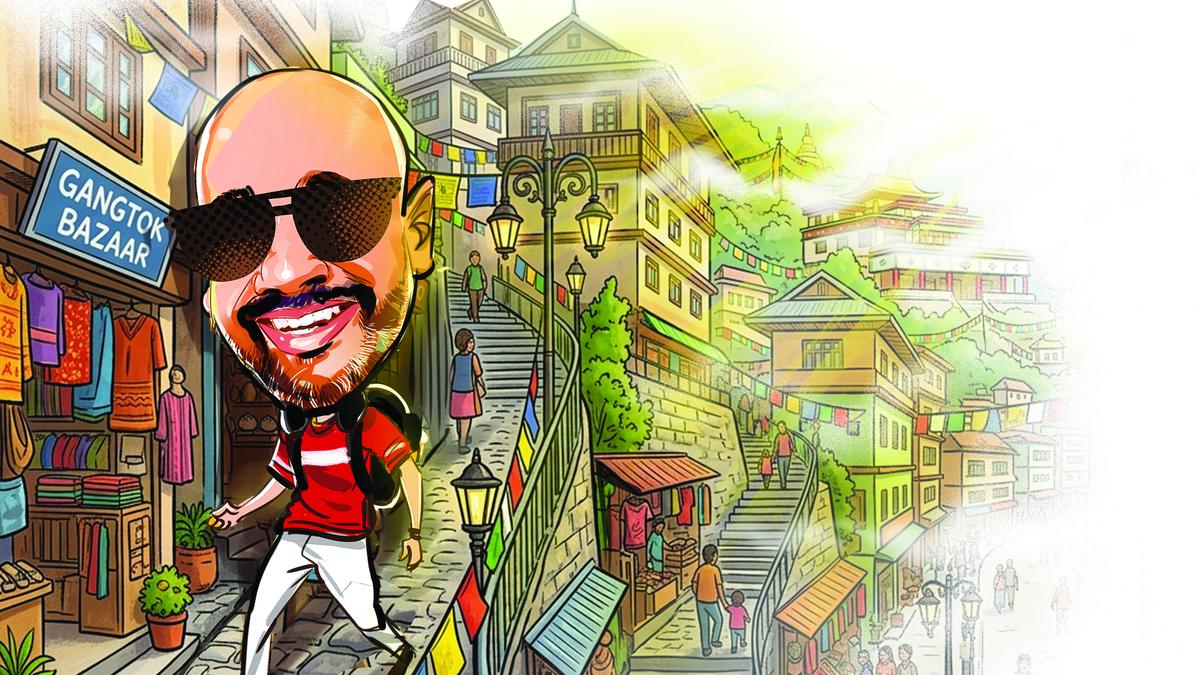
Gangtok, my hometown nestled in the Himalayan foothills, was a walker's city since we were growing up. We traversed everywhere on foot, from uphill journeys to school and home, down from school to home, and up the steep hill from Paljor Stadium to the town. Even Mr. CSP Singh's Physics tuition classes began at dawn with uphill walks. Walking four to five kilometers a day was the norm, a way of life in this hilltop town.
In 2009, our main square, the MG Marg, was pedestrianized, becoming one of the few straight roads in town. It was the hub for shopping, dining, and strolling. Architect Prashant Pradhan, who played a significant role in making MG Marg car-free, recalls the initial resistance from shop owners who feared losing business due to the lack of vehicular traffic.
However, the transformation has been a success, with everyone – from residents to tourists – praising the change. The city's cobbled paths, cleanliness, and the novelty of a vehicle-free center have attracted middle-class domestic travelers, while influencers have lauded the civic sense, noting the absence of spitting, litter, overcrowding, and public defecation.
Gangtok stands out among Indian cities for its pedestrian-friendliness, offering not just parks and gardens but a network of stairs, flyovers, and footpaths that enable errands to be run on foot. Despite the city's well-equipped foot transportation system, it is not immune to the trend of preferring cars due to a perceived lack of accessibility by foot.
The city's residents take their pedestrian-centricity for granted, even when encountering no-walk zones in other South Asian cities.
Written by urgent.news from The Hindu's reporting — not their text. Machine-written — may contain errors; check the original before relying on it.