Why cash refuses to die in Pakistan
Agencies IslamabadIf you took a trip to a livestock market this past Eidul Azha, you could see Pakistan’s cash paradox performing itself live.On one side, a bank kiosk with a QR co...
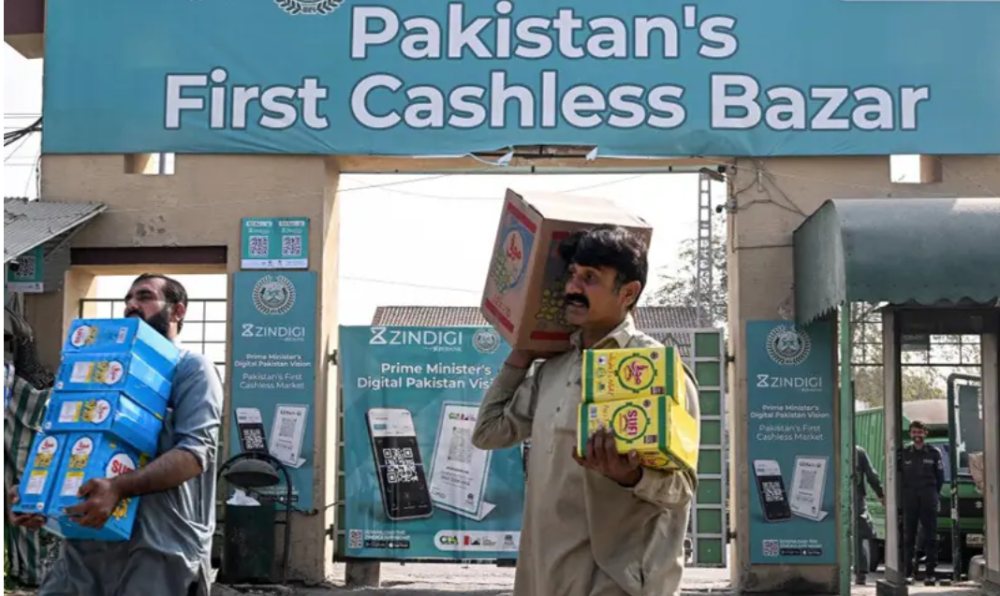
In Pakistan, there is a paradox regarding cash usage that remains largely unexplained. While the amount of cash in circulation has skyrocketed, with the country's currency in circulation (CIC) reaching an all-time high of approximately Rs 11.94 trillion in fiscal year 2026, this growth has outpaced digital transactions. Bank kiosks still handle cash payments, with consumers counting out hundreds of thousands of rupees for everyday expenses like rent, wages, and wedding costs. This article aims to unravel the complex dynamics behind this seemingly contradictory trend.
CIC grew at an alarming rate of 94 percent between fiscal years 2020 and 2026, from Rs 6.14 trillion to Rs 11.94 trillion. Meanwhile, digital banking transactions increased by 47 times over that same period, and the number of active digital merchants quadrupled. In addition, the government launched a Cashless Pakistan Initiative, which achieved tangible results. However, despite these advancements, cash continues to play a significant role in daily transactions.
The paradox lies in the fact that while most of Pakistan's cash is being used for traditional transactions, the majority of these cash withdrawals are not being deposited back into the formal banking system. ATM withdrawals in Pakistan have nearly doubled, with 1.055 billion transactions in fiscal year 2025 alone, more than double the number from fiscal year 2020.
Branch cash withdrawals have also increased significantly, rising 148 percent to Rs 11.08 trillion in fiscal year 2025. However, deposit transactions have only grown by 13.7 percent over the same period, resulting in a shrinking proportion of cash entering the formal system.
The disparity between the flow of cash out of the banking system and its return is evident. While digital transactions have surged, cash is predominantly being dispensed from ATMs and bank branches, with minimal cash being reinserted into the system. This "cash-out loop" is a primary factor behind the paradox, as the majority of the population still relies on cash for everyday expenses. The average cash withdrawal has more than doubled, indicating a growing demand for cash payments.
Despite these trends, there is a silver lining. The real value of cash in circulation has declined due to inflation, with a 12.5 percent decrease in purchasing power from FY2020 to FY2026. However, this decline is not as significant as it may seem, as the cash intensity as a share of GDP has also declined, suggesting that the overall economic impact of cash is still substantial.
In conclusion, while the growth of cash in circulation may appear to be at odds with the increasing adoption of digital transactions, the underlying issue lies in the lack of a corresponding increase in cash deposits into the formal system. Until this gap is addressed, the paradox of cash in Pakistan will persist.
Written by urgent.news from Qatar Tribune Business's reporting — not their text. Machine-written — may contain errors; check the original before relying on it.