US-China tech war is coming for AI’s plumbing
The US Federal Communications Commission (FCC) is reportedly considering a ban on Chinese optical transceivers, signalling that the US-China tech war is expanding beyond the focus on semiconductor chips to shadow even the smallest link in the chain of essential artificial intelligence (AI) hardware. Optical transceivers are small devices that use fibre optic technology to send and receive data as…
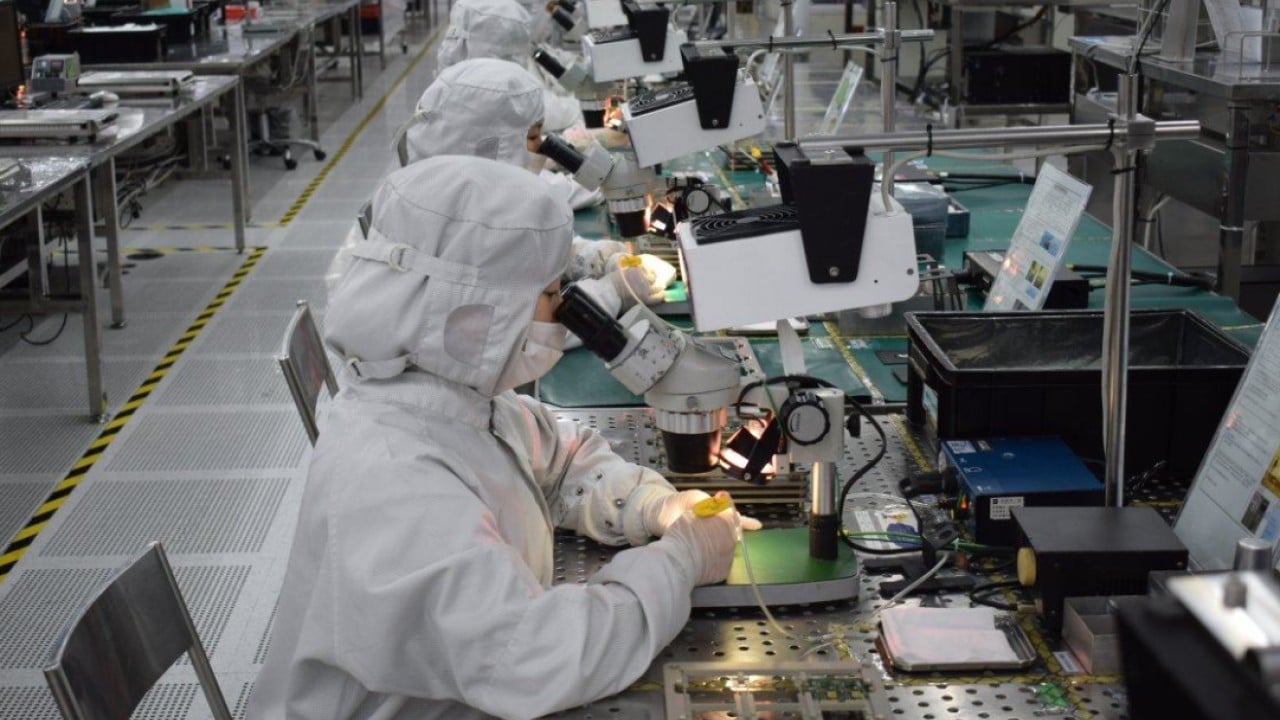
The US Federal Communications Commission (FCC) is reportedly contemplating a ban on Chinese optical transceivers, signaling that the US-China tech conflict is spreading beyond semiconductors to affect even the most fundamental components of artificial intelligence (AI) hardware. Optical transceivers, small devices utilizing fiber optic technology, are crucial in transmitting and receiving data as light, with their primary application being the rapid transfer of vast amounts of information within large AI data centers and cloud networks.
Washington's concerns regarding the utilization of Chinese optical modules are rooted in three primary factors: data theft, service disruption, and long-term dependency. Due to their physical integration into the AI ecosystem, these transceivers could potentially be exploited to infiltrate malware. The Trump administration is employing a preventive approach to avert a repeat of the Huawei situation, preferring to eradicate any Chinese elements from their AI infrastructure before incurring significant costs and risks.
However, the enormous demand from US data centers and the limitations of alternative suppliers raise doubts about whether it might already be too late. The abrupt ban on Chinese optical transceivers might inadvertently create complications for the US, as it would disrupt data center and cloud network operations in the short term due to the absence of suitable alternatives.
While US-based suppliers like Coherent and Lumentum manufacture comparable-quality optical modules, they are unlikely to match the scale of Chinese producers. Optical modules are highly sensitive to temperature and dirt, necessitating frequent repairs or replacements. Their compatibility with existing hardware infrastructure also poses challenges for a sudden substitution of these components.
Consequently, major US hyperscalers, such as Amazon and Microsoft, could face supply disruptions of optical modules. Additionally, the interconnected nature of supply chains makes US-China technological decoupling even more intricate. On the one hand, the US hosts nearly half of the world's data centers, accounting for approximately 36% of the global optical transceiver market, which could potentially increase to 45% by 2035.
On the other hand, China is projected to command about 64% of global optical transceiver demand. Although it is relatively easier to develop optical transceivers in China due to its access to the complete industrial chain and abundant labor, these final products also rely on components from Western firms such as Broadcom, Marvell, Lumentum, and Mitsubishi.
The collapse of shares of major Chinese firms like Zhongji Innolight and Eoptolink Technology in response to news about the proposed FCC ban contrasts with the rise in shares of US-based firms such as Coherent, Lumentum, Marvell, and others. Even companies not directly related to the US, like Malaysian optical transceiver manufacturers, stand to benefit from the speculation surrounding the proposed ban.
The potential repercussions of such a policy, driven by techno-economic statecraft, are expected to transcend the primary stakeholders. In response to reports of the FCC action, the Chinese embassy in Washington denounced the move, asserting that "China will take all necessary measures in response to any action that causes material harm to its interests."
Following recent US sanctions, China's Ministry of Commerce announced a series of sanctions targeting US entities and tightened export restrictions, including shipments of drones and related technology to the US, placing several US entities on its countermeasures list, and initiating a national security investigation into imported printing and office copying equipment.
This suggests that the implications of any FCC ban may extend beyond the optical transceiver market, affecting other strategic assets. The US-China tech war, initially focused on semiconductors, is now expanding to encompass the physical hardware that connects those chips. While the US might not implement this ban, its efforts to decouple from China amid the AI boom are likely to prove costly for all parties involved.
Written by urgent.news from South China Morning Post's reporting — not their text. Machine-written — may contain errors; check the original before relying on it.