UPSC Ethics Simplified: Can development come at the cost of safety?
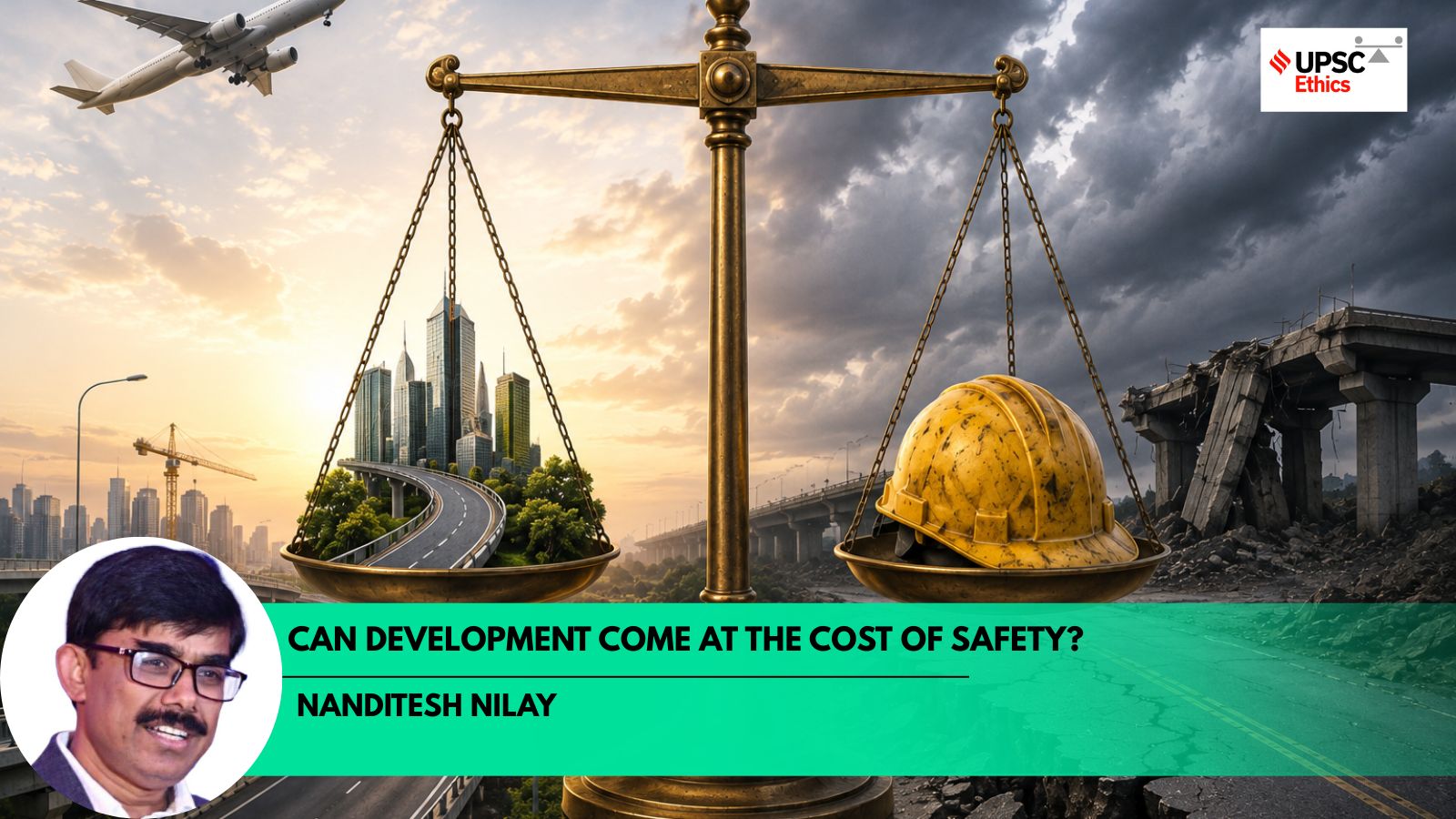
In a world marked by economic crises and conflicts, the resilience of travel modes and infrastructure like bridges and roads has become a matter of deep concern. As the United States' National Highways witness a surge in complaints about their quality, an ethicist examines the dilemma between development and safety. The question remains - can development ever come at the cost of safety?
Drawing inspiration from the famous poet Robert Frost, the article emphasizes that every journey is a series of choices, and these choices can make all the difference. However, in today's world, the very infrastructure meant to facilitate progress is crumbling, making the journey perilous. The cost of such crumbling infrastructure is borne by every citizen through taxes, public expenditure, and the loss of lives, livelihoods, and happiness.
The article draws a parallel between the safety of air travel and the uncertainty it brings. Even if individuals take precautions like vaccination, they are still exposed to risks. Similarly, the safety of passengers on highways and bridges should not be taken lightly. The article questions the ethics of compromising safety for the sake of development and efficiency.
Applying Immanuel Kant's moral philosophy, the article argues that human beings must always be treated as ends in themselves, not mere means to an end. When development collides with safety, the ethical obligation lies in prioritizing human life and dignity. This raises fundamental questions: when development conflicts with safety, who should an ethical institution choose?
If a company chooses profit over safety, is it justifying the compromising of human life? If an agency ignores warnings for a deadline, does it disregard the value of human life?
The article emphasizes the importance of the principle of precaution. Institutions should anticipate risks and prevent avoidable harm rather than waiting for disasters to occur. Safety should not be reduced to mere compliance but should be an integral part of a safety culture, where every individual understands the value of their own life and the lives of others.
The "third age" of safety, as proposed by Hale and Hovden, moves beyond technical and organizational measures to recognize safety culture and human behavior. In this era of rapid development, safety must be elevated to the status of a paramount value.
Written by urgent.news from The Indian Express's reporting — not their text. Machine-written — may contain errors; check the original before relying on it.