Solar-powered floating conveyor could handle 125,000 oysters a year in Maine
Engineers in Maine are developing an innovative solar-powered floating system tailored for oyster farming. This unique platform incorporates a vertical conveyor that efficiently transports oyster baskets from underwater to above, aiming to enhance production while significantly lessening the labor demands on farmers. Additionally, it aids in shaping the oysters and cleaning their shells from…
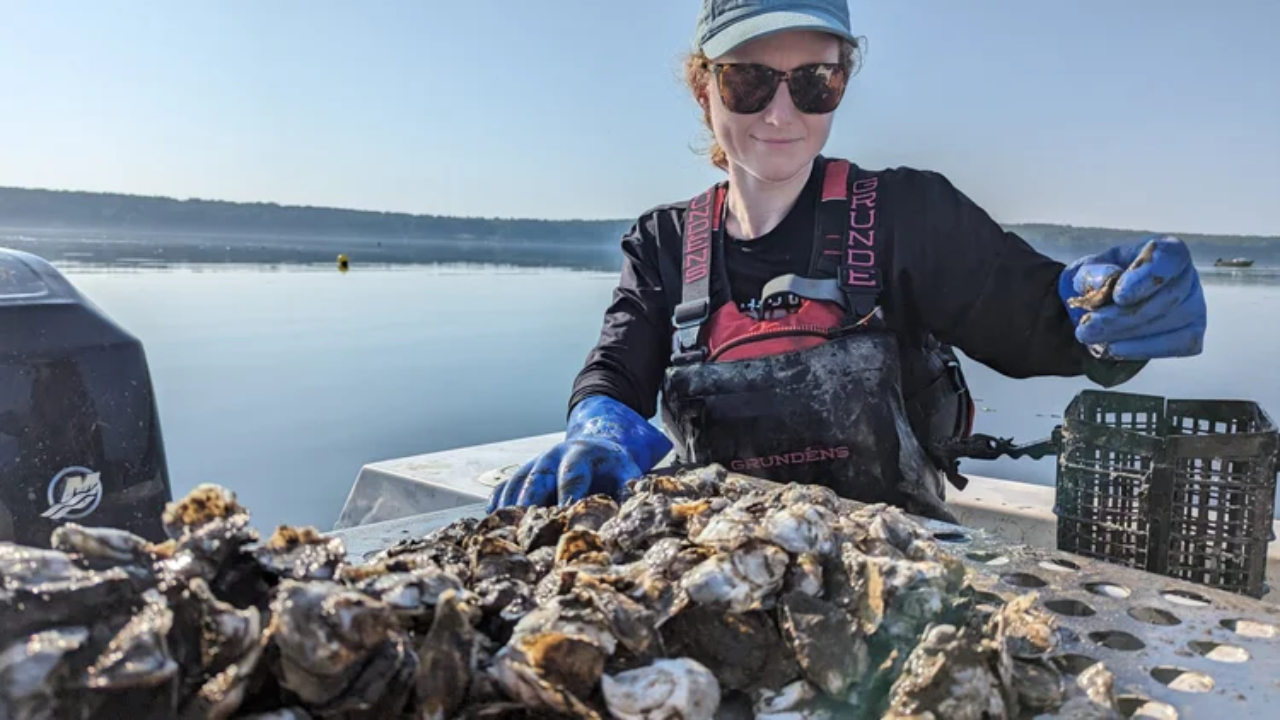
Engineers and aquaculture experts in mid-coast Maine are testing a solar-powered floating system that could transform oyster farming. The 3D-COAST (3-Dimensional Cultivation of Oysters Automated with Solar Tumbling) platform is capable of producing up to 125,000 oysters annually from a single 8-by-25-foot raft. Led by Luke Saindon of The World's Your Oyster Co., the system utilizes a vertical conveyor to move oyster baskets between coastal waters and the open air, reducing the physical labor required in traditional farming methods.
Unlike traditional methods that employ floating bags or place oysters on the seafloor, the 3D-COAST system operates in about 12 feet of water. Oyster baskets are attached to a vertical conveyor loop, powered by two solar panels, which completes a full cycle every six hours. The conveyor gently tumbles the oysters underwater, promoting the development of deeper and more rounded shells, which command higher prices.
Simultaneously, the oysters are exposed to sunlight and air, helping to remove unwanted organisms like barnacles and algae, thus improving water flow and health.
The system's design aims to cut down on manual work and operational costs. Field testing of the prototype is ongoing throughout the 2026 growing season in Maine's mid-coast region, with final data on reliability, labor savings, and overall efficiency expected by early 2027. Supported by various research organizations, including FocusMaine, the Maine Technology Institute, and the University of Maine's Darling Marine Center, the 3D-COAST system promises to increase oyster production in a smaller footprint, potentially reducing competition with commercial fishermen and recreational boaters, while also minimizing visual impact on coastal landscapes.
Written by urgent.news from Times of India's reporting — not their text. Machine-written — may contain errors; check the original before relying on it.