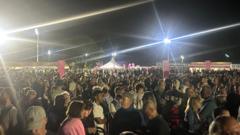
중국 ‘남색경제’ 확산…SNS서 20억회 재생된 ‘탄춘펑’ 열풍
The "manly economy" (男色经济) is gaining attention in China as a new form of consumption, combining men's physical attractiveness and appeal with intimate interactions. This phenomenon is fueled by expanding women's purchasing power and the spread of "emotional consumption." A representative case is the 'Chunfeng' performance by the 'Guangguo Theater', featuring 16 male dancers.
The show, staged last December 4th at the Dongfang Art Center in Shanghai, has been widely viewed on Chinese video platforms, with over 207 million views on the Chinese TikTok platform TikTok as of 16th. Plans are in place for around 600 performances this year, with ticket prices reaching up to 880 yuan (approximately 18,000 won), leading to rapid sellouts.
The popularity of 'Chunfeng' has drawn attention to the broader "manly economy" trend. This growing industry offers a controlled and safe form of intimacy, interpreting it as a balance between men's physical appeal and safety. The rise of the "manly economy" is also linked to the increasing economic and purchasing power of women.
As women become more vocal about their preferences, a market for men's appearance and services is emerging. This trend has been dubbed the "female economy" (她经济·女性经济). Shanghai University Professor Shaoming Li notes that advertising targeting women is shifting from traditional "male gaze" to "female gaze," granting women a sense of agency in expressing their visual and sensual preferences.
However, this does not necessarily signify progress in gender equality, as both industries are targeted by companies. Li suggests that while the rise of manly consumption and the "female economy" may seem revolutionary, it does not equate to a truly equal power structure. The state-run China Daily newspaper recently criticized the phenomenon, noting that it involves organizations and platforms exploiting viewers' emotional responses, particularly minors.
They urge "self-regulation by creators and platforms, as well as strict supervision by cultural authorities" to prevent the spread of potentially inappropriate content.
Written by urgent.news from Hankyoreh's reporting — not their text. Machine-written — may contain errors; check the original before relying on it.