Modi's New India: A State Seeking to Protect, Provide and Win Back Its Youth
Prime Minister Narendra Modi’s Independence Day address from the Red Fort this year was significant not merely for what he said, but for whom he appeared particularly keen to address. The speech retained the familiar themes of nationalism, security, self-reliance and development, but there was a noticeable departure: India’s youth, particularly the younger generation, occupied an unusually…
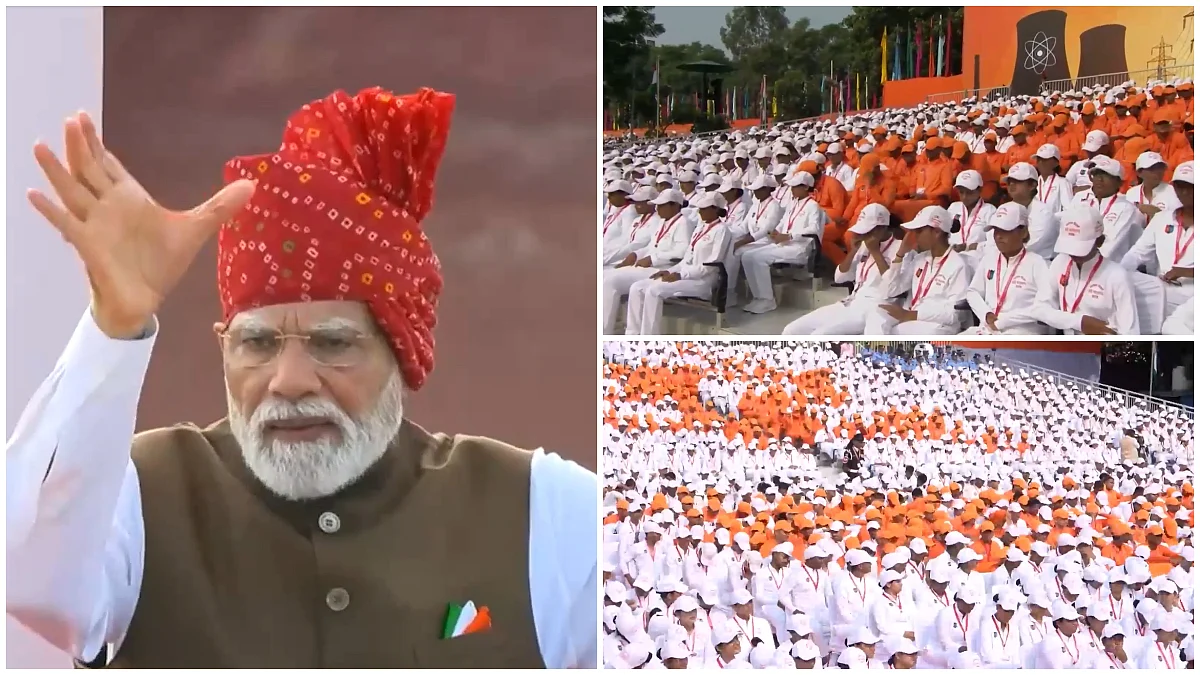
Prime Minister Narendra Modi's Independence Day speech, delivered from the Red Fort, marked a significant shift in his political messaging. While he maintained familiar themes of nationalism, security, self-reliance, and development, he distinctly focused on India's youth and their aspirations. The youth-led "Cockroach Janta Party" agitation and growing concerns over education, coaching costs, and employment highlighted a constituency that required more than traditional political rhetoric.
This focus on youth represented a political recalibration in the Modi narrative. In the past, his speeches emphasized nationalism, infrastructure, welfare, and India's global power status. However, this time, his message was directly aimed at the young generation, who will inherit the country's future. The timing was crucial, as youth protests demonstrated that India's young population is not merely a demographic asset but can also become a political force when educational and employment expectations are unmet.
The speech highlighted several key initiatives aimed at addressing the aspirations of India's youth. These included plans to train one crore young Indians in artificial intelligence, provide free online coaching for competitive exams, and identify sporting talent nationwide. While these announcements showcased the government's commitment to empowering the youth, critics questioned whether these measures would truly create jobs or simply generate more certificates.
Free coaching could alleviate financial burdens, but it alone cannot reform an ailing examination system plagued by doubts about its credibility.
National security continued to be a central theme in Modi's address. He emphasized the importance of defence self-reliance, reducing dependence on foreign suppliers, and advancing indigenous defence systems, drones, counter-drone technology, and advanced weaponry. This emphasis aligned with the Atmanirbhar Bharat (Self-Reliant India) doctrine.
However, transforming mere declarations into genuine self-reliance necessitates sustained research, indigenous design capabilities, private sector involvement, reliable supply chains, and long-term investments. Similarly, the push towards self-reliance in semiconductors, critical minerals, and energy production indicates India's ambition to move from a large consumer to a major producer of strategic technologies.
The challenge lies in converting these ambitious goals into tangible results within a reasonable timeframe.
Modi's speech also reinforced the notion of the State as both protector and provider. He outlined how the government would shield citizens from external and internal vulnerabilities through enhanced security, energy independence, technological advancements, welfare, and development. This approach indicates a more interventionist role for the State, leveraging digital delivery, direct transfers, infrastructure development, and targeted welfare programs.
However, the ultimate question remains: can welfare evolve into empowerment, moving citizens from dependence to dignity through education, skills, enterprise, and employment?
Despite the speech's comprehensive coverage, it had notable gaps. The first gap pertained to the quality of employment. While India needs jobs, the emphasis should be on positions that offer productivity, decent wages, and social mobility, rather than just employment figures. The second gap was the deeper crisis within the education system. Free coaching may offer temporary relief to aspirants, but it does not address the underlying issues that plague the education sector.
Written by urgent.news from Free Press Journal's reporting — not their text. Machine-written — may contain errors; check the original before relying on it.
This story
This is one outlet's version. Read the fullest account.
- Modi's New India: A State Seeking to Protect, Provide and Win Back Its Youth freepressjournal.in