Leaking pipes, broken pumps and tankers define SA’s water crisis
Residents in South Africa express their frustrations over water service failures during public hearings
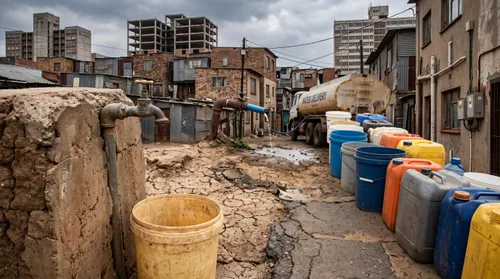
Throughout August 2026, water dominated discussions at conferences and public meetings across South Africa. The issue overshadowed Women’s Month, a time meant for reflection on the 1956 march led by over 20,000 women against oppressive laws. In Mpumalanga Province, residents brought the challenges they faced to a public hearing on the Water Services Amendment Bill, held at Graskop Town Hall on Friday.
Leon Basson, the chairperson of the Portfolio Committee on Water and Sanitation, highlighted that these hearings aim to tackle persistent issues in South Africa’s water sector, such as unreliable services and strained infrastructure.
The committee’s first meeting in Mpumalanga set the stage for a nationwide process of public involvement between August 14 and 16. Residents lamented receiving water only on weekends via tankers, malfunctioning pumps, a shortage of water tankers, and leaking pipes. They also complained about inadequate project implementation and their repeated efforts to contact government officials proving futile.
The Department of Water and Sanitation (DWS) announced plans to amend the National Water Act to hold officials personally liable for service failures and pollution. However, the South African Local Government Association (Salga) warned this move might be too focused on individual accountability, overshadowing systemic problems like historical backlogs, funding shortages, and ageing infrastructure.
On Thursday, the DWS held a consultation on Raw Water Use Charges for the 2027/2028 financial year in Pretoria, emphasizing its importance as a yearly process of setting charges for water usage. Wisane Mavasa, a spokesperson for the Department, explained that this consultation enables water-user sectors to voice their concerns and share their perspectives before the charges are finalized.
Representatives from various sectors presented their views, including Deputy Minister David Mahlobo, who spoke at the 4th International Conference on Water Challenges and Solutions (ICWCS) 2026. He stated that while South Africa has allocated over R156 billion for water and sanitation infrastructure over three years, this alone won’t suffice to address the long-term needs.
Mahlobo called for better project planning, stronger institutions, improved operations, and maintenance, reduced water losses, enhanced water quality, and additional funding sources.
Mahlobo stressed that water reuse can alleviate pressure on freshwater sources, while advanced treatment can support industrial applications and generate economic value through resource recovery. He also emphasized that digital transformation should complement, not replace, institutional transformation. Lastly, Mahlobo stressed the need for climate-resilient, financially sustainable, technologically intelligent, environmentally responsible, and socially just water systems, warning against the misconception that technology imports alone can solve systemic issues.
Written by urgent.news from IOL's reporting — not their text. Machine-written — may contain errors; check the original before relying on it.