In Spain’s Ceuta, hundreds of migrants stage protest and demand asylum
Most of them live in precarious conditions on the beach or city outskirts while awaiting a chance to journey on to continental Europe.
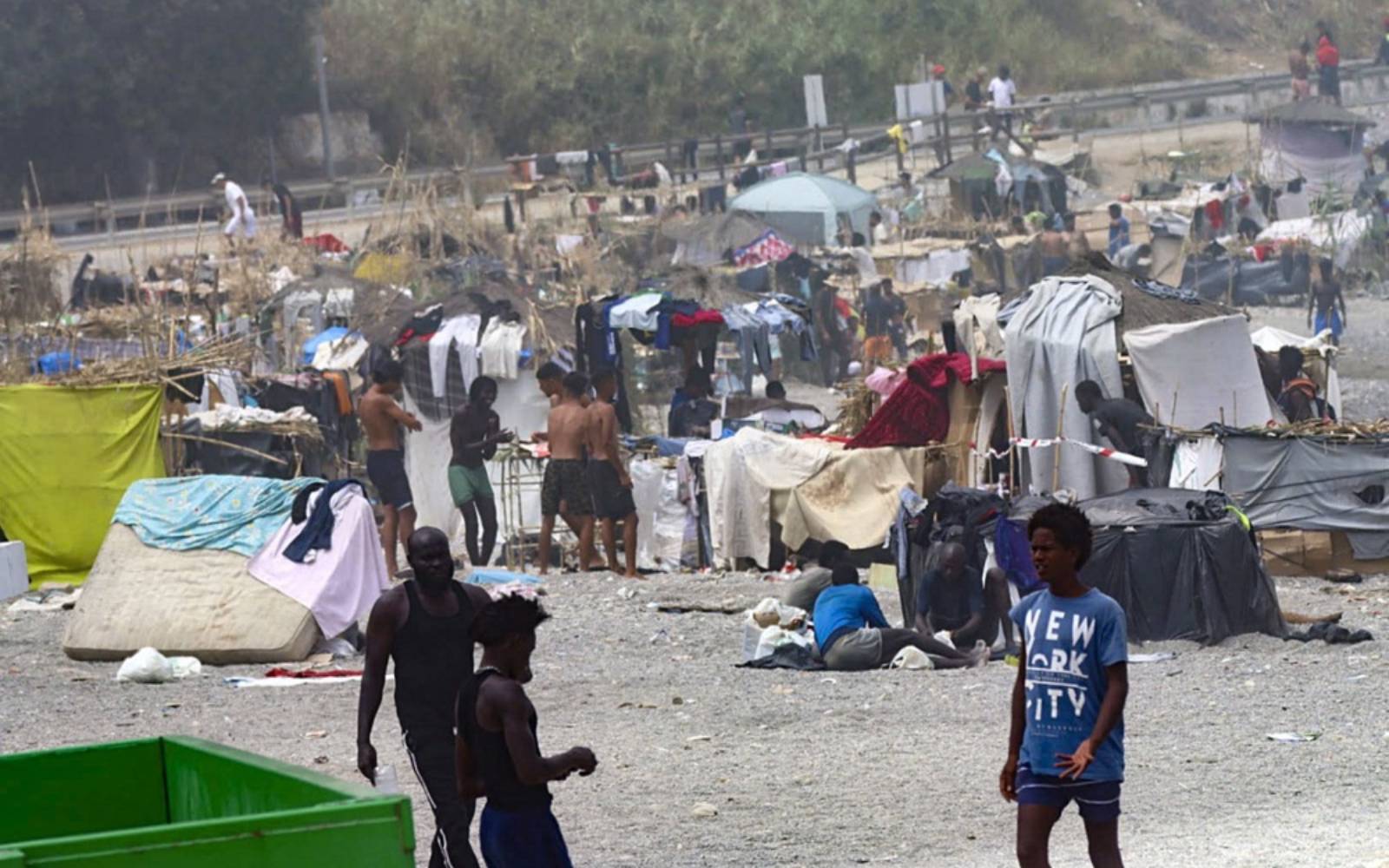
Hundreds of North African migrants in Ceuta, Spain's North African enclave, demonstrated on Trampolin beach on Sunday, demanding asylum instead of being sent back to Morocco. The protest was triggered by the recent mass border crossing that saw over 72,000 people enter the enclave. The majority of migrants, estimated to be between 5,000 and 8,000, have been living in inadequate conditions on the beach or outside the city while awaiting a chance to travel to mainland Europe.
The migrants, many of whom are from Morocco, expressed their dissatisfaction with the current situation. Ayoub Elarroud from Tetouan stated that they were suffering due to cold, bad smells, and police blocking their path to the city center. They held up Spanish flags and banners, chanting slogans like "We don't want to go back to Morocco" and "We are also human." Some migrants also engaged in activities like washing clothes and fishing on the rocky shores.
Health services in Ceuta are under significant pressure, with medical board head Enrique Roviralta reporting exhaustion among healthcare workers. He described diseases like infectious diarrhea and scabies as prevalent, along with rising violence-related injuries. Health Minister Monica Garcia acknowledged that while the services were not "collapsed," they were indeed facing challenges.
She rejected the notion that migration equated to illness, emphasizing that the risk of epidemic outbreaks was moderate for migrants and low for residents.
The majority of interviewed migrants highlighted poor working conditions in Morocco as the primary reason for their journey. Mohammed Ouanzar, a 39-year-old automation specialist, shared that his monthly salary of 3,000 dirham ($324) was insufficient to afford a home or start a family. He expressed a strong desire to remain in Spain. Hicham Chikir, a 25-year-old automation specialist, echoed this sentiment, stating that he would rather die than return to Morocco.
Refugees like Emmanuel, a 30-year-old electrician from Nigeria, and Mohammad Ismail Hossain, a 34-year-old from Bangladesh, shared their motivations for undertaking the perilous journey. Emmanuel's decision was driven by the safety of his children, as they stopped attending school due to kidnapping fears. Hossain recounted his two-year journey across multiple countries, witnessing many companions succumb to thirst in the desert.
Ousmane, a 30-year-old from Senegal, sought asylum due to persecution over his sexual orientation but had yet to receive a response from local NGOs.
Written by urgent.news from Free Malaysia Today's reporting — not their text. Machine-written — may contain errors; check the original before relying on it.
Also reported by 1 other outlet
- In Spain’s Ceuta, hundreds of migrants stage protest and demand asylum freemalaysiatoday.com