How Cambodian worker exodus exposes Thailand’s fragile labour model
After last year’s border conflict with Cambodia, hundreds of thousands of migrant workers left Thailand, exposing how dependent parts of its economy had become on cross-border labour. Thailand has tried to ease the squeeze by holding on to workers already in the country, especially Myanmar nationals. But figures from the International Labour Organization (ILO) and warnings from employer groups…
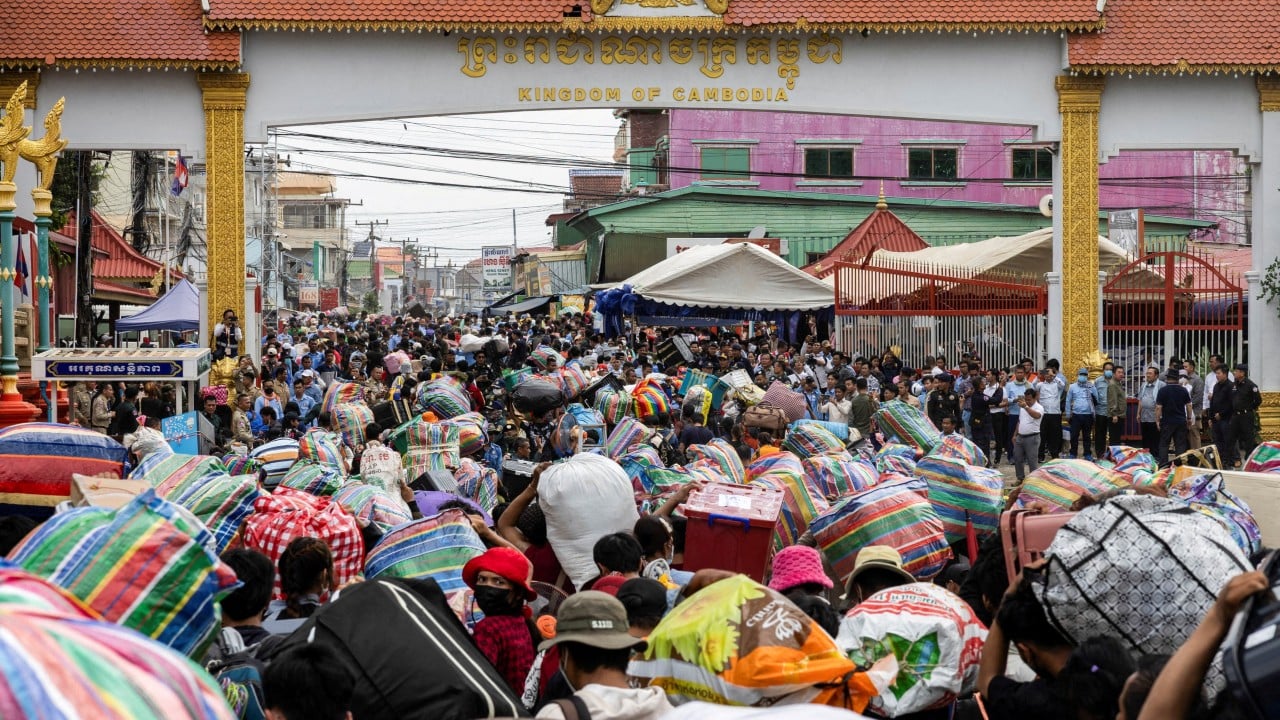
After the 2020 border conflict between Thailand and Cambodia, hundreds of thousands of migrant workers from Cambodia left Thailand, highlighting the country's heavy reliance on cross-border labor. Thailand has attempted to mitigate the labor shortage by retaining the workers already present in the country, particularly Myanmar nationals.
However, according to the International Labour Organization (ILO) and employer groups, the underlying issue stems from a workforce that is based on proximity, familiarity, and low travel costs, which cannot be easily replicated through permit extensions. Legal recruitment of new workers is proving to be an arduous task due to ongoing conflict, Myanmar's exit controls, and rising travel and brokerage expenses.
The precise number of Cambodian workers who left Thailand remains disputed due to different calculation methods. Thailand's Department of Employment initially recorded 495,271 authorized Cambodian workers in March, while a Labour Ministry analysis six months later cited an estimate of 780,000 returns, including undocumented migrants and family members. A report by Reuters stated that the number of Cambodian workers had dropped from 550,000 to 194,000.
Employers are more concerned about the availability of workers rather than the exact number who have left. According to Wiboon Suphakarnpongkul, vice-chairman of the Thai Chamber of Commerce, the drop in Cambodian workers has affected various sectors such as agriculture, manufacturing, construction, tourism, and services. The Thai government has responded by extending work permits for eligible Myanmar, Laotian, and Vietnamese workers until December 2027.
However, this policy emphasizes Thailand's dependence on existing migrant workers and does not offer a complete solution to the labor shortage.
Written by urgent.news from South China Morning Post's reporting — not their text. Machine-written — may contain errors; check the original before relying on it.