From industrial powerhouse to anxious auto town: Opel’s hometown feels the strain
AgenciesAs Germany’s Opel slashes its engineering ranks and partners with China’s Leapmotor, anxiety is running high in Ruesselsheim, the city it has long dominated. Struggling lik...
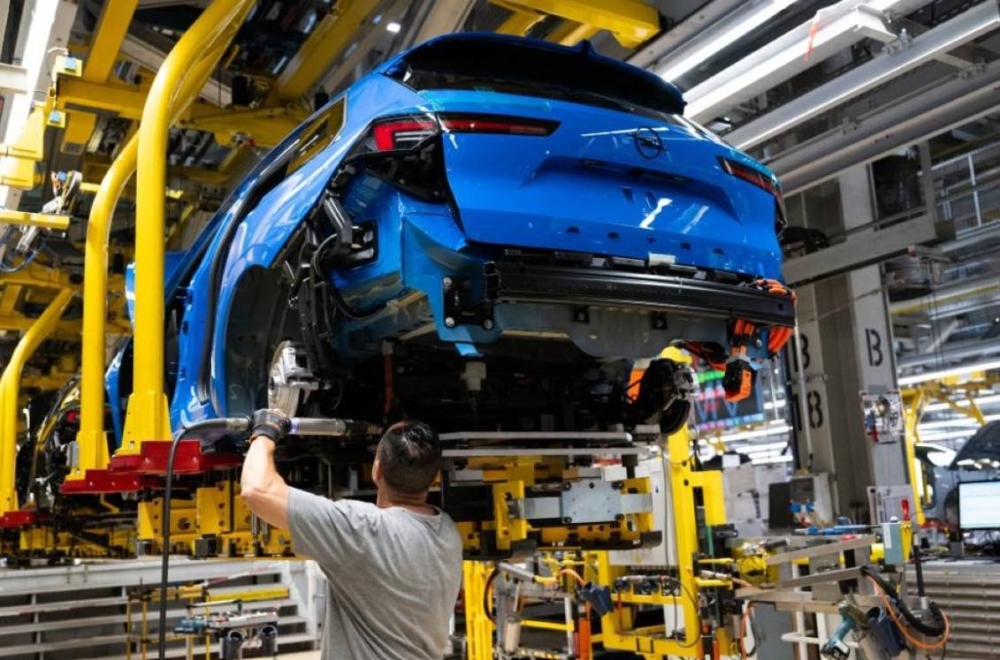
As Germany's Opel, a once-mighty automotive manufacturer, reduces its workforce and partners with Chinese firm Leapmotor, the city of Ruesselsheim is feeling the strain. Part of a larger trend in the European auto industry, Opel is expanding its collaboration with Leapmotor to construct a new SUV, taking advantage of the Chinese company's expertise in electric vehicles and cost-effective production methods.
In exchange, Opel's local engineers will focus on traditional vehicle design elements, such as chassis, seats, lighting, and driver-assistance systems.
Stellantis, Opel's multinational parent company, announced earlier this year that it would cut 650 engineering positions at its Ruesselsheim development center from a total workforce of 1,650. This development has sparked concern among the city's residents, who remember when Opel was the economic powerhouse of Ruesselsheim. Daniel Bremm, a local representative of the IG Metall union, expressed worry over potential technological downgrading, fearing that the engineering center might become just an "adaptation hub" for vehicles designed elsewhere within the Stellantis group or in China.
Opel's executives, however, insist they are adapting to global competition. Florian Huettl, Opel's CEO, acknowledged the rise of Chinese manufacturers in the EU market, noting that they now hold a 10.5% share of the market compared to 9% in the first five months of 2026. He also emphasized the importance of combining German industrial know-how with the Chinese company's software expertise to create the best of both worlds.
The Ruesselsheim teams will now focus on their core competencies, leaving more traditional vehicle design work to Opel's engineers. However, as other German automakers such as Volkswagen, Mercedes-Benz, BMW, and Porsche announce cost-reduction programs, the pressure on Opel to maintain competitiveness continues to grow.
Founded in 1862, Opel has a long history as a German industrial powerhouse, producing everything from sewing machines to bicycles before venturing into car manufacturing in 1899. The Ruesselsheim site was long a symbol of German industrial might, and the brand once dominated the West German market and sold well in Europe during the 1970s. But Opel's fortunes have declined since its acquisition by the Peugeot Group in 2017, which subsequently merged with Fiat-Chrysler to form Stellantis.
While the city's mayor, Patrick Burghardt, acknowledged the impact of Opel's job cuts on Ruesselsheim, he also expressed concern that a strategy of cutting German engineering expertise could eventually backfire. The decision to manufacture the upcoming SUV in Zaragoza, Spain, rather than Ruesselsheim, has added to the city's anxieties.
However, there is a glimmer of hope: Stellantis recently decided to allocate production of the next-generation Opel Astra and DS4 to Ruesselsheim, securing the plant's operations beyond 2029. This is part of a one-billion-euro investment plan for Germany through 2030, which includes the construction of a new Ruesselsheim headquarters known as the "grEEn-campus."
The mayor is optimistic about the city's future and plans to transform industrial land into a technology hub dedicated to green hydrogen, positioning Ruesselsheim for growth beyond the Opel plants.
Written by urgent.news from Qatar Tribune Business's reporting — not their text. Machine-written — may contain errors; check the original before relying on it.
This story
This is one outlet's version. Read the fullest account.