FPJ 98th Anniversary: Gondhal To Hip-Hop — How Maharashtra’s Protest Music Became A Language Of Social Change
Maharashtra’s protest music has never belonged to a single era, nor has it ever settled into a solitary sound. From medieval saint-poets who sang in the vernacular to challenge elite hegemony, to revolutionary Shahirs whose ballads mobilised working-class uprisings, the state has continuously birthed music that arms the marginalised. Today, that same pulse reverberates through the narrow alleys…
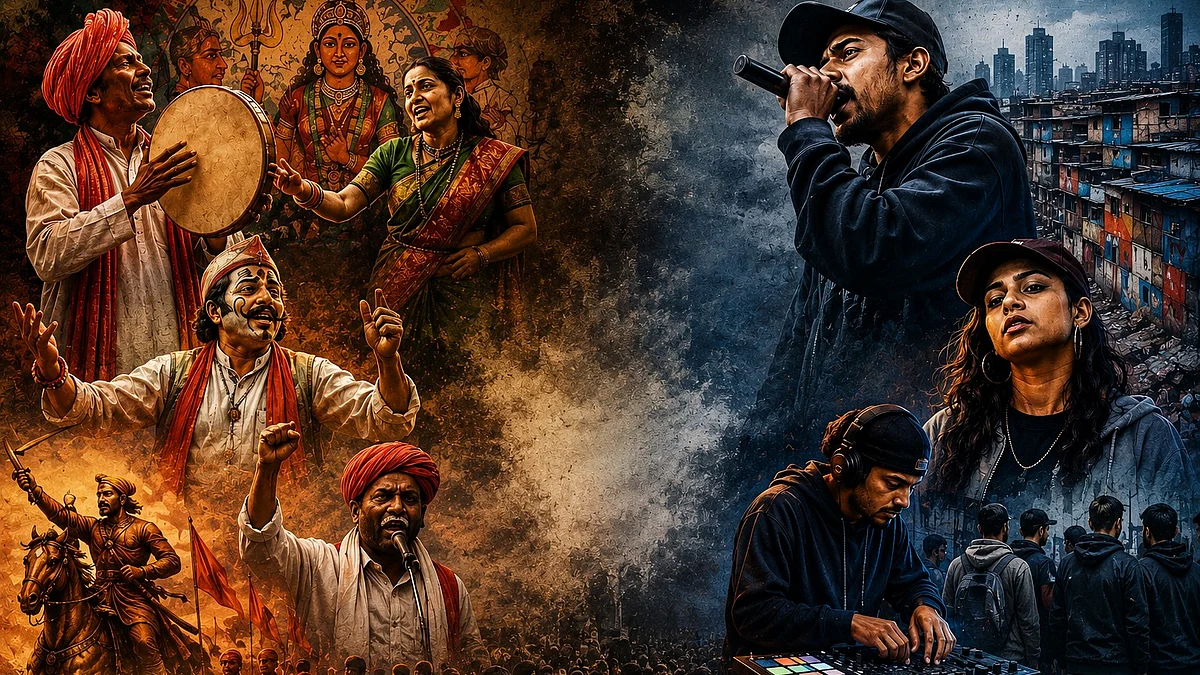
Maharashtra’s protest music has long been a dynamic force, transcending eras and sounds. From ancient saint-poets to revolutionary balladeers, the state has a rich history of creating music that uplifts the marginalized. In recent times, this tradition continues to thrive in the bustling streets of Dharavi and the chawls of Pune. The only difference is how dissent is expressed now—traditional instruments have blended seamlessly with digital beats, turning folk rituals into hip-hop and rap.
To truly comprehend contemporary street music, one must delve into the socio-cultural roots of Maharashtra’s earliest oral arts. Gondhal, a sacred ritual dedicated to goddesses like Renuka and Bhavani, evolved to include community gatherings, patriotic fervor, and keen social commentary. Similarly, Bharud, rooted in narrative, humor, and theatrical address, exposed societal hypocrisies. These were not mere relics of the past; they were powerful social tools.
During the COVID-19 pandemic, artists adapted Gondhal, Bharud, Powada, and even Lavani to deliver public health guidelines, demonstrating how folk media can swiftly pivot to modern challenges. The political forebearers of today’s street music lie in the Shahiri tradition. In the 19th and 20th centuries, Satyashodhaki Jalsas, utilizing music as an ideological weapon, conveyed Mahatma Jyotirao Phule’s anti-caste philosophy.
Later, Shahirs spread Dr. B.R. Ambedkar’s emancipation vision through song. Shahiri set a precedent: music was not merely entertainment; it was a potent tool of public speech.
Veteran balladeer, cultural activist, and composer Sambhaji Bhagat, who inspired the film Court, treats each protest song with the analytical precision of a novelist. "My music originates from the masses and the centuries-old oral traditions I was born into," Bhagat explains. "Yet, I don't simply replicate folk forms. I analyze the reality of an issue, like Gen Z movements.
By studying sociologists’ insights into their mentalities, languages, and media habits, I determine which forms—hip-hop, rap, or film music—best convey the message. The mechanics of art in social movements remain anchored in power dynamics. The oppressors wield state power and police, while the oppressed, lacking physical weaponry, lean on counter-culture.
Art, music, and voice become our weapons against cultural hegemony. A voice cannot be silenced; only a body can," Bhagat asserts.
Examining modern youth protests, such as the NEET demonstrations, Bhagat sees a significant evolution: today’s artists ingeniously fuse folk traditions with hip-hop, rap, and grunge to advance social causes. This sensitivity now bridges class divides. This philosophy is evident in the streets, where Abhirup Kadam, an educator, conservationist, and performer, argues that modern rap mirrors historical Maharashtrian folk forms.
As Kadam observes, "Rap is fundamentally non-different from traditional folk forms like Lokgeet or Powadas; both serve to stir social consciousness and address street reality." Long before modern hip-hop, Lokshahirs like Annabhau Sathe and Vilas Ghogre composed rhythmic, socially charged music to inspire change.
For veteran cultural activist Sunil Kadam, who has witnessed four decades of street performance, the trajectory of cultural resistance follows a clear historical continuum. As industrialization and capitalism took hold, worker movements worldwide—marxist labor movements, Gandhian non-violence, and Ambedkarite anti-caste struggles—realized that political revolutions require an accompanying cultural revolution.
In India, protest music traversed distinct streams: Gandhian non-violence, Marxist labor movements, and Ambedkarite anti-caste struggles.
Reflecting on pivotal moments like the 1980s textile mill strikes in Mumbai and his own performances during the post-1992 communal riots, Kadam highlights both continuity and change. While activists once traveled from neighborhood to neighborhood, singing peace-promoting songs, today’s smartphone media allows a single reel or rap track to instantly mobilize thousands of youth.
The evolution of Maharashtra’s street and protest music is a testament to its adaptability, continuously reshaping itself to meet the socio-political crises of each era.
Written by urgent.news from Free Press Journal's reporting — not their text. Machine-written — may contain errors; check the original before relying on it.