Death knell? Hong Kong’s five-year plan is a starting gun
I’m a little perplexed and bemused by the brouhaha surrounding Hong Kong’s decision to draft its first five-year plan, as if the sky is falling in around the city’s famed laissez-faire economy. Predictably, Yale University’s Stephen Roach (he of “Hong Kong is over” fame) warned in a commentary last month that “Chinese-style central planning” could “over-promise and under-deliver”. In a 2024…
Hong Kong's decision to draft its first five-year plan has sparked a debate about the city's economic future. Critics, like Yale University's Stephen Roach, have warned that Chinese-style central planning could "over-promise and under-deliver," even going as far as calling Hong Kong "shackled by the deadweight of autocracy." However, it appears that Hong Kong is long overdue for a strategic long-term planning framework that can provide coherence for optimizing the city's future as a conduit between rapidly changing China and a volatile global economy.
Former Chinese leader Deng Xiaoping recognized as early as 1992 that capitalism and communism both require a balance of practical day-to-day administration and a clear long-term vision. Deng referred to planned economies as different from socialism and market economies as distinct from capitalism, as both systems incorporate planning and markets respectively.
Over the years, China's five-year planning process has become increasingly nuanced and is often referred to as "directed improvisation." The central government sets the overarching objectives, and local administrations are responsible for tailoring their approach to suit specific local circumstances. This approach has been instrumental in Hong Kong's governance up until 1997, when the British colonial government maintained the Central Policy Unit (CPU) to ensure long-term strategic planning aligned with the UK's needs.
Since 1997, Hong Kong's policymaking responsibility has been decentralized to a highly trained and efficient administration, focusing on the effective implementation of previously formulated plans rather than on developing long-term strategies. This shift has had an impact on Hong Kong's economic infrastructure, as the city has not been able to replace the long-term vision people that once guided its progress.
Nevertheless, the upcoming adoption of a five-year plan offers an opportunity to address these issues and help restore Hong Kong's reputation as a global financial, technological, and tourism hub. Some key elements that are expected to feature prominently in the plan include the development of the Northern Metropolis, a modernization of Hong Kong's aging housing stock, and the integration of new technologies in education, trade, and tourism.
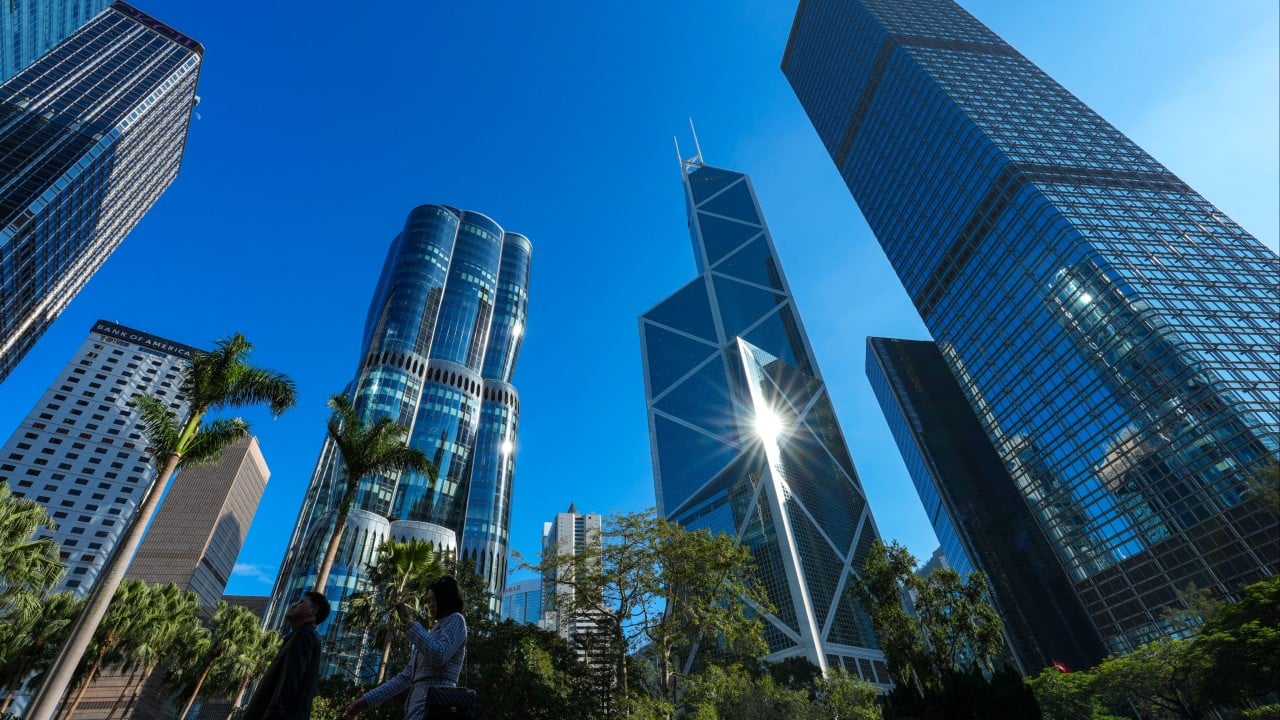
Additionally, Hong Kong's aging population and the need to revitalize the Central business district, home to numerous iconic skyscrapers and elderly high-rises, will also be addressed.
The proposal for the Northern Metropolis, with an estimated cost of HK$224 billion (US$28.5 billion), aims to accelerate development in the region. Simultaneously, efforts are being made to address the issue of Hong Kong's aging high-rises, many of which are in a state of disrepair and may not be fit for purpose in the future. Henderson Land's Central Yards, a HK$63 billion "groundscraper" set to open next year, has been constructed with the latest environmental and efficiency standards in mind, highlighting the urgent need to address the city's aging infrastructure.
The success of the five-year plan will depend on substantial public-private coordination to ensure timely and focused funding for Hong Kong's future global leadership in finance, technology, and tourism. This collaborative effort, led by private-sector stakeholders, acknowledges the strain that ambitious long-term projects might place on Hong Kong's public purse. If implemented effectively, the plan should help alleviate the concerns of Hong Kong's naysayers and those claiming that the city is "over."
Written by urgent.news from South China Morning Post - Hong Kong's reporting — not their text. Machine-written — may contain errors; check the original before relying on it.
This story
This is one outlet's version. Read the fullest account.