A year after Trump-Putin summit, 'spirit of Anchorage' has vanished
A year after the Alaska summit, U.S. and Russian efforts to impose a peace settlement on Ukraine have failed, NZZ writes on Aug. 16.
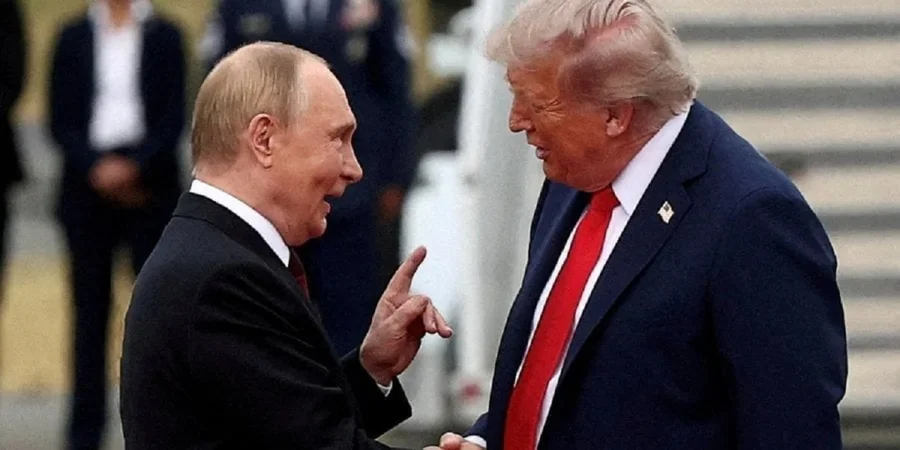
A year has passed since the summit in Anchorage, yet the warmth that once existed between the United States and Russia has disappeared. The article, published on August 16, reports that the U.S. and Russia's attempts to broker a peace deal in Ukraine have not succeeded. Critics, including Ukrainian officials and European capitals, raised concerns that any agreements reached in Alaska might undermine Ukraine's and Europe's security.
The "spirit of Anchorage," a term coined by the Russians, is no longer in existence. While the Kremlin views this as a setback, it is not a disaster, according to a columnist. President Donald Trump continues to withhold military aid to Ukraine and considers Russia's war as not impacting U.S. interests. Putin seems content with this arrangement.
Russia's complaints about potential broken promises in Anchorage appear unconvincing. Russia is realistic enough to understand that the political landscape has changed significantly in the last year. Trump lacks the leverage to compel Ukraine to accept peace terms that do not meet its approval. The war in Iran has weakened Trump, who is now more focused on achieving a peace settlement in the Persian Gulf.
Meanwhile, Ukraine has become stronger militarily, boosting the nation's confidence. The notion of giving up parts of the Donbas that are still under Russian control in exchange for vague Western security assurances is now less popular among Ukrainians than it was a year ago. Ukrainian President Volodymyr Zelenskyy has proposed several measures, including an unconditional ceasefire, a moratorium on airstrikes, and an end to attacks on civilian vessels and ports in the Black Sea.
Russia has rejected all of these proposals. U.S. presidential special envoy Steve Witkoff is scheduled to visit Kyiv soon, marking his first trip there. This visit, however, contrasts with Russia's approach; Russian President Vladimir Putin has visited the U.S. seven times to meet with Trump but has never visited Ukraine. Witkoff seems to have concluded that achieving a fair peace requires listening to both sides, concludes the columnist.
On June 24, Reuters reported that three senior Russian officials accused the U.S. of violating agreements allegedly reached in Anchorage during the August 2025 meeting between Trump and Putin. Reuters noted that after the Alaska summit, Moscow frequently referred to the "spirit of Anchorage," believing Trump had supported Moscow's demand that Ukraine cede the entire Donbas, including non-occupied territory, in exchange for freezing the front line elsewhere.
The U.S., however, never confirmed any agreements were reached at the summit. On June 25, U.S. Secretary of State Marco Rubio stated that "no agreement happened in Alaska," only a proposal. Russian Foreign Minister Sergey Lavrov criticized Rubio's remarks. On June 28, Putin admitted that "there were no agreements in Anchorage," stating that "the compromises discussed were the proposals presented by the American side to us."
On July 23, Rubio said the approach to a peace settlement proposed by Russia in Anchorage had failed because it was unacceptable to Ukraine.
Written by urgent.news from New Voice of Ukraine's reporting — not their text. Machine-written — may contain errors; check the original before relying on it.