A Six-Step Framework for Auditing Enterprise AI Agents
A six-step framework for finding, scoring, consolidating, and retiring enterprise AI agents based on cost, value, ownership, and governance risk.
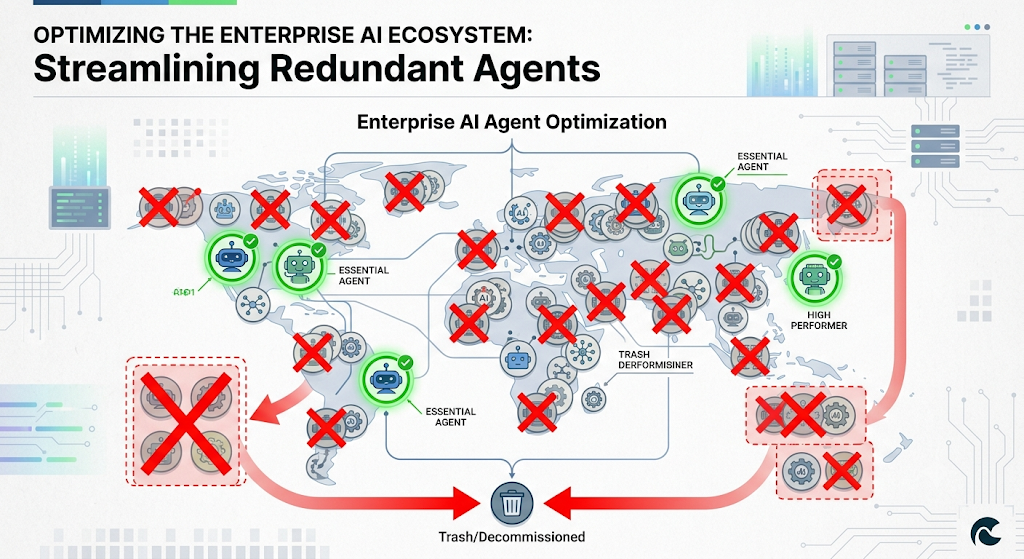
Enterprise AI agents have proliferated across large companies, but many remain unmanaged, leading to redundancy and hidden costs. The author outlines a six-step framework to audit and manage these agents effectively.
First, inventory every agent calling a model in the environment, pulling data from API billing dashboards, model gateway logs, and service accounts. Flag any agents without a clear owner, as they are likely orphans that the audit aims to identify.
Next, map overlap by grouping agents by job and identifying clusters performing the same tasks. Consolidating redundant agents can save multiple token bills and data paths for one outcome.
Score each agent on cost versus value. Cost is straightforward, derived from monthly token spend and maintenance overhead. Value involves measurable outcomes like time saved, revenue influenced, errors caught, and work avoided. Plot high-cost, low-value agents for retirement, and retain high-value, low-cost agents.
Consider governance exposure by assessing what data the agent can read and write, and the permissions it requires. Over-permissioned agents pose security risks and should be retired.
Retire, consolidate, or keep agents based on the scores. Retired agents are turned off and revoked of access, consolidated agents are merged into the best performer, and kept agents maintain clear ownership, measurable value, scoped permissions, and justified costs. Regular audits ensure orphan agents do not reappear. Finally, implement a lightweight gate process for new agents requiring a named owner, measurable outcome, scoped permissions, and cost estimate before deployment.
This structured approach helps keep both the bill and risk in line with the value generated by AI agents.
Written by urgent.news from HackerNoon's reporting — not their text. Machine-written — may contain errors; check the original before relying on it.