Why putting foil under your ironing board speeds up ironing
Think of aluminum foil as your new ironing ally. When utilized underneath the cover of your ironing board, it reflects heat back towards the fabric, allowing for a dual heating effect. This means you can reshape garments in fewer strokes, enhancing productivity and effectively managing your laundry. Embracing this straightforward method can transform the way you handle your laundry tasks and make…
Ironing is a necessary household chore that often seems time-consuming. Even with the best ironing techniques, stubborn creases can remain on certain fabrics. While water can help ease creases in some materials, it may not work for all types of fabric. However, there is a common household item that can help speed up the ironing process: aluminium foil.
The trick is to place a piece of aluminium foil directly beneath the ironing board cover. This may seem unusual, but there is a simple reason why it works. Aluminium is a good conductor and reflector of heat. When a hot iron comes into contact with fabric, some of the heat may transfer directly through the fabric into the ironing board.
A layer of aluminium foil can reflect some of this heat back onto the fabric, heating it from both sides. This does not mean the foil magically removes wrinkles, but it can make the heat-transfer process more efficient, potentially reducing the number of passes needed. When you iron your clothes, the fibres temporarily change shape due to moisture, heat, and pressure, creating wrinkles.
The hot soleplate of the iron heats up the fibres, while pressure and movement help reshape them. Steam or moisture can further relax the fibres, making them easier to reshape. The iron is typically the primary source of heat, with some of it conducted through the fabric and absorbed by the padding of the ironing board and the surface beneath.
Aluminium foil can help reflect radiant heat back toward the underside of the garment, reducing heat loss into the board. This effect is easiest to understand with an example: when ironing a cotton shirt, the iron heats the top of the shirt, and some of the heat conducted through the fabric can be reflected back from the foil layer, keeping the fabric warmer and easier to reshape.
However, aluminium foil alone is not a substitute for a proper iron, steam, or correct temperature settings. The effectiveness of this method depends on various factors, including fabric, iron temperature, moisture level, ironing board cover, and heat loss. It is more of a heat efficiency trick rather than a dramatic shortcut. The biggest benefit may come from reducing the number of repeated ironing passes, especially for larger fabric items.
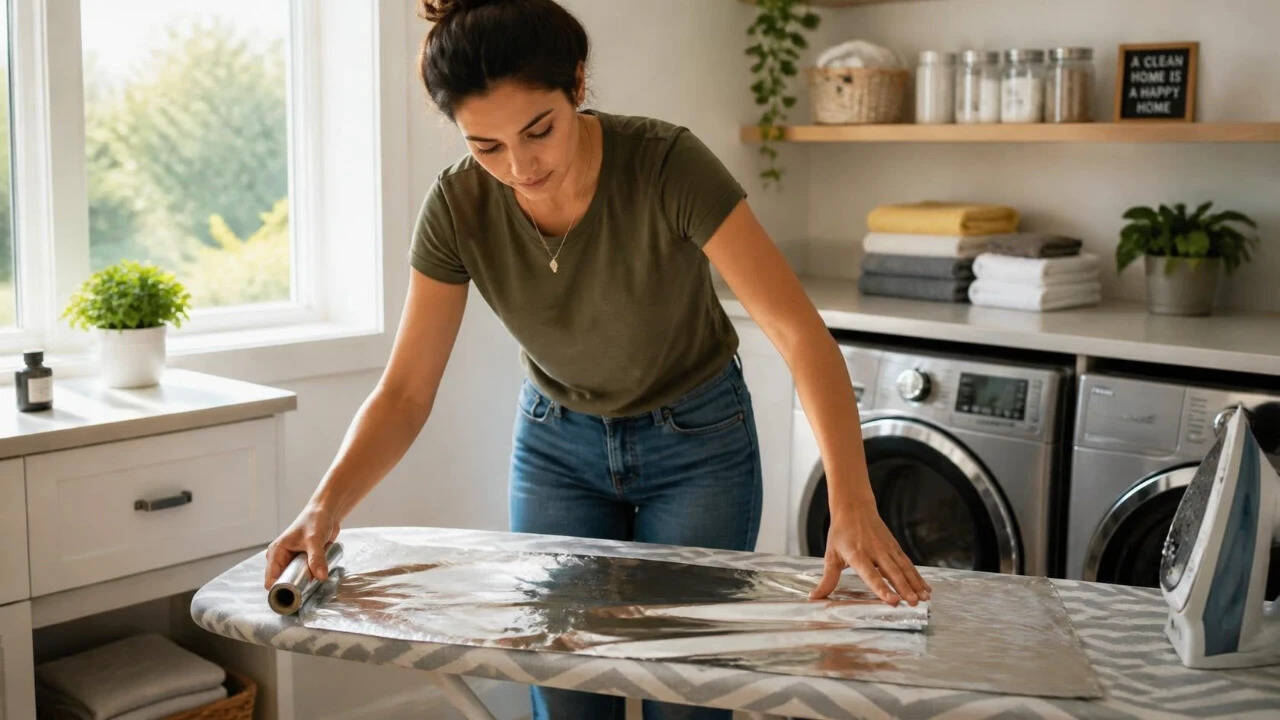
To use this method, remove the ironing board cover, place a sheet of aluminium foil (shiny side up) across the board, and cover it with the ironing board cover again. This creates a continuous metallic layer that reflects some of the heat back onto the garment. Remember to avoid using the shiny side directly on the iron surface, as it can become extremely hot, damage delicate fabrics, and scratch the iron's soleplate.
This technique is most helpful for fabrics that require heat and steam to remove wrinkles, such as cotton and linen, as well as larger items like tablecloths, sheets, and curtains. However, delicate fabrics should be handled with care, as excessive heat may cause damage.
Written by urgent.news from Times of India's reporting — not their text. Machine-written — may contain errors; check the original before relying on it.