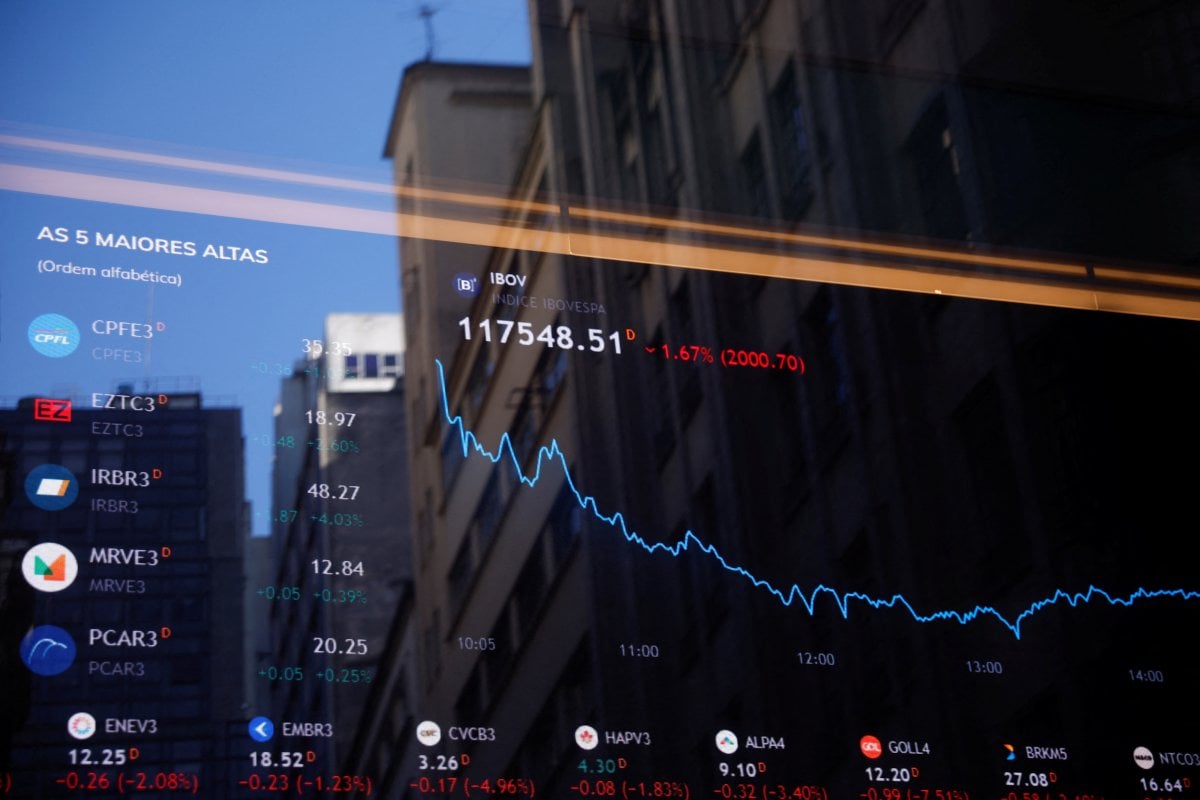
US stocks retreat from record high after weak data
The US stock market edged back from its all-time high on Friday following the latest report on the economy to come in surprisingly weak, this time about how much shoppers are spending at retailers. Such data could keep interest rates low, which is something Wall Street loves, but it also raises the risk of a slowing economy when inflation is still high. The S&P 500 slipped 0.2 percent from its…
The US stock market retreated from its record high on Friday following the release of surprisingly weak economic data on retail spending. This development keeps interest rates low, which Wall Street favors, but also heightens the risk of a slowing economy despite high inflation. The S&P 500 fell 0.2 percent from its previous record, the Dow Jones Industrial Average dropped 107 points, or 0.2 percent, and the Nasdaq composite declined 0.3 percent.
The S&P 500 closed at 7,785.76, down 13.23 points, while the Dow Jones Industrial Average ended at 53,732.41, a 107.58 point decline, and the Nasdaq composite fell 73.87 points, to 26,729.16. Stocks initially gained early in the day, but lost momentum after oil prices rose by 1.7 percent, reaching $88.52 per barrel, amid ongoing uncertainty about a potential conflict with Iran.
Concerns about a weaker economy were exacerbated by a report indicating that consumers spent less at US retailers last month compared to the prior month, a finding that contradicted economists' expectations of continued growth. This unexpected drop in consumer spending could help alleviate inflation, potentially prompting the Federal Reserve to delay further interest rate hikes.
Despite the market's downward trend, Reddit experienced a surge, jumping 12.6 percent following news of its inclusion in the S&P 500 index starting the following Tuesday. However, other sectors faced declines, including Applied Materials, which saw a 5.1 percent drop despite reporting stronger-than-expected profit and revenue for the latest quarter.
AI-related stocks have been volatile, with investors concerned that their prices may have inflated due to excessive optimism about artificial intelligence. The overall sentiment among US consumers remains cautious, with a preliminary survey from the University of Michigan indicating that economic optimism had worsened significantly, particularly affecting older, lower-income groups and other vulnerable populations.
Written by urgent.news from RTHK News - Finance's reporting — not their text. Machine-written — may contain errors; check the original before relying on it.