UAE residents' update: Trump’s Hormuz claim, ADNOC attack and flight cancellations
The US-Iran conflict remains centred on the Strait of Hormuz, with tensions rising after President Donald Trump said he could declare the strategic waterway US territory . Iran has rejected the claim and said the strait will remain under its authority. For UAE residents, the developments continue to have implications for regional security, shipping, energy prices and air travel. Get updated…
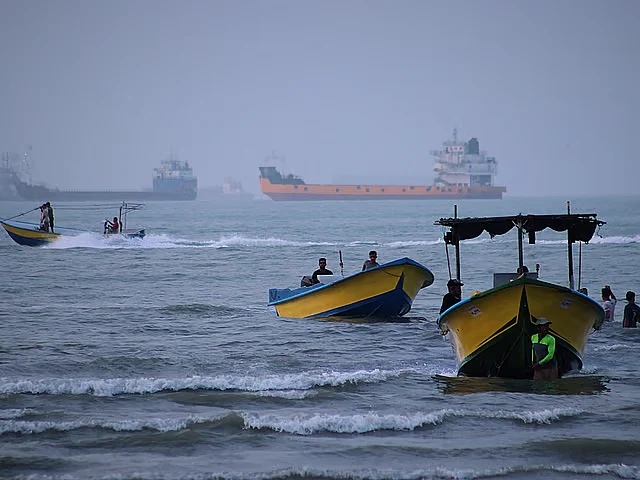
The US-Iran conflict continues to center around the Strait of Hormuz, with tensions escalating after President Donald Trump announced his intention to declare the waterway US territory. Iran adamantly rejects this claim, asserting the strait's ongoing Iranian control. For UAE residents, these developments hold significant implications for regional security, shipping, energy prices, and air travel.
President Trump declared his intention to claim the Strait of Hormuz "pretty soon" following the defeat of Iran. Iran firmly denies the assertion, maintaining that the waterway remains under its authority and that its opening or closure will be decided solely by Iran. Trump reiterated that he would "never apologize" for military actions against Iran, asserting that heightened fuel prices are a necessary price to avoid Iran acquiring a nuclear weapon, stating, "I did the right thing."
The traffic through the Strait of Hormuz remains minimal, with only 151 vessels passing through in the past week, accounting for just 17% of pre-conflict levels, according to UKMTO. The United States Central Command (CENTCOM) reported the redirection of 62 commercial vessels, the disabling of three, and the boarding of two during efforts to enforce the blockade against Iran.
ADNOC, an Abu Dhabi National Oil Company, confirmed that one of its vessels was attacked while transiting the Strait of Hormuz on Friday. The incident resulted in no reported injuries, and the situation was swiftly brought under control. President Trump has announced that the USS George Washington is en route to the Middle East, set to replace the USS Abraham Lincoln, which has spent over 240 days continuously at sea.
The fate of ongoing Iranian-US talks remains uncertain, with Iran's Foreign Minister Abbas Araghchi stating Tehran has not yet decided on resuming negotiations, while Qatar and Pakistan have exchanged communications with both sides.
Shipping remains severely disrupted due to the US blockade of Iranian ports and the ongoing risks associated with the alternative Southern Omani route. The UAE, Saudi Arabia, Kuwait, Qatar, Jordan, Egypt, and the Arab League have all condemned the attacks on ADNOC-affiliated vessels, emphasizing the necessity to safeguard commercial shipping and freedom of navigation.
UAE travelers are advised to verify their flight status prior to heading to the airport, as Etihad Airways continues to operate a few Abu Dhabi-Bahrain services, while other routes have been canceled until August 21. Emirates' status for specific Dubai-Kuwait and Dubai-Bahrain services is currently unavailable, with updates set to be provided 24 hours prior to departure.
Air Arabia has reported cancellations on multiple UAE-regional routes, whereas flydubai maintains that its Kuwait, Bahrain, and Saudi Arabia services remain operational. Several international airlines have either suspended or altered selected UAE and regional services. The European Union Aviation Safety Agency has extended its conflict-zone advisory covering Gulf airspace until August 31, urging travelers to check their airlines' websites or apps for the latest flight status and schedule updates.
Written by urgent.news from Gulf News's reporting — not their text. Machine-written — may contain errors; check the original before relying on it.