Taiwan drone defences fall short against Beijing’s evolving technology, audit reveals
Taiwan’s push to build a modern counter-drone shield has come under renewed scrutiny after an official audit uncovered technical shortcomings and a key procurement programme collapsed following repeated testing failures. The developments have fuelled concerns that Taipei’s efforts to match Beijing’s rapidly evolving drone technology are being undermined by capability gaps, procurement failures…
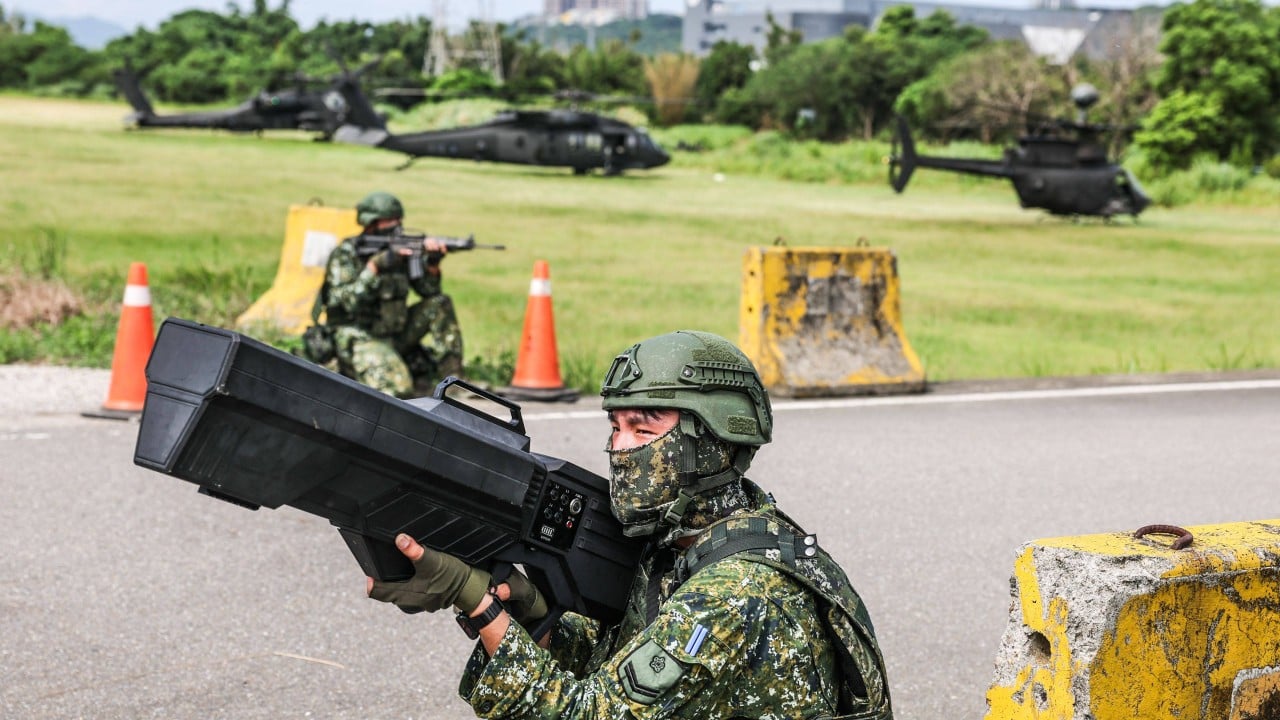
Taiwan’s efforts to counter Beijing’s advancing drone technology have been marred by technical deficiencies and procurement failures, according to a recent audit by the country’s Audit Office. The NT$3.55 billion (US$111 million) fixed-site counter-drone programme, designed to guard key military installations, falls short in detecting and jamming newer Chinese drone models operating on the 5.1GHz frequency.
Further, the system failed to safeguard parts of the BeiDou-3 satellite navigation system and proved ineffective against emerging threats like fibre-optic and AI-guided drones. The audit also revealed that the project was delayed by six to twelve months due to construction delays and component shortages. The Ministry of Defense admitted the system’s target identification capabilities did not meet the contract-required standards, leading to the termination of a separate NT$980 million procurement for 26 fixed-site counter-drone systems.
The Defense Minister attributed the failure to the system’s inability to integrate data from its search and passive radar systems with multiple waves of drones. Despite these issues, the defense ministry stated that many of the identified technologies emerged post-project initiation in 2021, and they intended to upgrade the jamming capabilities for newer frequencies.
NCSIST president confirmed that all its counter-drone systems were integrated with the military’s Tactical Assault Kit battlefield awareness platform, but the Ministry of Defense's response to the audit findings has been described as "extremely disappointing". Analysts argue that Taiwan should adopt a more flexible procurement system to introduce commercial technology quickly and establish a unified command-and-control network for drone and counter-drone operations.
Written by urgent.news from South China Morning Post's reporting — not their text. Machine-written — may contain errors; check the original before relying on it.