Dispute over Strait of Hormuz: Trump wants to make Strait of Hormuz US territory
Trump wants to declare the Strait of Hormuz US territory after a victory over Iran. Tehran sharply rejects the claim and threatens to continue the blockade.
US President Donald Trump wants to declare the Strait of Hormuz to be US territory. "As soon as we have defeated Iran - which is currently suffering a devastating defeat - I will declare the Hormuz Strait to be part of the United States," he said at a campaign rally in the state of New York. He did not elaborate on his stated intention.
Iran immediately rejected Trump's claim. "The Strait of Hormuz can be neither occupied by a tweet nor by an aircraft carrier, nor by a command or a campaign speech," Iran's Deputy Foreign Minister Kasem Gharibabadi wrote on platform X. The strait would only be opened or closed at Tehran's behest. Iran would maintain the de facto blockade as long as the US did not accept its defeat.
At the same time, Gharibabadi claimed the strait for his country: "The Strait of Hormuz has belonged to Iran, belongs to Iran and will belong to Iran."
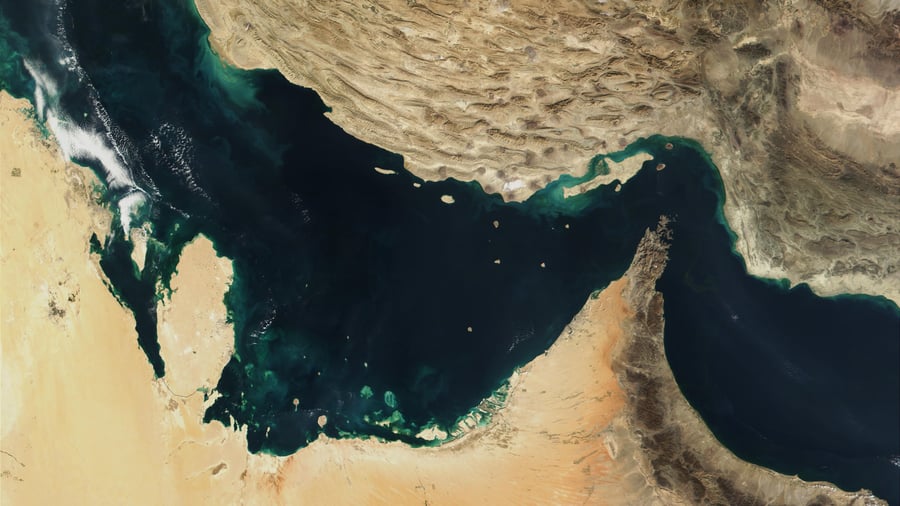
In fact, both Iran and Oman border the strategically important waterway. Trump's move comes at a time when efforts to end the Iran war have stalled and a 60-day ceasefire is due to expire without being extended.
The Strait of Hormuz remains a key point of contention between Washington and Tehran, alongside Iran's nuclear program. Oil prices have skyrocketed as a result of the war, as Iran has significantly disrupted shipping traffic in the strait with threats and attacks. The Strait of Hormuz is one of the world's most important trade routes for oil, gas and fertilizers.
Publicly announced annexation plans like this one are a staple of Trump's foreign policy. He has made similar comments regarding Venezuela, Cuba or Greenland. It is unclear whether Trump will follow up his words with actions. A month ago, Trump had threatened to impose a toll on the strait, but shortly afterwards he scrapped the plans.
In a framework agreement, Washington and Tehran had agreed that Iran would not be allowed to demand fees during 60 days of negotiations. How things will proceed after this period expires is to be negotiated by Iran with Oman - in accordance with international law and involving the neighboring states. No agreement has been announced so far. The 60-day deadline expires this weekend.
For Iran, the de facto blockade of the strait has proven to be the most effective means of exerting pressure on Trump. The US president has been struggling for weeks to find a solution to the problem that did not exist before the start of his unpopular war in the US.
The Strait of Hormuz is only about 39 kilometers wide at its narrowest point. Since Iran and Oman each claim a 12-nautical-mile zone (about 22.2 kilometers), the territorial waters of both neighboring countries overlap. There are no international waters in this area. Nevertheless, merchant ships could pass through the strait freely and without fees or charges before the start of the war.
US Republicans have an interest in a quick exit from the war: in just under three months, they will have to face the voters in the midterm elections to the US Congress - high fuel prices are not advantageous.
Translated by urgent.news. Machine-written — may contain errors; check the original before relying on it.