Recycling old solar panels could generate nearly $1 trillion by 2060
Discarded solar panels will create significant waste by 2060, posing environmental risks. Proper recycling can unlock nearly one trillion dollars in economic value from these materials. Middle-income countries, especially China, will become major sources of retired solar panels. A phased subsidy strategy can ensure fairer economic benefits between richer and poorer regions. Building recycling…
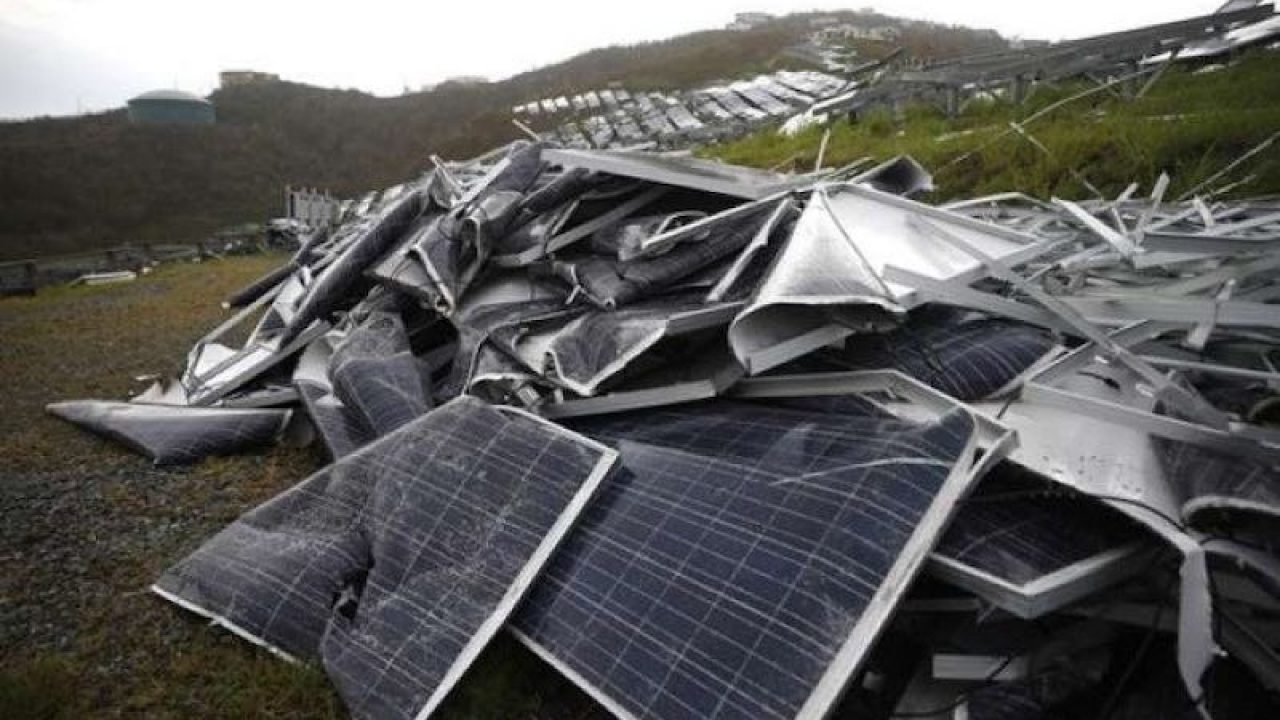
The world's discarded solar panels could hold a potential value of nearly $1 trillion (£770 billion) by 2060, according to a study published in the journal Nature. With the global photovoltaic (PV) waste expected to reach between 297 million and 402 million tonnes over the next 40 years, proper recycling of these panels could prove economically valuable.
The bulk of the waste is anticipated to originate from middle-income countries, particularly China, once the initial solar installations reach the end of their operational lifespan after 2040. Solar panels contain valuable materials such as silicon, silver, copper, and tellurium, alongside hazardous heavy metals like lead and cadmium. If disposed of improperly, these substances can lead to environmental risks.
Researchers from China, Australia, and Sweden conducted a study to identify the best ways to safely recover these materials. They developed a computer model that analyzed 1,708 recycling scenarios across 32 regions, taking into account local facilities, material prices, international trade, and government subsidy policies.
The research found that utilizing recycling methods tailored to each region, in conjunction with international recycling partnerships, could maximize economic benefits and decrease billions of tonnes of carbon dioxide-equivalent emissions. However, there is a concern that sending old solar panels to countries with more affordable or efficient recycling facilities could concentrate economic gains in wealthier regions, potentially exacerbating economic inequality.
Professor Jian Zuo, co-author of the study from Adelaide University’s School of Civil Engineering and Construction Management, emphasized the importance of including solar panel end-of-life considerations in energy planning. To ensure that recycling benefits are distributed fairly, he suggested economic efficiency should be balanced with fairness.
The study also proposes a phased subsidy strategy to make international recycling fairer. Governments could gradually reduce subsidies as recycling facilities become commercially viable, rather than providing permanent financial support. This approach could improve the economic benefits' distribution between regions while costing less than providing continuous subsidies.
Solar panel recycling's future value will depend on raw material prices. As the cost of recovered silver, aluminum, and silicon increases, recycling will become more profitable. Conversely, falling recycling costs due to technological advancements and facility efficiency improvements will also play a role. Building recycling capacity before the waste surge is anticipated to help avoid major problems when millions of retired panels need processing.
Moreover, recycling solar panels could alleviate pressure on global supplies of critical raw materials, as mining and processing new silicon, tellurium, and silver require extensive energy and can cause environmental damage. Recovering these materials from old panels would enable manufacturers to utilize more recycled material instead of relying solely on newly mined resources, potentially reducing carbon dioxide-equivalent emissions and bolstering supply chain security.
Written by urgent.news from Times of India's reporting — not their text. Machine-written — may contain errors; check the original before relying on it.