Ozzy the orphaned long-nosed potoroo loves his peanuts
Meet Ozzy who has gone from a 96g orphan to a robust boy who'll live his life out in an eco-sanctuary teaching students about predators and the environment.
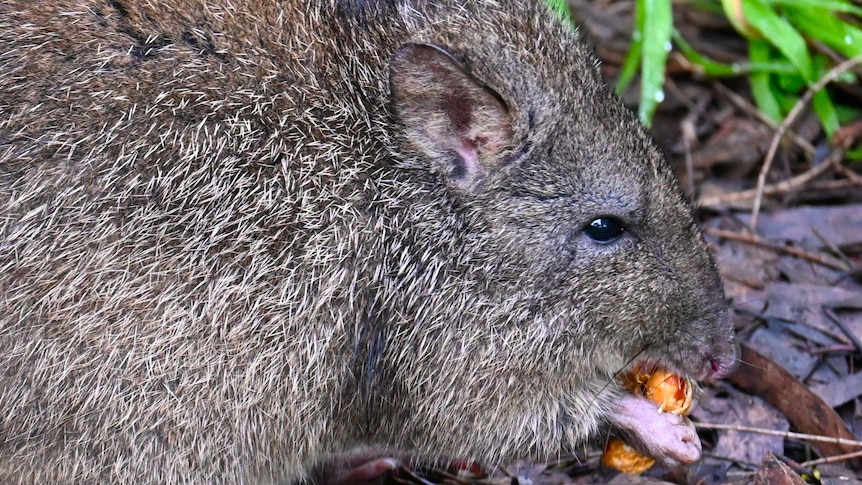
Ozzy, an orphaned long-nosed potoroo, has found a new home at Tatachilla Lutheran College in McLaren Vale, South Australia. The tiny kangaroo-like creature was rescued in January after his mother died from a bacterial infection, leaving him in critical condition at just 96 grams and with a thin fur covering. A dedicated team of staff, students, and volunteers took on the responsibility of caring for Ozzy, providing round-the-clock care and nursing him back to health.
Ranger Dee, a long-standing staff member, played a crucial role in the process, taking charge of the night feeds that required two hours of her time each day. As Ozzy grew stronger and more independent, he was eventually moved to the college's eco-sanctuary, a 4.3-hectare protected area that serves as a safe haven for native wildlife.
While Ozzy is still learning the ropes of being a potoroo and enjoys occasional peanut treats, he has shown signs of becoming more adventurous, even constructing a nest under a bus. This behavior suggests that Ozzy may soon seek a mate among the nine other potoroos residing in the sanctuary, along with other native species such as brush-tailed bettongs, tammar wallabies, and various bird species.
The eco-sanctuary, which has been in operation for over 20 years, was originally established on land that was previously used for grape cultivation and sheep farming in the renowned McLaren Vale wine region. The sanctuary has been painstakingly restored with native plant species, creating a protective barrier against predators like cats and foxes, which were once responsible for the decline of the potoroo population in South Australia.
The college's eco-sanctuary not only provides a safe environment for Ozzy and his fellow potoroos but also serves as an educational resource for students, allowing them to learn about the importance of preserving native wildlife and the impact of human activities on the local ecosystem. Conservationists hope that by maintaining a small but thriving population of potoroos in the sanctuary, they can eventually reintroduce the species to its natural habitat in South Australia, where they had once been extinct due to land clearing and the introduction of feral predators.
Written by urgent.news from ABC News AU's reporting — not their text. Machine-written — may contain errors; check the original before relying on it.