I saw behind-the-scenes of a 4K movie restoration — and it's made me appreciate the quality of my 4K Blu-rays more than ever now I understand the 'ethical dilemmas' and artistry involved
Ever wonder how a film gets to 4K Blu-ray? I visited Silversalt Restoration's studio and saw the magic of film restoration in action.
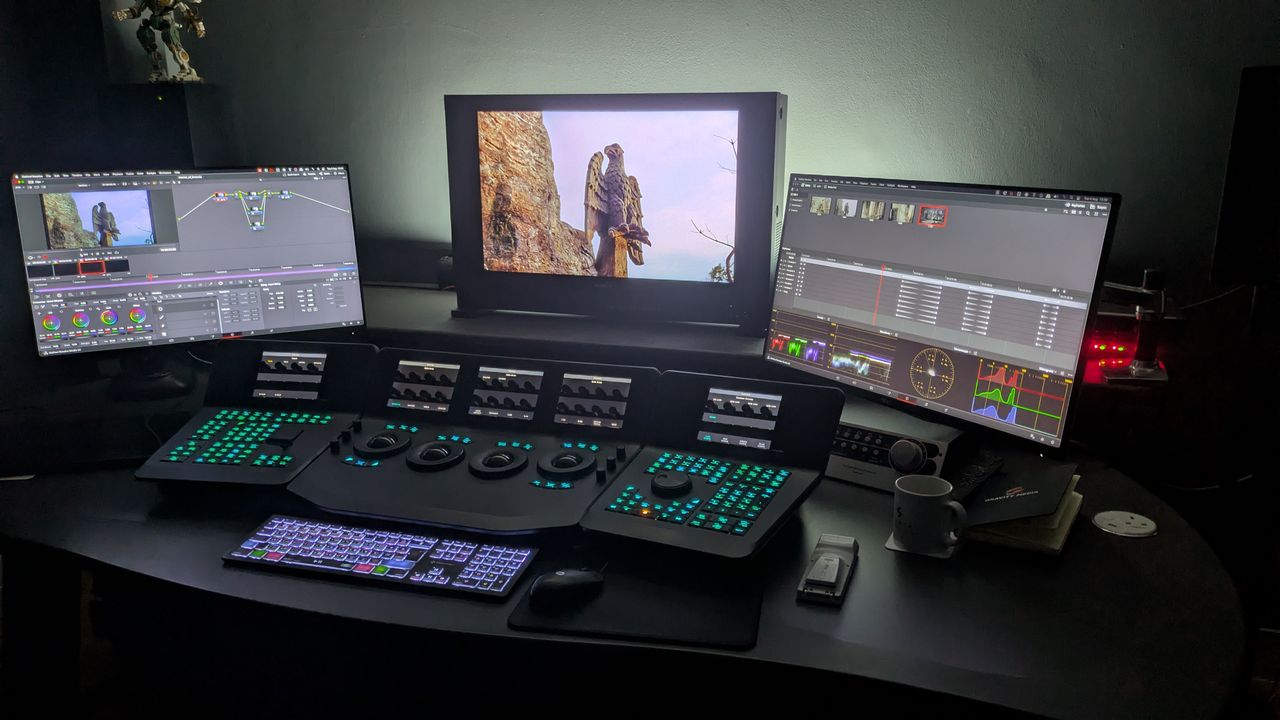
Recently, I had the opportunity to visit Silversalt Restorations, a company that specializes in audio restoration, data archiving and restoration, and movie transfer, including 4K restoration. As someone who covers 4K Blu-ray for TechRadar, I am always eager to learn more about the process behind restoring classic films for the highest quality possible.
Upon entering the studio in Hammersmith, I was greeted by Mark Bonnici, the Managing Director, who led me through the meticulous process of restoring a movie. The journey began at the film inspection table, where Marie Fieldman, the resident film inspector, examined an old film reel for any damage, marks, scratches, wear and tear, degradation, or even mold. Fieldman meticulously noted every defect and determined the best course of action for each issue.
After the inspection, the film reel was then placed in a cleaning machine, which gently removed surface dirt using a film-safe solvent. In some cases, however, hand cleaning was necessary, particularly if the film had a wax coating. Once the film was clean, it moved on to the scanning process.
Silversalt uses two scanning machines: the Arriscan XT and the Laser Graphics Director. The Arriscan XT utilizes a wet-gate system, where the film is immersed in Kodika—a special liquid that minimizes scratches and marks while digitizing the film into a digital image sequence known as a DPX file. The film is scanned at 6K resolution, which is then downgraded to 4K for 4K Blu-ray. The Laser Graphics Director, on the other hand, scans up to 13.5K resolution and can handle 8mm to 35mm film.
Following scanning, the DPX files are sent to restoration artists, who work to restore the film reel by correcting image instability, removing unwanted scratches and marks, removing excess film grain, and tidying up the image. The artists analyze the digitized frames for film dirt and, using a red mode, present the results to the restoration team. Any falsely removed parts of the image are then reinstated. Restoration artists also perform tasks such as stabilization, deflicker, and scratch removal.
Throughout the process, the goal is to put detail back into the film that has been incorrectly removed. The restoration artists' expertise and attention to detail are truly impressive, ensuring the restored movies maintain their artistic integrity while improving visual quality. This behind-the-scenes look at the 4K movie restoration process has only deepened my appreciation for the quality of 4K Blu-rays and the ethical dilemmas and artistry involved in their preservation.
Written by urgent.news from TechRadar's reporting — not their text. Machine-written — may contain errors; check the original before relying on it.