E-textiles could reshape fashion, healthcare and circular economy
AgenciesWhen you think of advanced futuristic clothing, what comes to mind? Perhaps shirts that can detect and alert users to low blood glucose levels or socks that can track your...
When envisioning cutting-edge attire, futuristic garments that monitor health metrics or track physical activity often come to mind. Imagine pajamas that detect subtle bodily changes during sleep, potentially detecting early signs of cancer or alerting caregivers of impending seizures. These scenarios may soon become a reality, as researchers develop advanced textiles that seamlessly blend electronic functions with conventional clothing and fabrics.
Known as e-textiles or smart fabrics, these garments integrate sensing, computation, and power into their very fibers, transforming threads into sensors and stitches into circuits. They can monitor health, temperature, motion, and air quality, communicate wirelessly, and harvest various forms of energy. While still under development in university and industry prototypes, their progress through clinical trials and lab testing suggests a near future where these smart garments may no longer exist solely in the realm of imagination.
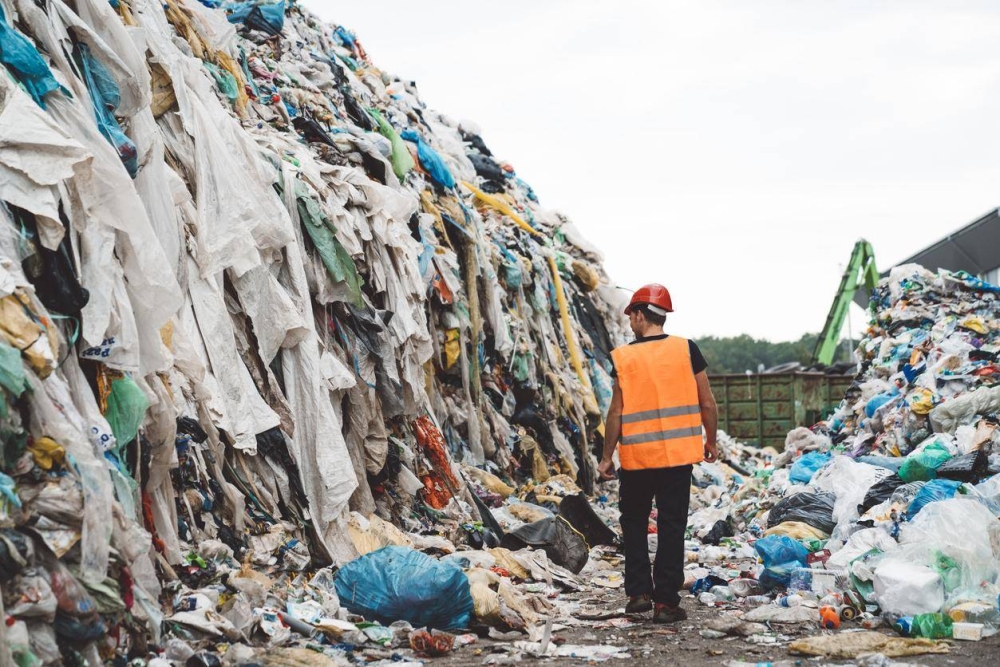
However, the rise of e-textiles brings forth a pressing concern: their potential to exacerbate the global e-waste crisis. As these garments become increasingly prevalent, they will inevitably contribute to electronic waste, the fastest-growing waste stream in Europe, with a record 62 million tons discarded in 2022. Globally, textile waste reaches an alarming 92 million tons, and by 2030, it's projected to climb to a staggering 134 million tons.
Textiles alone account for 6.7% of global greenhouse gas emissions, and the average European discards a staggering 11 kilograms of textiles annually. E-textiles introduce a new hybrid waste category, combining electronic components with traditional textile materials, presenting unique challenges for recycling and disposal. These garments commonly employ mixed polymers, metal nanoparticle inks, and other components that create fire hazards within conventional textile recycling processes.
When incinerated or landfilled, they release toxic residues, trapping hazardous and valuable materials within the garments. This results in both environmental and health hazards as well as a loss of vital resources, such as graphene and rare-earth elements.
Silver, for instance, is commonly used in e-textiles for conductive yarns, antimicrobial coatings, sensors, and electrodes. Its value is coupled with the toxicity it poses to aquatic life. The current methods of e-textile disposal are inadequate to handle these new materials, particularly in the areas of reusability and recyclability.
As e-textile growth continues unabated, it is imperative to reevaluate disposal methods to accommodate these novel materials, focusing on reusability and recyclability. To address these challenges, the EU's sustainable and circular textiles strategy is part of its broader plan to become the first climate-neutral continent. Regulators are implementing stricter rules regarding recyclability, chemical safety, and product lifespans, actively seeking ways for e-textiles to meet these requirements.
Industry practices are starting to catch up, placing more responsibility on clothing producers to consider the long-term environmental impact of their products.
Fortunately, practical solutions exist for creating sustainable e-textiles. Key measures include design for disassembly, enabling the separation of electronics from textiles for easier recycling; implementing digital product passports that provide information about materials and their environmental impact; and developing biodegradable and recyclable conductors.
Prioritizing conductors free from precious metals and using alternatives like screen printable carbon paste, recyclable conductive inks, and yarns are essential. Energy-first design, integrating textile energy harvesting technologies such as solar, thermoelectric, piezo/triboelectric nanogenerators, can reduce or eliminate battery dependence.
Embedding antennas and wireless power receivers in garments can minimize bulky batteries, while standards for washability, durability, and end-of-life testing ensure products can survive real-world use and be repaired rather than discarded. These measures are not optional extras but rather crucial aspects that determine whether e-textiles become a public good or an environmental liability.
Several university research groups and industry consortia are already demonstrating printable, stretchable components and trial wireless power systems, reducing battery dependence, and improving the comfort, lightweight nature, washability, and natural movement of smart clothing. To steer the market toward durable, repairable, and recyclable e-textiles, policymakers must establish clear rules on recyclability and chemical safety, while researchers work on making e-textiles functional, affordable, sustainable, and safe.
Brands must disclose material details and repair guides, ensuring sustainable practices throughout their supply chains. Investors should avoid funding throwaway novelties, and standards bodies must define test methods for washing, wear, and end-of-life recovery. By implementing these steps, the market can transition toward more sustainable e-textiles that have the potential to positively transform lives.
Written by urgent.news from Qatar Tribune Business's reporting — not their text. Machine-written — may contain errors; check the original before relying on it.