Commentary: Japan needs deterrence and renewal - not managed decline
More than eight decades after the end of the second world war, the country must rethink its role in the world, says this writer for the Financial Times.
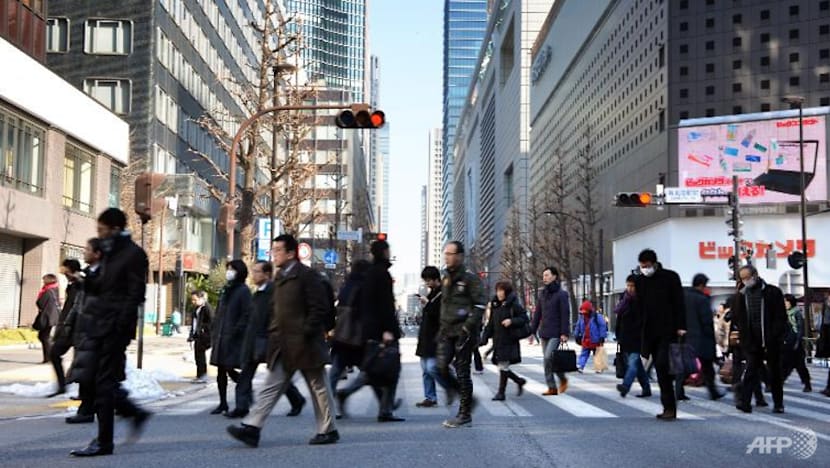
Eighty years after the end of the second world war, Japan must rethink its role in the world, according to a Financial Times writer. The 81st anniversary of the war's conclusion will arrive without fanfare in Japan this weekend. Beneath the silence lies a deeper issue: a fear of sovereignty that has created a rigid outlook on Japan's future.
A recent Gallup survey found that only 9% of Japanese citizens would be willing to fight for their country, the lowest among all nations surveyed. This attitude has been reinforced by Japan's education system, despite China's growing economic and military influence and North Korea's provocations.
The country's curriculum is still rooted in postwar assumptions, which fail to address today's realities that require a focus on deterring threats to national security. However, the question remains: what deterrence should Japan adopt today? The first and most important aspect is economic strength. Japan's shrinking workforce highlights the need for a solid immigration framework built on skills and genuine integration.
For thirty years, deflation allowed Japan to maintain inefficient industries and protect existing jobs instead of fostering new ones. Hard power is another crucial pillar. Japan needs to invest more in defense, develop capabilities, including missiles, drones, and possibly nuclear submarines, and stop viewing this as a sign of embarrassment. A nation unable to protect itself limits its options in other areas.
Soft power is also essential, and Japan has a significant advantage in this regard. The Japan International Cooperation Agency's development work, overseas aid, and cultural exports like manga and anime have cultivated goodwill across Asia. Nations that admire Japan are less likely to threaten it. Critics argue that Japan cannot afford a stronger deterrence, but this is incorrect.
A stronger economy finances greater security, and without economic renewal, no level of defense spending is sustainable. Japan needs honest leadership rather than politicians who resort to subsidies when facing rising electricity bills or fuel prices. Leaders must have the courage to communicate openly with the public, expressing urgency and presenting a credible positive vision.
Subsidies are merely a political escape route, as they dull urgency, freeze the status quo, and starve the driving force behind genuine progress.
The business community must also take the lead in industrial revival and deterrence. Semiconductor technology, robotics, AI, and precision manufacturing are inherently dual-use, and Japan's corporate sector must drive this shift urgently, in partnership with the government, by dismantling institutional barriers, including the self-imposed ban on defense research in universities and regulatory silos that restrict labor mobility.
Eighty years after the war's end, Japan cannot survive with an education system still shaped by postwar assumptions rather than the world as it is today.
Finally, Japan needs to restore national confidence, having grown accustomed to managing decline instead of pursuing renewal. Deterrence starts with a society that believes in its own future. A nation that has lost this belief will struggle to defend itself. This is the most challenging truth in the debate, rarely spoken aloud. Lastly, building a broader economic and security coalition is vital.
While America remains indispensable, Japan's vision of a free and open Indo-Pacific offers like-minded nations, such as India, Australia, the Philippines, and South Korea, a common purpose and a foundation for regional prosperity through factors like integrated supply chains. A coalition cannot guarantee peace but raises the price of aggression beyond what most are willing to pay.
Japan must never surrender the trust earned across eight decades as a peaceful nation. It can acquire real deterrence and continue being the peaceful country it chose to become in 1945. This peace was never free; the past generation paid with restraint, while this generation must pay for the next eighty years with clarity, will, and acceptance that no one else will bear the cost.
Written by urgent.news from Channel News Asia's reporting — not their text. Machine-written — may contain errors; check the original before relying on it.