China installs 15,927 mirrors at world’s highest solar thermal plant to power 50,000 homes
China has proudly completed the construction of the world's tallest solar thermal power plant at an impressive altitude of over 15,000 feet. Known as the Tushuo facility, this 100 MW powerhouse utilizes mirrors to effectively concentrate solar energy onto molten salts. The resulting stored heat will generate electricity even after sunset, ultimately supplying power to approximately 50,000…
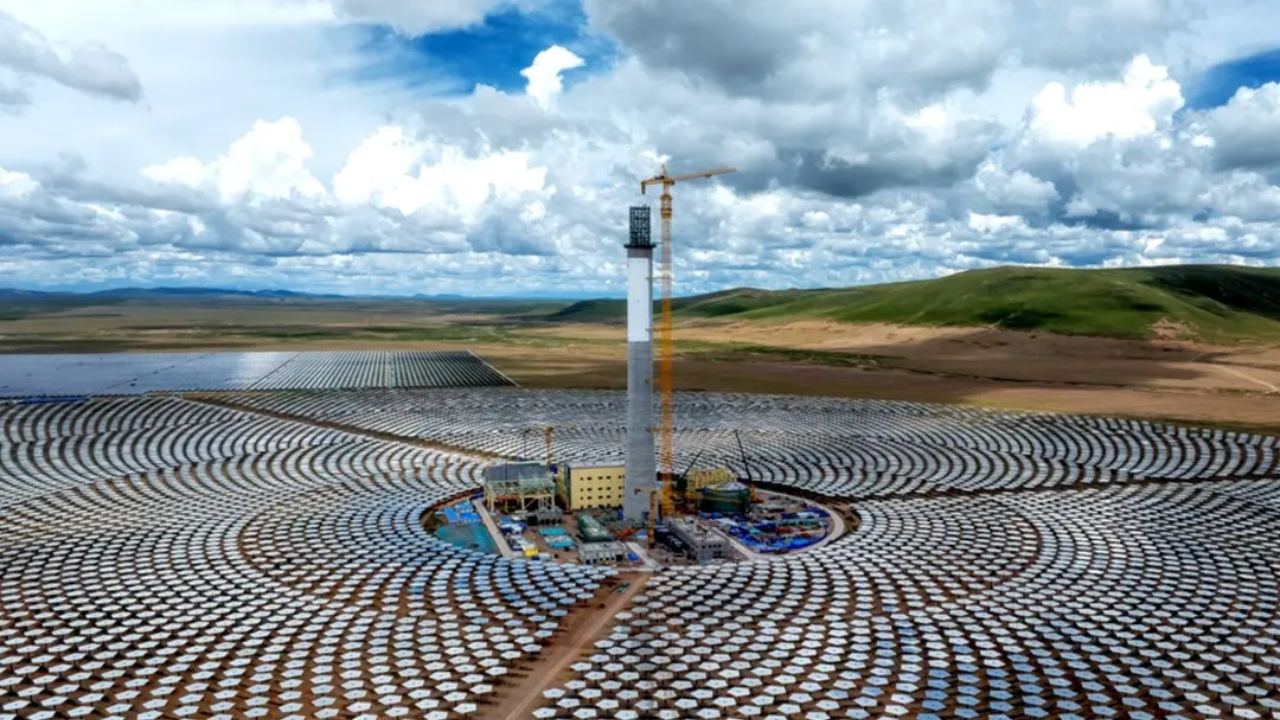
China has recently completed the construction of the world's highest solar thermal plant, located atop the Qinghai-Xizang Plateau at an elevation of 15,258 feet in Amdo County. This 100-megawatt (MW) project, named Tushuo, is designed to withstand extreme conditions such as strong winds, sub-zero temperatures, and high ultraviolet radiation.
The Tushuo plant features 15,927 heliostats, or mirrors, covering an area of approximately 800,000 square meters. These mirrors are strategically arranged to direct solar radiation towards a receiver located at the top of a 210-meter-high tower. By concentrating solar energy, the temperature of molten salts rises to around 1,040°F, which is then utilized to generate electricity.
Unlike photovoltaic solar parks, this solar facility first converts sunlight into thermal energy. Each heliostat continuously adjusts its position to keep the reflected light focused on the receiver. The stored heat is transferred to molten salts, which can later produce steam to drive turbines connected to electric generators, similar to a conventional thermoelectric power plant.
One of the key advantages of this solar thermal plant is its ability to provide electricity even after sunset due to thermal storage. The system is designed to supply power for up to eight hours following sunset, making it particularly valuable in an era where electrical systems rely heavily on intermittent renewable sources.
The Tushuo plant's construction posed significant challenges due to its high-altitude location. Engineers had to develop lightweight yet rigid heliostat supports to withstand strong winds and design solar tracking mechanisms with extremely precise mechanical tolerances. Additionally, the mirrors were coated with ultraviolet-resistant materials to counteract the region's intense solar radiation.
With a daily production capacity of around 6,000 square meters of heliostats, the plant is expected to generate approximately 255 million kilowatt-hours (kWh) annually once operational. This amount of energy could potentially power around 50,000 homes and replace the consumption of approximately 60,000 tons of coal each year, thereby avoiding the emission of about 165,000 tons of carbon dioxide annually.
Written by urgent.news from Times of India's reporting — not their text. Machine-written — may contain errors; check the original before relying on it.