Catastrophic optical disc shattering blamed on cleaning chemicals and packing foam — another data preservation concern to add to bit rot and laser rot
Bitrot isn't the only worry, CDs and DVDs are also susceptible to damage caused by cleaning or foam off-gassing chemicals.
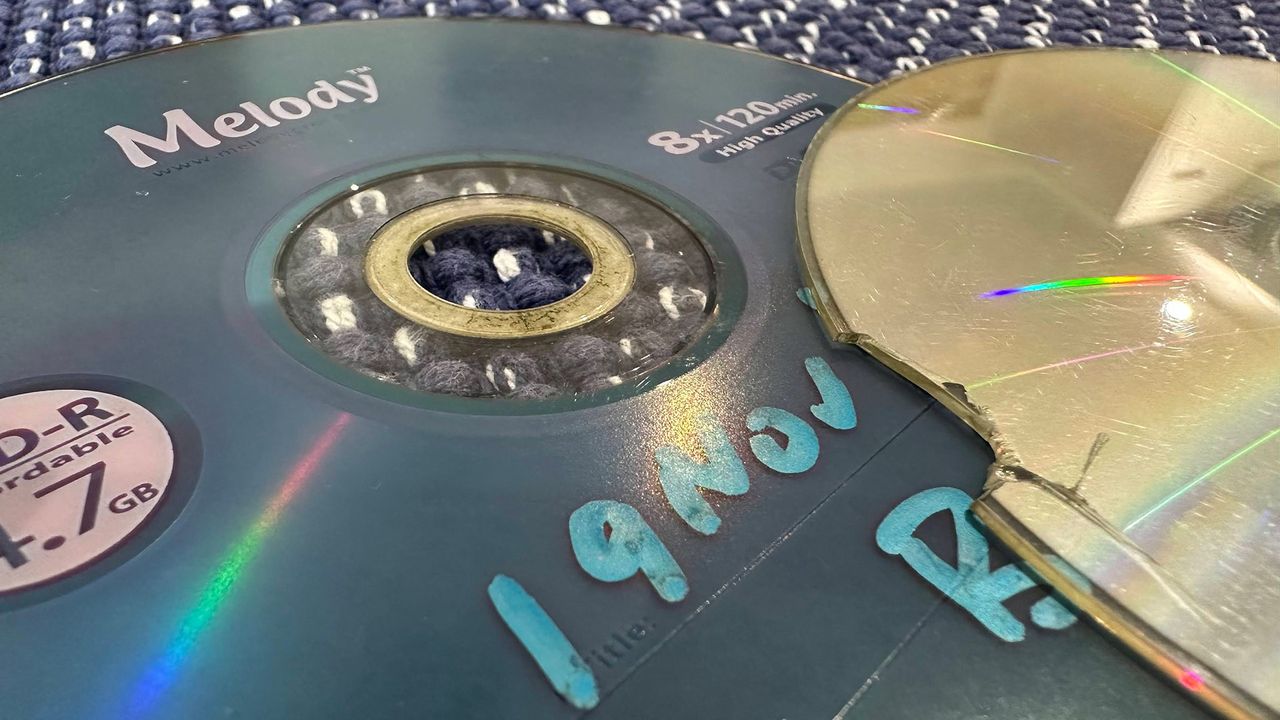
Optical disc collectors are once again raising concerns about the longevity of computer data stored on compact discs (CDs). Recent reports on social media indicate that certain CDs have experienced catastrophic failures, shattering or splitting without apparent cause. Experts believe the root cause may be the deterioration of the polycarbonate substrate due to exposure to cleaning chemicals or certain types of foam padding in storage cases.
According to one Twitter/X user, their favorite CD split down the middle after being cleaned and polished to maintain its shine, potentially leading to chemical cracking of the polycarbonate substrate. In another case, a CD user suspects that foam padding in a protective case caused dramatic damage when the material off-gassed ammonia compounds. Sealed protective cases containing CDs with particular foam padding materials may release these compounds, weakening or cracking the polycarbonate structure over time.
While CDs rely on a single layer of polycarbonate, DVDs use two bonded halves, making them less susceptible to these issues. However, optical discs are still vulnerable to other forms of data degradation, such as bit rot and laser rot. Bit rot refers to the gradual loss or corruption of data stored on a digital medium, often caused by oxidation of the reflective layer, reactions with contaminants, or ultraviolet light damage. DVDs are also at risk of de-bonding between the two polycarbonate layers due to adhesive weakening.
Given these concerns, experts emphasize the importance of regularly backing up optical discs, which may themselves be backups of previous backups. This practice can help preserve valuable digital memories and ensure that these old digital treasures remain accessible for generations to come.
Written by urgent.news from Tom's Hardware's reporting — not their text. Machine-written — may contain errors; check the original before relying on it.