Bakterienteppiche: Blaualgen an Ostsee und Seen – Warnung für Badende
Bläulich grüne Trübung im Wasser? An vielen Küsten und Seen im Norden raten Behörden vom Baden ab. Der Grund sind Bakterien, die etwa allergische Reaktionen auslösen können.
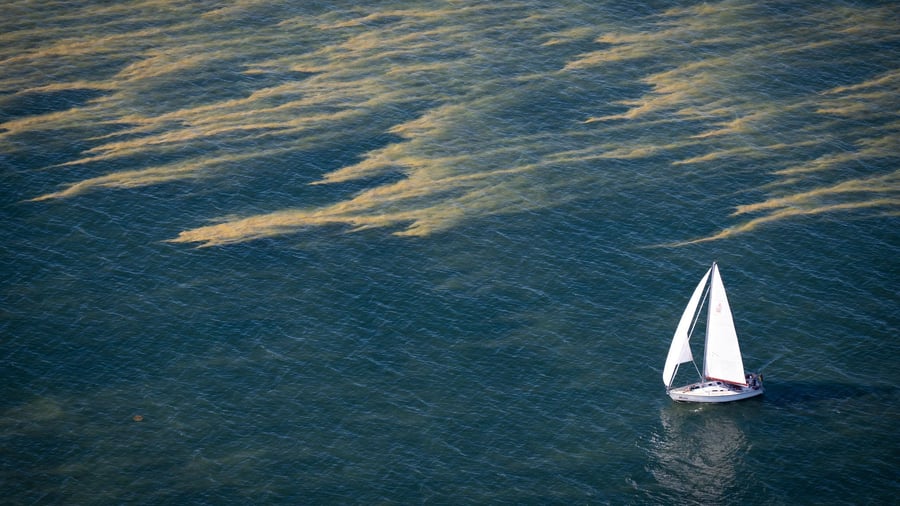
Large algal blooms have spread along the Baltic Sea and numerous lakes in Mecklenburg-Western Pomerania and Schleswig-Holstein, according to satellite images from the Federal Office for Maritime and Hydrographic Affairs. These algal mats extend across the entire inland sea all the way to the Danish coast between Rostock and Hiddensee. The Health Ministry in Schwerin advises beachgoers to avoid areas with visible algal accumulations.
Algal blooms can be identified by a bluish-green discoloration of the water, strands, mats on the surface, or cloud-like distributions within the water. The blooms are influenced by wind and weather and can change within a few hours. Affected areas along the Baltic include Rostock-Warnemünde, Kiel-Born, Heiligendamm, Wohlenberger Wiek near Wismar, and rivers and lakes such as the Peene River, Schwandt Lake, and Melze Lake in Mecklenburgische Seenplatze district.
However, there are no official swimming bans due to the algal blooms. In Schleswig-Holstein, some lakes like Bordesholm Lake, Brahm Lake, Warder Lake, and Dörp Lake in the Rendsburg-Eckernförde district have issued swimming bans. These bans are expected to remain in effect until Wednesday. Additionally, swimming and bathing are advised against at several Baltic Sea bathing spots in Ostholstein district, such as near Sierksdorf, Rettin, or Scharbeutz, if the water turns bluish-green and one cannot see their feet at knee depth.
Children should also be kept out of the water and away from the shoreline in these cases. Cyanobacteria, often called blue-green algae, can produce toxins that may cause allergic reactions, skin and mucous membrane irritations, and nausea or vomiting if swallowed in large quantities.
Written by urgent.news from Handelsblatt's reporting — not their text. Machine-written — may contain errors; check the original before relying on it.