Antarctica once had a rainforest just 900 km from the South Pole
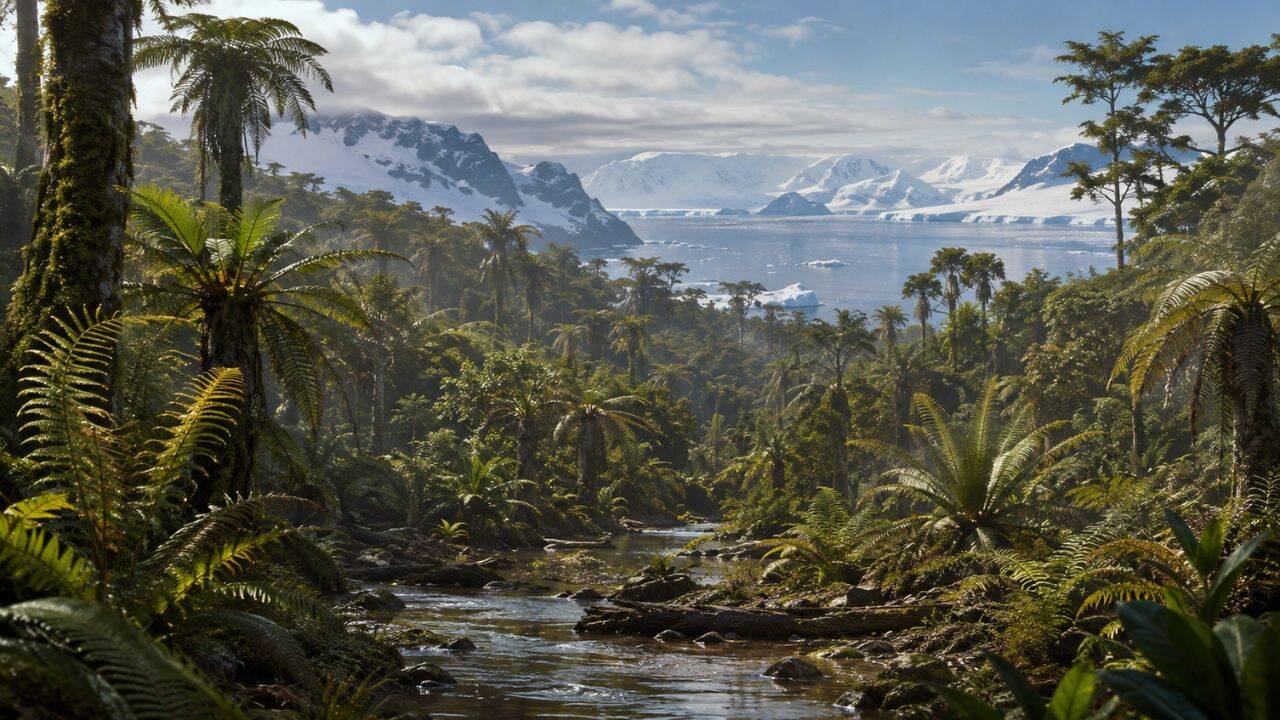
Approximately 90 million years ago, during the Cretaceous Period, a rainforest thrived near the South Pole in what is now West Antarctica. A sediment core retrieved in 2017 from the Amundsen Sea provided fossilized roots, pollen, and spores as evidence of this extraordinary forest ecosystem. These remnants indicate that the forest was situated at a latitude of about 82 degrees south, where it endured extended periods of darkness each year.
Despite this perpetual night, the forest flourished due to relatively mild average annual temperatures of around 12°C, with summer temperatures reaching up to 19°C. Water sources in the area likely warmed to about 20°C. The forest's existence challenges the notion that Antarctica was perpetually icy, suggesting instead that it was a temperate rainforest with abundant moisture and extreme seasonal variations in daylight.
The presence of high carbon dioxide levels in the atmosphere, estimated to have been between 1,120 and 1,680 parts per million, played a crucial role in maintaining the warmer climate necessary for the forest's survival. The discovery of fossilized roots, pollen, and spores in the sediment core is a rare and valuable record, offering scientists a detailed glimpse into the ancient Antarctic landscape.
Furthermore, the finding of tiny amber fragments from the same core provides additional evidence of resin-producing trees, further supporting the idea of a lush, forested environment in a region that is now dominated by ice.
Written by urgent.news from Times of India's reporting — not their text. Machine-written — may contain errors; check the original before relying on it.