A signature in thread
Manamedu weavers excel in creating handloom ‘butta’ saris and the Maragathaleswarar Handloom Weavers’ Cooperative Society is keeping the art alive by supporting the fraternity
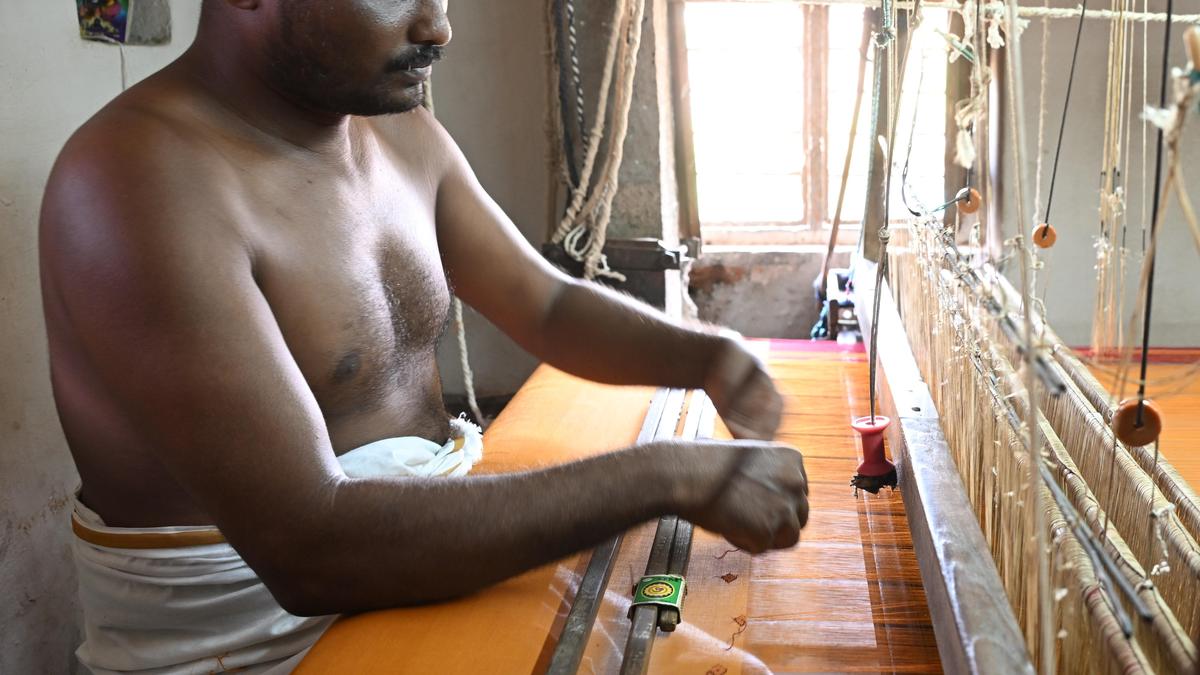
K. Jothimani, a 33-year-old handloom weaver, meticulously cuts eight strands of red thread from a bobbin and weaves them into an orange sari at equal intervals across the fabric. Using a razor blade, he ensures the placement of the red thread is precise as he moves the shuttle horizontally at least 10 times, adjusting the placement until an intricately designed butta, resembling an eye, emerges on the fabric.
Mr. Jothimani, a member of the Maragathaleswarar Handloom Weavers’ Cooperative Society, is one of many artisans who keep the ancient craft of manually creating butta (flower in Persian) alive.
The 'eye' is just one of many possible buttas that can be woven, including the maangani (mango), yaanai (elephant), and teppakulam (temple step well). Mr. Jothimani showcases a collection of hand-drawn motifs on graph sheets, demonstrating the diversity of designs possible through this ancient craft. His wife assists him by using a repurposed bicycle wheel and pedal to spin yarn and prepare thread spindles for his weavings.
The cooperative, which includes weavers from the Manamedu village, has successfully created a unique handloom product called the 'Manamedu' sari. This lightweight and colorful cotton sari has revitalized the livelihoods of at least 10 weaving societies in the region. The cooperative's manager, P. Dhandapani, attributes this success to increased diversification, starting with the addition of handwoven buttas to their saris four years ago.
The popularity of these buttas, though less refined than powerloom products, contributes to their authenticity and value.
Experienced weavers employ punched jacquard cards sourced from Salem to guide threads in weaving the buttas into the pallu and body of the saris. They have also incorporated block-printing to enhance the appearance of the butta sari. The handloom saris now come with attached blouse material, measuring up to 6.20 meters in length, comparable to powerloom products.
Weavers in this cooperative can earn between ₹500 and ₹650 per sari. However, these handloom products are often resold for ₹2,500 in urban markets, with connoisseurs preferring to purchase directly from the weavers to ensure they benefit from their labor.
Written by urgent.news from The Hindu's reporting — not their text. Machine-written — may contain errors; check the original before relying on it.