Why Nabil Kanso's haunting paintings of war feel made for our times
We have become remarkably good at watching war. It floods our screens sandwiched between entertainment and advertisement, competes for the same attention as everything else, and loses. Never have we had such constant exposure to human suffering, yet it has become increasingly difficult for many to truly absorb it. Perhaps we need art to do what the news cannot: to put us inside the experience…
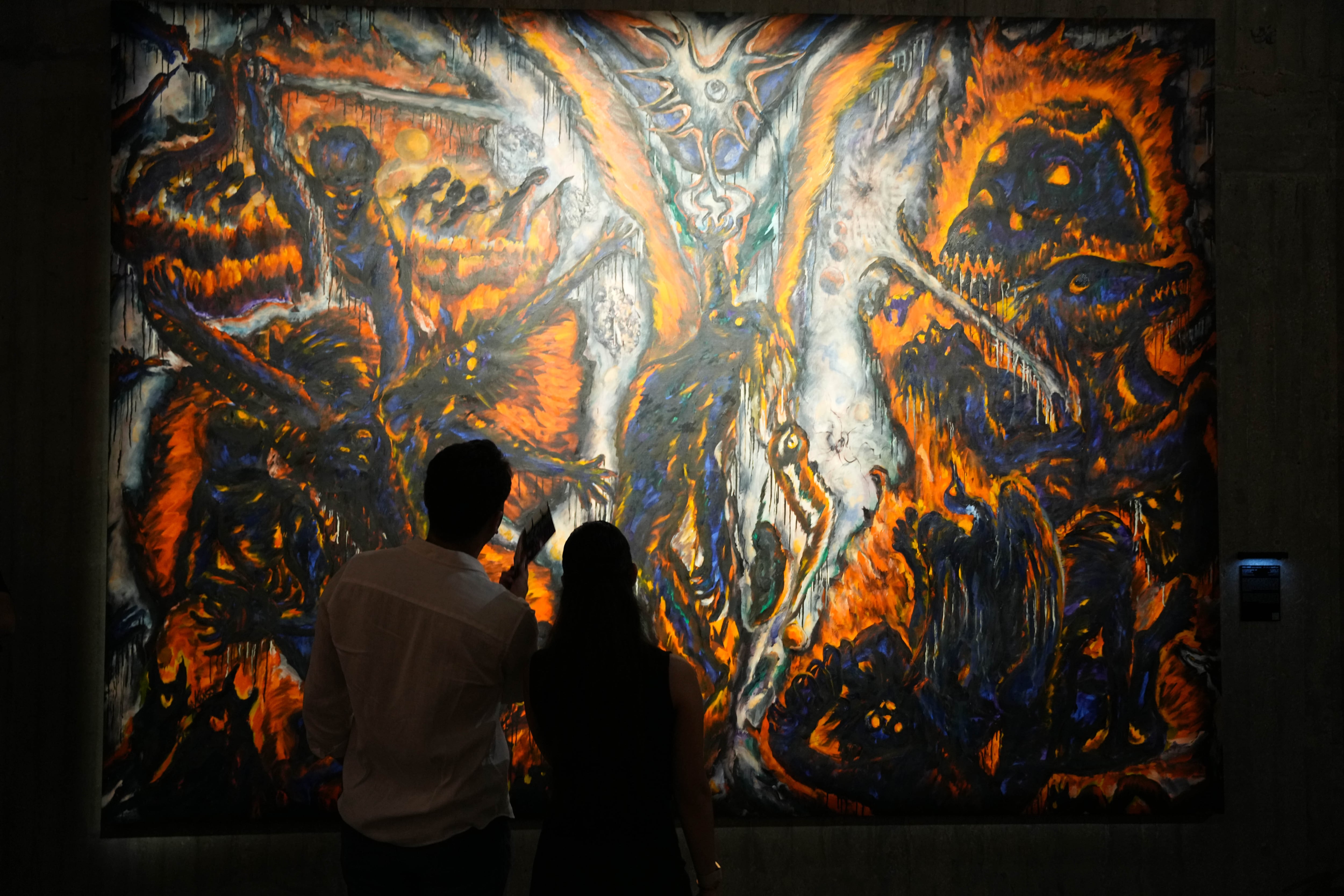
Nabil Kanso's haunting paintings of war resonate deeply in today's world, where we are inundated with images of human suffering, often leaving us desensitized. The Lebanese-American artist dedicated his career to depicting the human experience amid violence, believing that constant exposure to war strips away its impact. Born in Beirut in 1940, Kanso moved to New York in 1966 and spent five decades creating a monumental body of work that established him as one of the foremost painters of the modern Arab world.
Kanso's art confronts war in all its brutality and light, from Vietnam to Lebanon, South Africa, and El Salvador. His first major solo exhibition in Lebanon, seven years after his death, arrives at a time when his messages feel more relevant than ever. In works like "Leaves from the Theatre of War," Kanso presents grotesque leaders, power brokers, newscasters manipulating public opinion, and ordinary people caught in the crossfire.
Despite the darkness, he always imbues his paintings with light, as his son Daniel explains, "Despite the darkness, despite the brutality – which he gives you fully and completely – when you look at the paintings, you see light emanating."
Kanso's paintings go beyond documenting conflict; they immerse viewers in the lives unfolding within it. He believed that art could restore humanity, while social media and 24-hour news cycles risk desensitizing us. His work features not only soldiers but also mothers, lovers, musicians, children, and pregnant women. These recurring figures highlight the artist's belief that women are the strongest agents of resistance and guardians of life.
The true antagonist of Kanso's work is not war alone, but indifference. He feared the human capacity to ignore and dismiss suffering, which he saw as a threat to our shared humanity. Daniel emphasizes that Kanso's message is clear: "You can't ignore this." The artist's commitment to painting monumental canvases, even at the cost of commercial success, demonstrates his dedication to his craft and his refusal to compromise his vision for the market.
When asked about the delay in Lebanon giving Kanso the recognition he deserved, Daniel acknowledges the country's shattered cultural infrastructure due to the Civil War, but also his father's reluctance to confront these issues directly.
Written by urgent.news from The National UAE's reporting — not their text. Machine-written — may contain errors; check the original before relying on it.
This story
This is one outlet's version. Read the fullest account.
- Why Nabil Kanso's haunting paintings of war feel made for our times thenationalnews.com