'Transformative' strategy on Traveller culture, heritage
Ireland's first Traveller Heritage Strategy aims to protect oral history, music, craft skills and a distinct way of life.
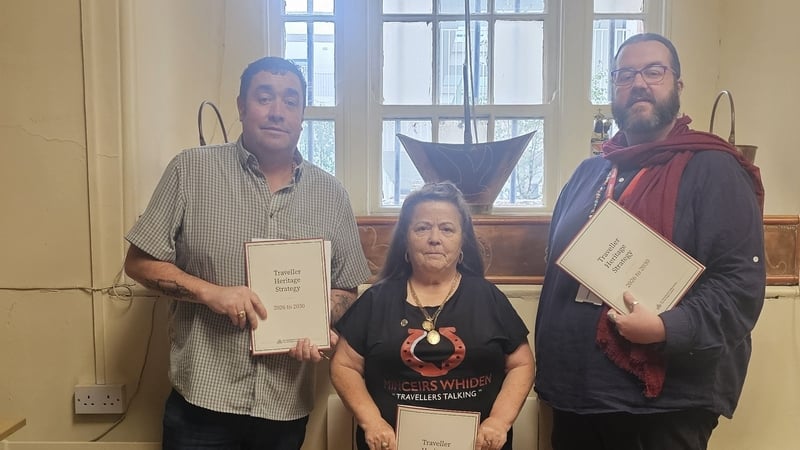
Ireland's inaugural Traveller Heritage Strategy aims to safeguard the oral history, music, craft skills, and unique way of life of the Traveller community. Developed over three years through a Traveller-led working group, the National Heritage Council's strategy sets a national framework to support cultural heritage. Primary objectives encompass allocating dedicated funding to heritage projects, establishing a Traveller-led working group to protect the Traveller language, and conducting a scoping study for a National Centre for Traveller Heritage.
This marks the first such strategy since the formal recognition of Irish Travellers as an ethnic minority in 2017.
Owen Ward, Convenor of the Traveller Heritage Strategy Working Group, expressed optimism about the strategy's development over time. He emphasized that Irish Traveller heritage often remains marginalized, making this a transformative journey to address that disparity. John Paul Collins, a community development worker with Pavee Point Traveller and Roma Centre, highlighted the significant lack of investment in Traveller culture and heritage.
He emphasized the importance of preserving the Traveller language, Cant, ensuring it is recorded, understood, developed, and recognized as a distinct language.
Maureen Ward, co-ordinator for Minceirs Whiden, echoed the calls for language preservation while also advocating for the protection of traditional skills, such as paper flower making, beady pockets, and seamstressing. These skills, she said, are essential for Traveller young people to become independent and secure alternative livelihoods.
Oein DeBhairduin, Inclusive Histories Curator of Traveller Culture at the National Museum of Ireland, expressed hope that the strategy would also safeguard Traveller crafts, including tinsmithing, shoe and paper making, and traditional ways of engaging with the environment and animals.
John Paul Collins hoped that recognizing Traveller culture and heritage would empower future generations to take ownership of their identity and cultivate pride in their traditions. Maureen Ward expressed a desire for the establishment of a Traveller museum, asserting that such a space could foster greater understanding and reduce discrimination against Travellers.
Oein DeBhairduin concluded by noting that, despite their significant contributions to Irish music, curative practices, and the preservation of holy wells, much of this impact remains unrecognized and underexplored.
Written by urgent.news from RTE News's reporting — not their text. Machine-written — may contain errors; check the original before relying on it.