The Middle East Conflict Tests BRICS
The conflict in the Middle East has become a defining geopolitical challenge for an expanded BRICS, testing its unity, diplomatic influence and strategic ambitions. As tensions reshape regional alliances and global power dynamics.
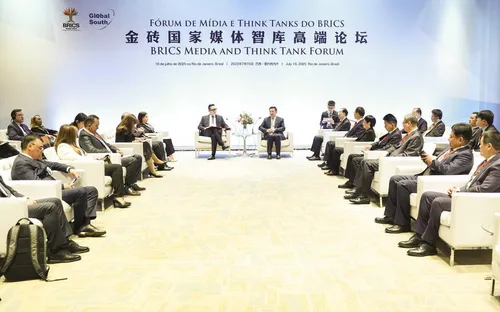
The ongoing dispute in the Middle East is not merely a regional security concern; it is a critical geopolitical challenge for BRICS, an alliance that has expanded to include significant Middle Eastern powers like Iran, Saudi Arabia, and the United Arab Emirates. This conflict is putting the group to the test as it grapples with complex political landscapes while striving to uphold its goal of fostering greater multipolar cooperation.
Central to this situation is China's involvement. Despite its close strategic ties with Iran, Beijing is unlikely to engage militarily in the conflict, as its primary strategic focus remains on Taiwan and the South China Sea. China's substantial investments in economic and diplomatic relations with Iran, Saudi Arabia, the UAE, and other Gulf states suggest that preserving these ties is likely to remain more important than direct military involvement.
This delicate balancing act encapsulates both the strength and the vulnerability of BRICS. The expanded alliance now comprises countries with varied interests, alliances, and security concerns. While BRICS touts itself as a forum for cooperation among emerging economies, regional conflicts involving member states or close partners can strain the bloc's internal unity.
Some geopolitical analysts warn that the current crisis may further fragment Middle Eastern relationships, with Iranian retaliation against Israel and attacks impacting neighboring countries such as Saudi Arabia, the UAE, Bahrain, and Kuwait potentially exposing deep-seated regional divisions. The conflict also carries substantial economic implications, given that BRICS includes major economies like China, India, and Russia, along with key energy producers such as Saudi Arabia, Iran, and the UAE.
Any prolonged instability affecting energy production, shipping routes, or investment confidence could disrupt regional economies and complicate BRICS' broader economic agenda. At a time when BRICS is rapidly growing in global influence, representing a significant portion of the world's population, economic output, and natural resources, its expansion into the Middle East has bolstered its strategic importance by uniting major energy exporters with some of the world's fastest-growing emerging markets.
Western policymakers have increasingly expressed concern about BRICS' expanding economic influence and its efforts to promote greater cooperation in trade, finance, and development. The growing prominence of BRICS has placed the organization at the forefront of discussions about the future of global governance and the emergence of a more multipolar international system.
Historical precedents, such as the US support for Saddam Hussein during the Iran-Iraq War and the subsequent US-led invasion of Iraq, highlight how external military intervention can alter regional power dynamics and enable extremist organizations to thrive. These past events continue to influence contemporary debates about the potential consequences of a wider conflict involving Iran.
The central challenge for BRICS is not just addressing the immediate crisis but demonstrating that a coalition of diverse, major emerging powers can maintain unity despite differing national interests. If the bloc can continue promoting dialogue, economic cooperation, and diplomatic engagement while avoiding internal fragmentation, it will enhance its credibility as a key player in shaping the future international order.
The Middle East conflict therefore represents more than just another regional confrontation; it is a defining test of whether BRICS can convert its growing economic weight into meaningful geopolitical cohesion. The actions taken by its members in the coming months could not only determine the future of the organization but also shape the balance of power in an increasingly multipolar world.
Written by urgent.news from IOL's reporting — not their text. Machine-written — may contain errors; check the original before relying on it.