The Dinner Party Has Left the Building
A few months ago, a small group gathered for a picnic during a retreat in upstate New York. In lieu of sitting on a grassy knoll with a checkered blanket, the diners huddled on a flat rock by a waterfall while the retreat’s co-organizer, Charles Michel, began priming its surface with vinegar before painting it […]
A small group gathered for a picnic in upstate New York a few months ago, eschewing traditional picnic settings for a flat rock by a waterfall. Food artist Charles Michel, the retreat’s co-organizer, transformed the rock into an abstract painting using vinegar, vegetable purees, and foraged elements. Michel, a self-proclaimed "food futurist," has been creating such food paintings for 15 years.
This particular painting marked a new milestone for his work, as it was set entirely in nature - no tables, chairs, or plates were involved.
Michel described how the picnic's setting spurred childlike playfulness and reverie. For example, diners scooped up vegetable puree using sourdough bread, and there was a collective pause before eating, fostering a sense of presence and gratitude. Some of the food was repurposed from the group's retreat leftovers, such as the fibrous trimmings of grilled white asparagus, transformed into a velouté for their shared meal.
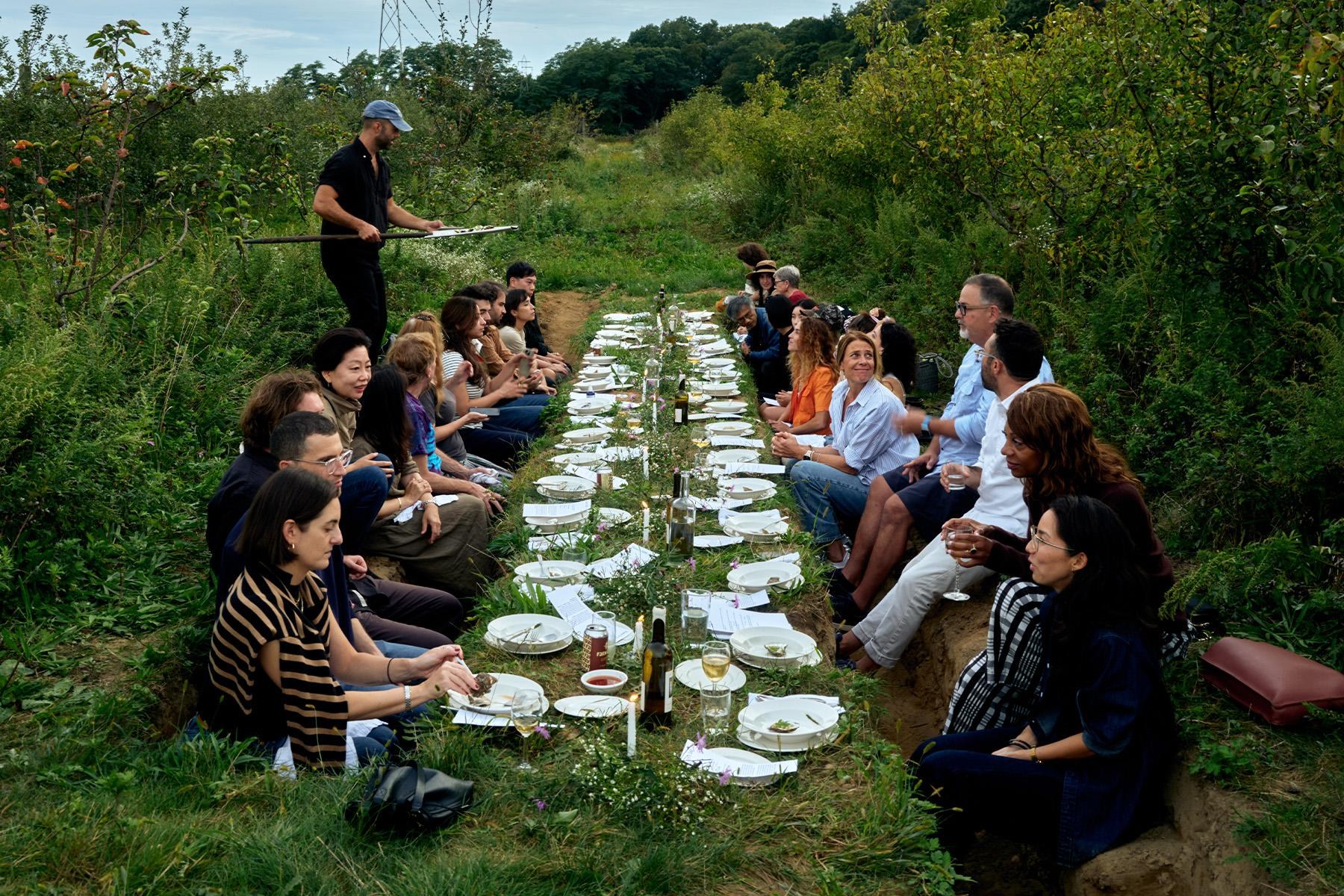
Earthwork dining, an increasingly popular trend, involves curating culinary experiences in nature. Similar events include multicourse dinners with dirt-made "placemats" and collaborative dinner series like The Ever-Changing Table, where leaves replace porcelain and vegetables become sculptural centerpieces. Sea-worthy earthwork dinners have also emerged, such as Banquet on the Sea, an aquatic dinner in Marseille featuring locally sourced and upcycled elements.
The blueprint for these earthwork dinners has roots in history. The Bread & Puppet Theater, a revolutionary 1960s puppet-activist group, has been serving house-made sourdough rye and pumpernickel loaves in Vermont fields since its early days. The farm-to-table movement of the 1970s further emphasized local, seasonal ingredients, paving the way for larger-scale land art dinners like Outstanding in the Field, a traveling outdoor dinner series that started in 1999.
These modern earthwork dinners, like Michel's rockface painting picnic and Lacloche's Banquet on the Sea, forgo many traditional dining conventions. While there were no individual plates or courses, everyone arrived hungry and left nourished. This disruption of dining rituals allowed for a more sensory-heavy, social-norm-disruptive experience.
Written by urgent.news from Eater's reporting — not their text. Machine-written — may contain errors; check the original before relying on it.