The Atlas Obscura Guide to Seeing the Northern Lights
Here is the failure mode nobody warns you about. You book a week in a country you chose because it appeared on a list of the best places to see the northern lights. You arrive. It is cloudy for six nights. You go home having seen nothing, and you conclude the country was wrong. The country was not wrong. The aurora is not a destination. It is a probability spread across a band of latitude, and no…
A common oversight when planning to witness the Northern Lights is assuming the location alone guarantees an encounter. Upon arrival, cloudy skies may dominate the week, resulting in no sightings and disappointment. In truth, the aurora is not a fixed destination, but a probability phenomenon spread across a specific latitude band. Choosing a location should focus on the overall experience it offers, rather than solely on light visibility.
The Northern Lights follow an eleven-year solar cycle, with the current peak occurring in October 2024. Although this may seem unfavorable, activity is expected to remain elevated through 2027 before gradually declining towards the 2030s. The best windows for viewing the aurora occur around the equinoxes, specifically late September and March, when Earth's magnetic field is optimally positioned to allow solar wind to enter. Summer months are unsuitable due to darkness being scarce, regardless of the northern location.
The Atlas Obscura guide delves into where and how to view auroras, highlighting Earth's curvature blocks brighter, lower-altitude displays, causing southern viewers to witness only high-altitude ones. The full aurora collection offers additional insights, such as the aurora identified by citizen scientists and the one resembling green sand dunes.
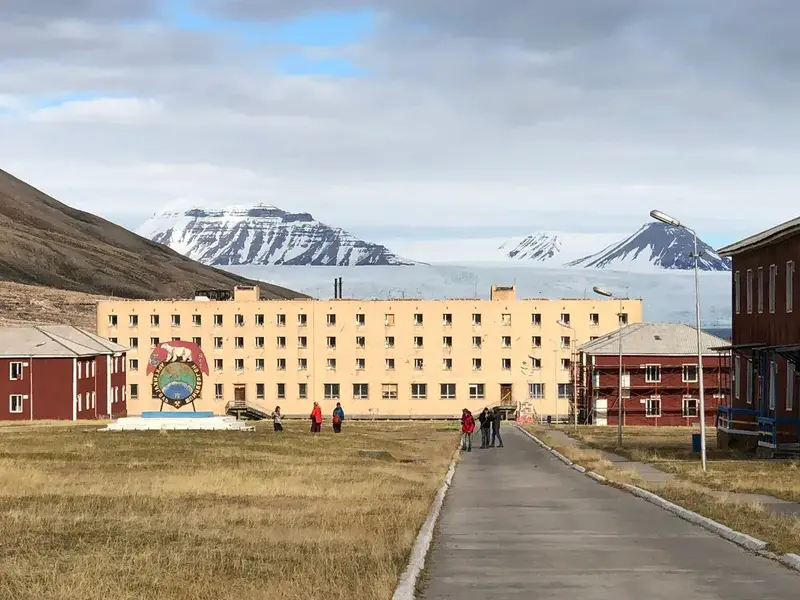
Svalbard, situated approximately 650 miles from the North Pole, presents itself as an excellent choice for those seeking a unique experience. The region boasts the Svalbard Global Seed Vault, which safeguards the world's crop diversity against crises like war, disaster, or mismanagement. The area is also home to the abandoned Soviet coal-mining town of Pyramiden, an Olympic-sized swimming pool, and various other abandoned structures that have withstood the test of time due to the cold and dry climate.
Longyearbyen, the main town, has effectively prohibited burial for decades due to the ground's freezing conditions, allowing bodies to remain undisturbed.
Iceland offers an alternative with its picturesque landscapes, such as Jökulsárlón, a glacial lagoon filled with drifting icebergs, and Diamond Beach, where icebergs washed ashore on black volcanic sand. The Blue Lagoon, formed by geothermal power plant runoff, is one of the many unusual attractions Iceland has to offer. For those who prefer a more controlled environment, the Blue Lagoon provides geothermal water for relaxation, while 163 other unique sites are described in the Atlas for cloudy nights.
Tromsø, Norway, is considered the most recommended aurora destination on Earth due to its position under the auroral oval, presence of an airport, and dedicated aurora-driven tourism industry. However, visitors may face crowded conditions. If solitude is preferred, the Lofoten Islands provide a similar latitude with dramatic peaks instead of a bustling city. Lofoten and Dyrhólaey in Iceland are repeatedly featured in Atlas Obscura's aurora photographer coverage.
Norway also offers Arctic Lapland, featuring the Kakslauttanen Arctic Resort, a collection of geodesic glass domes located near the northernmost point of Europe. These domes ensure an unobstructed view of the sky, as they are built to accommodate any surrounding obstructions. The resort is recognized as the most photographed aurora accommodation worldwide, providing a practical solution to the challenge of staying awake and outdoors during early morning hours in February.
Written by urgent.news from Atlas Obscura's reporting — not their text. Machine-written — may contain errors; check the original before relying on it.