Russia’s state statisticians report the growth Putin demanded—economists doubt it will hold
The rebound leaned on war spending and one-off boosts, it barely moved the flat first-half trend—and it landed just after Putin ordered his officials to turn the economy around.
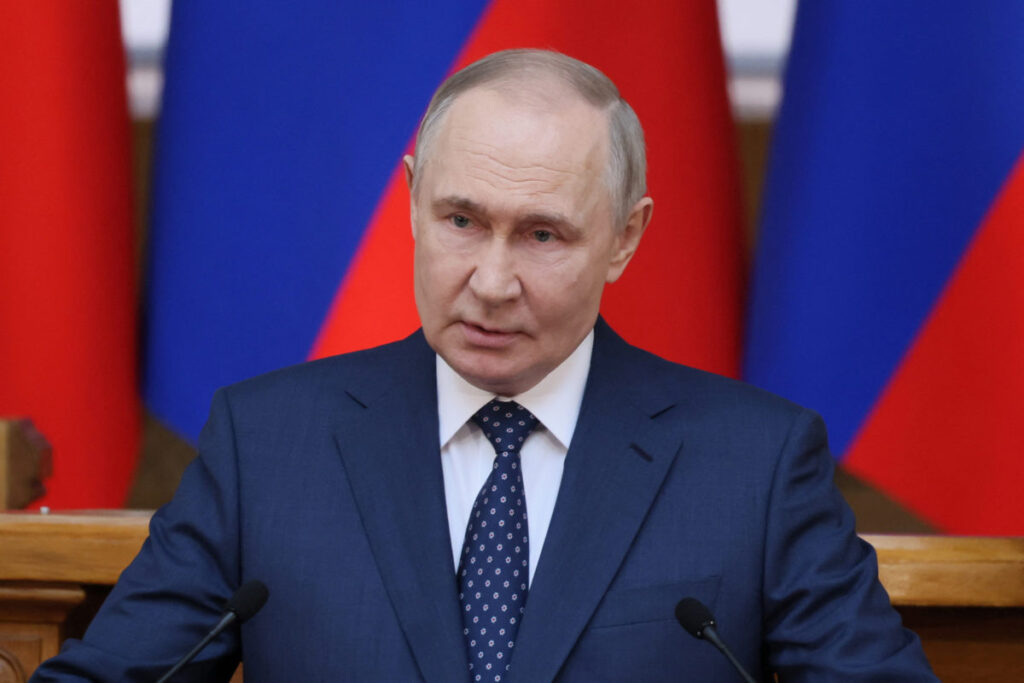
Russia's economy expanded 1.3% in the second quarter of 2026, according to state news agency TASS, citing preliminary estimates from the state statistics agency Rosstat. This figure, if confirmed, would mark a significant turnaround after the country experienced its first quarterly contraction since 2023 at the start of the year.
The growth comes in the wake of Russian President Vladimir Putin's April rebuke of his economic team, who were instructed to devise concrete measures to restore growth. The number may represent a modest recovery or a figure manipulated by the statisticians to align with the president's desired outcome. Russia's economy, which finances its ongoing war, holds significant importance, as its strength determines the limits of the Kremlin's ability to sustain military operations.
While the rebound appears thinner upon closer examination, the first quarter saw a 0.2% decline, and the entire first half of the year witnessed just a 0.6% increase, a pace half of last year and near seven times slower than the wartime boosts of 2023 and 2024. The initial surge in growth was primarily attributed to one-time factors such as additional working days, a temporary surge in oil revenues due to the Iran war, and a 16% budget increase, most of which went toward the military and weapons.
Analysis of the data suggests that military plants' output continued to rise, while civilian industry contracted by 3.2% from the previous year, according to the Center for Macroeconomic Analysis and Short-Term Forecasting (CMASF), a Russian forecasting institute. Rosstat also claimed this quarter was their strongest in six years and outperformed forecasts from both the economy ministry, which predicted 0.9%, and the central bank, which anticipated 0.8%.
Experts expect Russia's economy to remain stagnated in the near future, citing high interest rates, fuel crises, and the impact of Ukrainian long-range drone strikes, which have reduced oil refining to its lowest level in over two decades and forced Moscow to import gasoline from distant countries like Morocco.
Written by urgent.news from Euromaidan Press's reporting — not their text. Machine-written — may contain errors; check the original before relying on it.