Regulated Markets Are Slow to Handle Change
Gowrisankaran, Langer and Reguant have an excellent paper, Energy Transitions in Regulated Markets (WP), in the latest AER. The basic idea is that regulation designed to prevent utilities from building useless power plants can induce them to keep obsolete power plants. Some background. We regulated electric utilities under the theory that they were natural monopolies […] The post Regulated…
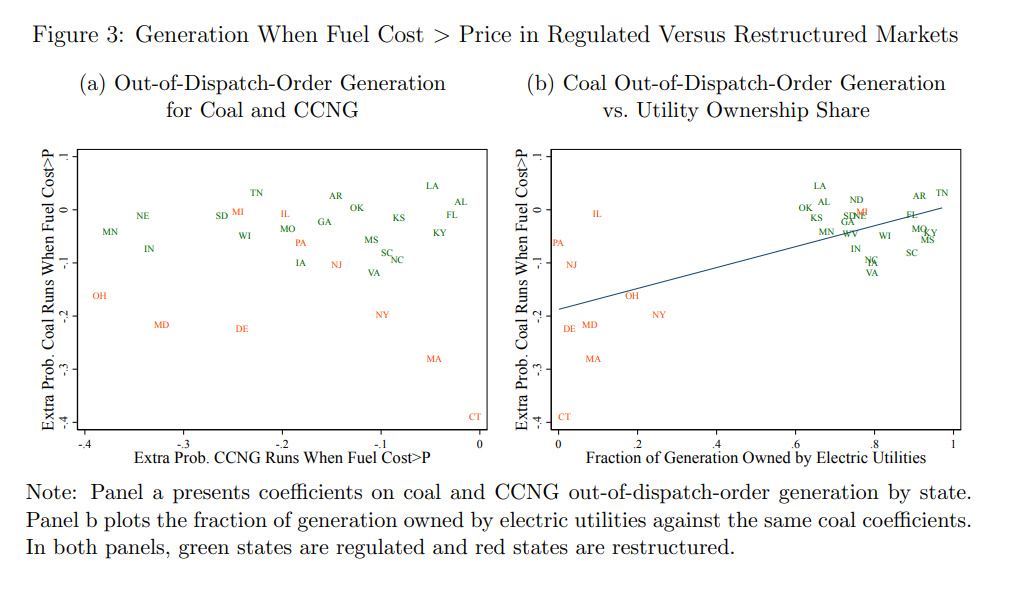
A recent paper in the American Economic Review titled "Energy Transitions in Regulated Markets" by Gowrisankaran, Langer and Reguant examines how regulation in the electric utility industry can lead to the retention of outdated power plants despite technological advancements. The authors argue that when utilities are subject to regulation, they may be incentivized to keep obsolete power plants running, even if it's not economically efficient.
This is known as the "Averch–Johnson effect." The authors provide data to support their claim, showing that in states with regulated utilities, coal plant operations do not decrease as much when the cost of coal exceeds the price of electricity. In contrast, restructured states with less utility ownership show stronger responses to these cost changes.
The authors also present a structural model suggesting that regulation may lead to too much investment in both old and new technologies, resulting in excessive capital stock. The authors conclude that regulation in dynamic conditions is more challenging than in static conditions and may not be beneficial.
Written by urgent.news from Marginal Revolution's reporting — not their text. Machine-written — may contain errors; check the original before relying on it.