Pangenome-Guided Breeding Boosts Yield and High-Altitude Adaptation in Buckwheat
Pangenome-guided breeding helped researchers combine high-altitude adaptation and improved yield in Tartary buckwheat by recovering useful wild alleles. The post Pangenome-Guided Breeding Boosts Yield and High-Altitude Adaptation in Buckwheat appeared first on GEN - Genetic Engineering and Biotechnology News .
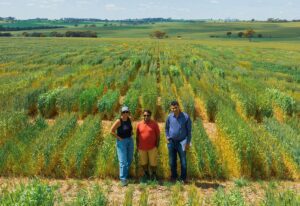
A groundbreaking study published in Cell has shown how pangenome-guided breeding can enhance both yield and high-altitude adaptation in Tartary buckwheat, a nutrient-rich grain cultivated in the Himalayan region. Led by the Chinese Academy of Agricultural Sciences and involving a global team of researchers, the study generated a telomere-to-telomere reference genome and assembled a graph-based pangenome from 16 accessions, representing both wild Himalayan populations and global landraces.
Additionally, genomic data from 994 accessions across 15 countries was integrated, revealing 123,131 nonredundant structural variants. The researchers identified FtRNH, a gene unique to wild plants that aids in repairing UV-B-induced DNA damage and improves high-altitude adaptability. They also discovered a structural variation at the FtPLATZ locus, involving copy-number changes and a promoter insertion linked to seed size variation.
By employing marker-assisted selection, the team successfully integrated these advantageous alleles into breeding lines, resulting in improved growth, larger seeds, and significantly higher yields in high-altitude field trials. This innovative approach, according to Rajeev Varshney, director of the Centre for Crop and Food Innovation at Murdoch University and co-corresponding author, enables breeders to stack specific DNA segments underlying each desirable trait, offering a template for future breeding programs.
The study highlights the potential of pangenomes to uncover valuable genetic variation in wild relatives and landraces, potentially guiding the development of crops with enhanced resilience and yield without sacrificing productivity.
Written by urgent.news from GEN Biotechnology's reporting — not their text. Machine-written — may contain errors; check the original before relying on it.